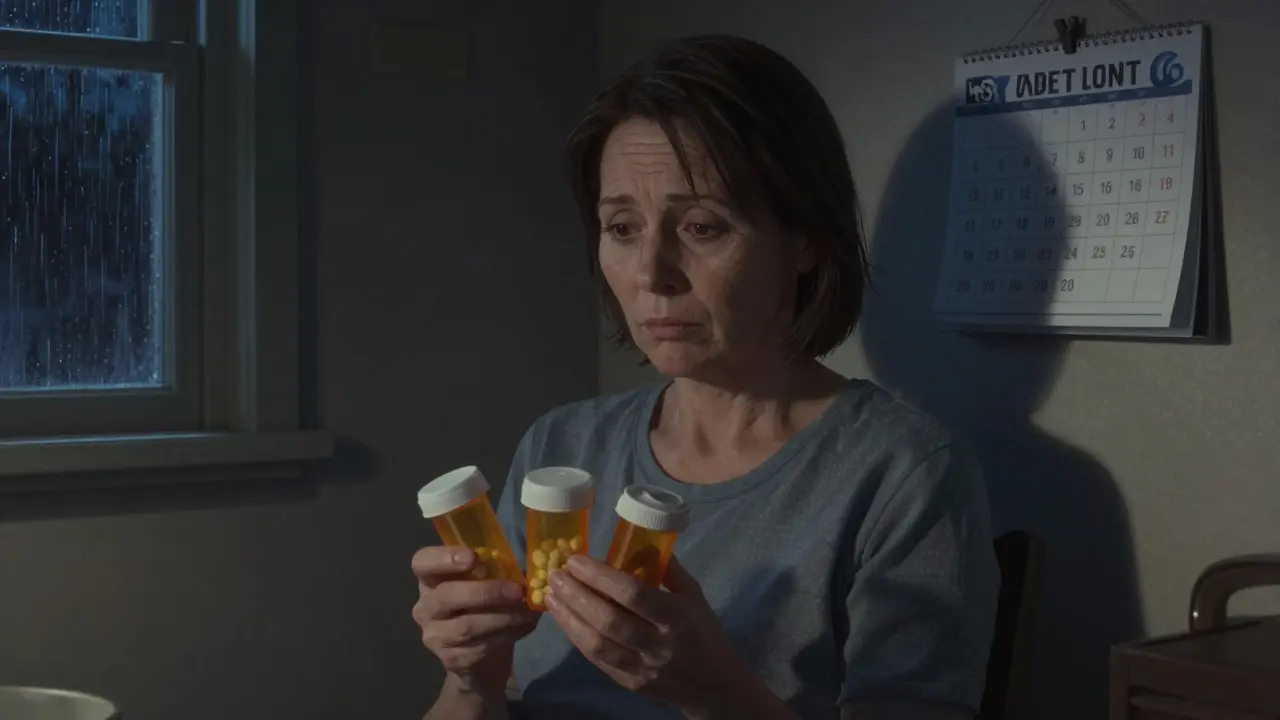
The Pharmaceutical Benefits Scheme (PBS) is the backbone of Australia’s healthcare system when it comes to prescription drugs. It’s not just a subsidy program - it’s a carefully engineered system that determines who gets access to what medicine, at what price, and how much patients pay out of pocket. For millions of Australians, the PBS means the difference between managing a chronic condition and going without treatment. But behind the scenes, it’s a complex web of pricing rules, bureaucratic hurdles, and market forces that shape the entire generic medicine market.
How the PBS Works: Subsidies, Co-Payments, and Safety Nets
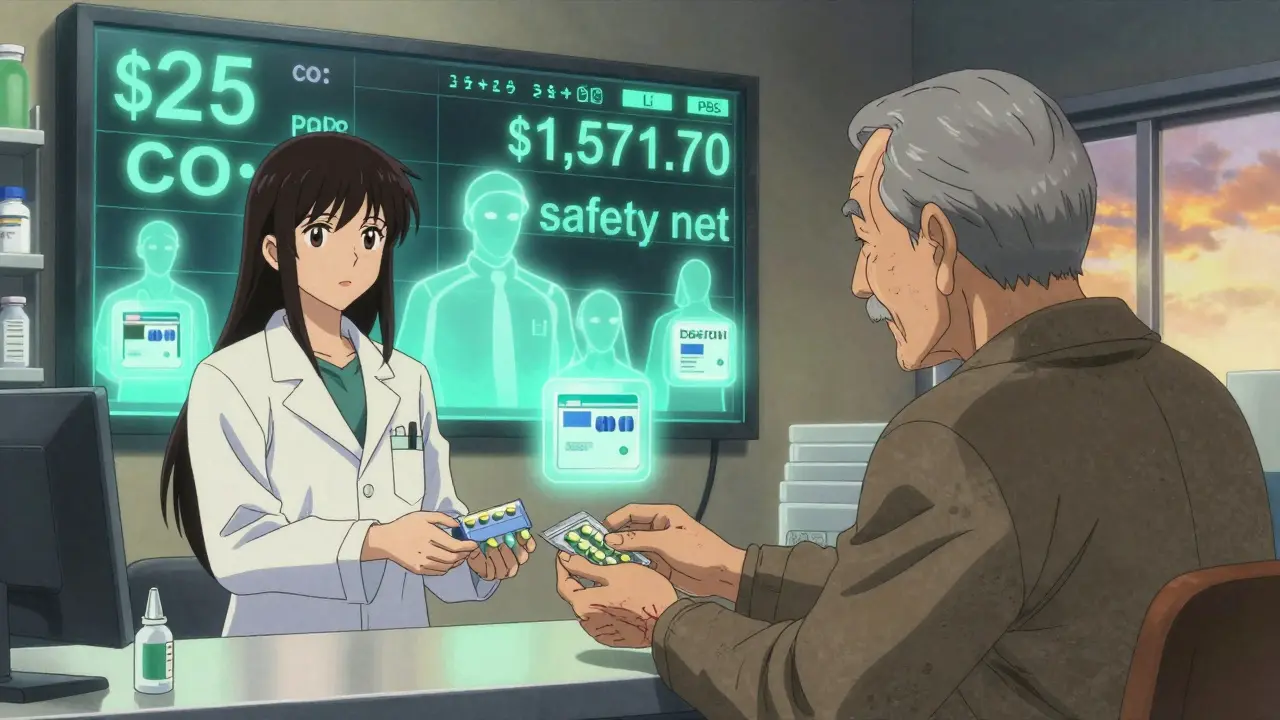
The PBS doesn’t give you free medicine. It cuts your bill dramatically. As of 2025, if you’re a general patient, you pay $31.60 for each prescription - and the government covers the rest. For concession card holders, it’s only $7.70. That’s a huge difference, especially if you’re on five or more medications a month. Multiply that by 12 months, and you’re looking at $379.20 for a general patient versus $92.40 for someone with a concession card.
But there’s more. Once you hit the PBS safety net threshold - $1,571.70 in 2025 - your co-payment drops to $7.70 for everyone, regardless of status. That’s a lifeline for people with multiple chronic conditions. One woman in Adelaide told her pharmacist she’d been skipping her diabetes meds until she hit the safety net. After that, she said, “I didn’t have to choose between insulin and groceries anymore.”
Starting January 1, 2026, the general patient co-payment drops again - to $25. That change alone is expected to save Australians nearly $800 million over four years. It’s not just about affordability; it’s about keeping people on their meds.
Why Generics Dominate the PBS Market
When a drug’s patent expires, the PBS doesn’t just allow generics - it pushes them hard. That’s because of the reference pricing system introduced in 2007. Here’s how it works: if five different brands of the same medicine are on the PBS, the government sets the subsidy based on the cheapest one. So if a generic version costs $5 and the brand-name version costs $20, the government only pays $5. The patient pays the difference - which means pharmacies and doctors have every reason to switch you to the generic.
The result? Eighty-four percent of all prescriptions for off-patent medicines in Australia are for generics - higher than the OECD average of 78%. In some areas, like statins for cholesterol, generics make up 95% of the market within 18 months of a patent expiring. But in trickier areas like biologics - drugs made from living cells - generic uptake is only 63%. Why? Because substitution isn’t automatic. Doctors need to explicitly prescribe them, and pharmacists can’t swap them without approval.
The top five generic manufacturers - Symbion, Sigma, Mylan, Aspen, and Hospira - control nearly 70% of the market. Their business model is simple: get their product listed on the PBS, undercut the originator by 60% or more, and ride the wave of mandatory substitution. Once multiple generics enter the market, prices often drop another 60% within a year. In cardiovascular drugs, prices have fallen by 74% on average since 2020.
The PBAC and the Cost-Effectiveness Gatekeepers
Not every drug makes it onto the PBS. The Pharmaceutical Benefits Advisory Committee (PBAC) is the gatekeeper. They review every new medicine based on three things: does it work? Is it better than what’s already available? And is it worth the cost?
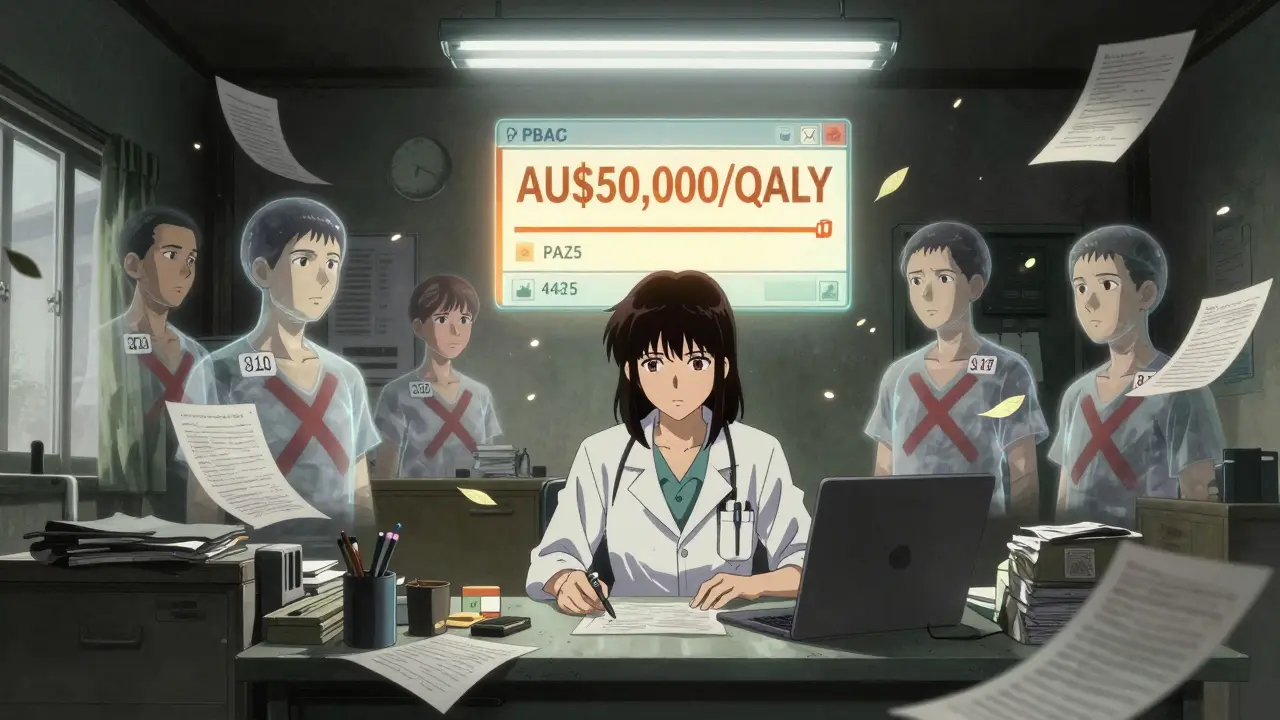
Their main tool is the cost-per-QALY - quality-adjusted life year. Think of it as: how much does it cost to give someone one more year of healthy life? The unofficial threshold is around AU$50,000. If a drug costs $120,000 per QALY, it’s unlikely to be listed - unless it’s for a rare disease.
That’s where the Highly Specialised Drugs Program (HSDP) comes in. It’s a special track for ultra-rare conditions, like certain genetic disorders or rare cancers. Even if a drug costs $150,000 per QALY, the PBAC may approve it if it meets eight strict criteria - including impact on life expectancy and lack of alternatives. In 2025, two new drugs for rare liver diseases were added under HSDP, giving hope to fewer than 500 Australians total. But for most common conditions, the bar is steep.
Delays and the “PBS Black Hole”
Here’s one of the biggest frustrations: a drug can be approved for sale in Australia by the Therapeutic Goods Administration (TGA) - meaning it’s safe and effective - but still sit on a shelf for over a year before it’s listed on the PBS. The average delay? 14.2 months. That’s called the “PBS black hole.”
During that time, patients pay full price. For a new cancer drug, that could mean $1,850 out of pocket per month. One man in Melbourne spent $22,000 over 15 months on a drug his doctor prescribed, only to find out it was finally listed on the PBS - and he could have paid $7.70 instead.
Compare that to Germany, where new drugs hit the market in 320 days on average. Australia’s 587-day median wait time is among the longest in the developed world. The PBAC says it needs time to assess value. Critics say it’s bureaucratic inertia - and it’s costing patients money and lives.
Who’s Left Behind?
The PBS works well for most people - but not all. According to the 2024 National Health Survey, 12.3% of general patients - that’s over 1.8 million Australians - admitted they skipped doses or didn’t fill prescriptions because of cost. For concession card holders, it’s 4.7%. That gap tells you everything.
Many retirees on fixed incomes don’t qualify for concessions. They’re not rich, but they’re not poor enough to get help. One Reddit user, ‘MedicareWarrior,’ posted: “I take five meds. $31.60 each. $158 a month. I’m choosing between my heart pills and heating my house.”
And then there’s the administrative burden. Forty-three percent of GPs say authority-required prescriptions - those needing prior approval - are a nightmare. They spend hours filling out forms, waiting for calls, and dealing with rejections. Pharmacists handle an average of 17 PBS-related transactions a day. Two-thirds say authority scripts slow them down and cause delays for other patients.
The Future: Cheaper Medicines, More Tech, More Pressure
The PBS is under pressure. Drug costs are rising. Australia’s population is aging. Biologics and gene therapies are becoming more common - and more expensive. The PBS spent $13.5 billion in 2022-23. By 2029-30, that’s projected to hit $18.7 billion.
But there are changes coming. The 2025-26 budget allocated $1.2 billion for 15 new PBS listings, including drugs for prostate cancer and endometriosis. The HSDP is being reformed to make it easier for rare disease drugs to get listed. And the government is rolling out AI tools to spot inappropriate prescribing - $1.2 billion in PBS spending was flagged in 2024 as potentially unnecessary.
Digitization is key. The PBS App, downloaded 1.2 million times, lets users check co-payments, track their safety net progress, and see if a new drug is listed. Real-time prescription monitoring is being tested. These aren’t just convenience features - they’re tools to stop waste and improve access.
What This Means for You
If you’re on PBS-subsidized meds, you’re getting one of the best drug deals in the world. But you need to know how to use it. Check your safety net status. Ask your pharmacist if a cheaper generic is available. If you’re on multiple drugs, calculate your annual co-payments - you might be closer to the safety net than you think.
If you’re a patient struggling to afford meds, don’t assume you’re on your own. Check if you qualify for a concession card. Talk to your doctor - they can sometimes apply for authority exemptions. And if you’re a prescriber, use the PBS online tools. They exist to save you time - and your patients money.
The PBS isn’t perfect. But it’s one of the few systems in the world that actually makes essential medicines affordable at scale. It’s not just policy - it’s survival for millions.
What is the PBS safety net and how does it work?
The PBS safety net is a limit on how much you pay out of pocket for PBS-subsidized medicines in a calendar year. Once you hit that limit - $1,571.70 in 2025 - your co-payment drops to $7.70 for every prescription for the rest of the year, no matter if you’re a general or concession patient. This helps people with chronic conditions who need multiple medications. Your pharmacy automatically tracks this for you.
Why are generic medicines cheaper on the PBS than in the U.S.?
Australia uses government price negotiation and reference pricing. The PBS negotiates bulk prices with drug companies and sets subsidies based on the cheapest medicine in a therapeutic group. In the U.S., drug prices are set by market forces with little government intervention. As a result, generic medicines in Australia cost 30-40% less than in the U.S., according to OECD data.
Can I get a 60-day prescription to save money?
Yes - if you’re a concession card holder, you can get a 60-day supply of most PBS medicines for the cost of one co-payment ($7.70). That’s a 50% saving compared to two 30-day scripts. General patients can also ask for 60-day scripts, but they’ll pay two co-payments. Not all medicines are eligible - your doctor or pharmacist can confirm.
Why do some medicines take so long to be listed on the PBS?
After a drug is approved by the Therapeutic Goods Administration (TGA), it must go through the PBS listing process, which includes cost-effectiveness reviews by the PBAC. The average delay is 14.2 months. This is because the government needs to assess whether the drug provides enough health benefit for its price. The result is that patients often pay full price for months - or even years - after the drug becomes available.
What’s the difference between a general patient and a concession card holder on the PBS?
General patients pay $31.60 per script (as of 2025), while concession card holders pay $7.70. Concession card holders also get 60-day scripts for the cost of one co-payment and reach the safety net faster. Concession cards are given to people on government payments, veterans, and low-income earners. If you think you qualify, check with Services Australia.


Caroline Dennis
March 24, 2026 AT 09:55The PBS reference pricing model is a masterclass in market-driven efficiency. By anchoring subsidies to the lowest-cost therapeutic equivalent, it creates a natural competitive pressure that cascades through the supply chain. Generic manufacturers don't just compete on price-they compete on scale, distribution, and regulatory agility. The result? A 74% price drop in cardiovascular generics since 2020 isn't luck-it's systemic design. This is how public policy should work: incentivize innovation while enforcing price discipline.
Zola Parker
March 24, 2026 AT 16:12Wow. So Australia just forces everyone to take generics? 😏 I mean, what if I *like* my brand-name statin? Who says I can't pay more for peace of mind? 🤷♀️
florence matthews
March 25, 2026 AT 23:25As someone from the U.S., I’m kinda in awe. Here, people choose between insulin and rent-and no one bats an eye. Australia’s system isn’t perfect, but it’s *human*. The safety net? Genius. That Adelaide woman’s story? That’s policy with a pulse. We need to stop treating healthcare like a marketplace and start treating it like a social contract. 🌍❤️
Raphael Schwartz
March 26, 2026 AT 09:45winnipeg whitegloves
March 27, 2026 AT 14:24Man, I’ve seen this play out in Canada too-the PBAC’s cost-per-QALY threshold feels like a cold calculus, but damn if it doesn’t keep us from going bankrupt. Still, I wish they’d loosen the reins on biologics. I’ve got a cousin on a rare autoimmune drug that took 22 months to get listed. By then, she’d maxed out her RRSPs. We need faster pathways, not just more committees.
Marissa Staples
March 28, 2026 AT 08:34It’s wild how much of this is invisible until you’re the one paying. I didn’t realize my dad was just barely under the safety net until he had a stroke last year. Suddenly, five prescriptions a day turned into $150/month. We didn’t know about the 60-day script trick. If the system is this opaque to people who are technically covered… what hope do the uninsured have?
Stephen Alabi
March 28, 2026 AT 20:34There is a critical flaw in the current PBS model: the assumption that all generics are bioequivalent. In reality, bioavailability varies between manufacturers-especially with extended-release formulations. A 2023 study in the Australian Journal of Clinical Pharmacology showed that 18% of patients switching to a new generic experienced clinically significant plasma concentration shifts. The PBAC should mandate post-market surveillance-not just price comparisons.
Agbogla Bischof
March 29, 2026 AT 19:27As a Nigerian pharmacist, I’ve seen what happens when you don’t have a PBS. Medicines are either unaffordable or counterfeit. Australia’s system-flawed as it is-is a beacon. The real issue isn’t the PBS; it’s the 14-month delay. That’s not policy-it’s negligence. TGA approves; PBAC stalls. Why? Budget cycles? Bureaucratic silos? Someone needs to cut the red tape. Lives are being lost to paperwork.
Pat Fur
March 30, 2026 AT 17:36I love that the PBS app tracks your safety net. I didn’t even know I was three scripts away from hitting it until it pinged me. Small things like that? They make the system feel alive. Also-ask your pharmacist if you can switch to a cheaper generic. They know. They just don’t always push it. You have to ask. It’s not just about money-it’s about dignity.
Caroline Bonner
March 31, 2026 AT 12:56Okay, I’ve been thinking about this for days, and I need to say this: the PBS isn’t just a subsidy-it’s a cultural artifact. It reflects a society that believes, deep down, that no one should have to choose between their health and their housing. That’s radical. In a world where healthcare is commodified, Australia’s system is a quiet revolution. The delays? The bureaucracy? The HSDP’s narrow criteria? They’re flaws, yes-but they’re flaws in a system that *tries*. And that’s more than most countries can say. I wish more people saw it that way. Not as a government handout, but as a promise kept. One prescription at a time.