Imagine eating a small breakfast and still feeling stuffed for dinner. For people with Gastroparesis is a chronic condition where the stomach muscles stop working properly, causing food to stay in the stomach way too long without a physical blockage. It's a frustrating cycle of nausea and fullness that can make eating feel like a chore rather than a pleasure. While there isn't a magic cure yet, the way you eat and what you put on your plate can drastically change how you feel every day.
What Exactly is Happening in Your Stomach?
Normally, your stomach acts like a smart mixer. It relaxes to hold your meal and then churns everything into a liquid slurry before pushing it into the small intestine. In a stomach with gastroparesis, this process breaks down. The muscles don't contract correctly, or the nerves controlling them-specifically the Vagus Nerve, which acts as the main communication line between your brain and gut-are damaged.
When this happens, you experience Delayed Gastric Emptying. This means food sits there, fermenting and causing pressure, which leads to the hallmark symptoms. About 90% of people deal with constant nausea, and 85% experience early satiety-that feeling of being full after just a few bites. It's not just in your head; your stomach physically isn't making room for more food.
Common Triggers and Causes
Why does this happen? It's rarely just one thing. About 35% of cases are linked to Diabetes. High blood sugar over many years can damage the nerves and muscles of the stomach. In fact, up to 50% of people with type 1 diabetes might develop this condition. Another 13% of cases happen after surgery, while about 30% are idiopathic, which is a fancy way of saying doctors aren't quite sure why it started.
It's also common to confuse gastroparesis with other gut issues. For instance, functional dyspepsia feels similar but usually involves more pain and less vomiting. It's also important to rule out a physical blockage, like a tumor or stricture, because the treatment for a blockage is very different from managing a motility issue.
The Gold Standard: Gastroparesis Diet Strategies
Since your stomach can't grind down food effectively, you have to do the work for it. The goal of a Gastroparesis diet is to reduce the workload on your stomach muscles and prevent dangerous clumps of undigested food, known as bezoars, from forming.
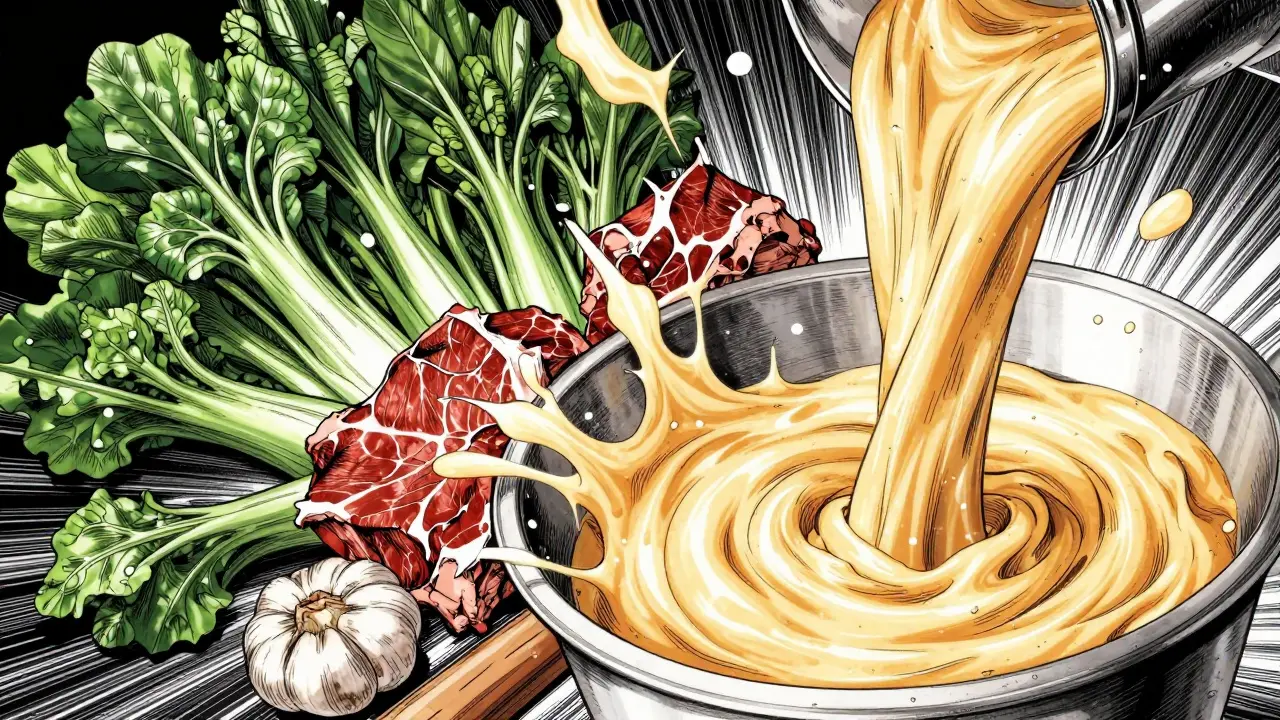
The first rule is texture. If your stomach can't blend it, a blender can. Moving toward a liquid or pureed diet often provides the fastest relief. If you can tolerate solids, stick to soft, well-cooked foods. Raw vegetables and tough meats are a nightmare for a slow stomach because they take forever to break down.
| Category | Avoid / Limit | Choose Instead | Why? |
|---|---|---|---|
| Fats | Fried foods, heavy creams | Low-fat proteins, lean fish | Fats slow stomach emptying by 30-50% |
| Fiber | Raw kale, nuts, seeds, skins | Pureed soups, peeled cooked carrots | Fiber is hard to digest and can cause bezoars |
| Drinks | Carbonated sodas, large glasses of water | Small sips of water between meals | Carbonation increases gastric distension |
| Portions | Three large meals | 5-6 small meals (1-1.5 cups each) | Prevents the stomach from becoming overwhelmed |
Practical Eating Habits for Daily Relief
It's not just what you eat, but how you eat. If you drink a giant glass of water during a meal, you're adding bulk to a stomach that's already struggling to empty. A pro tip is to separate your liquids and solids by about 30 minutes. This keeps the total volume in your stomach lower and reduces that "overstuffed" feeling.
Chewing is also your best friend. You want to chew every bite until it's practically a paste. Reducing the particle size of your food to less than 2mm before it even hits your stomach can significantly reduce nausea. Many people find success by keeping a detailed food and symptom diary for a few weeks to figure out exactly which foods trigger them, as everyone's tolerances are slightly different.
When Diet Isn't Enough: Medical Options
For some, changing their diet is enough. But for those with moderate to severe cases, doctors might suggest Prokinetic Agents. These are medications like metoclopramide that act as a nudge to the stomach muscles to get them moving. However, these can have serious side effects, like tardive dyskinesia, so they aren't always a long-term solution.
In more severe cases, there are procedural options. Gastric Electrical Stimulation (GES), which is essentially a pacemaker for the stomach, has helped about 70% of patients reduce their vomiting. There's also a newer procedure called per-oral pyloromyotomy (POP), where a surgeon opens the valve at the bottom of the stomach to let food pass through more easily.

Dealing with the Emotional Toll
Living with a condition that makes eating scary is exhausting. Many people develop a feeding aversion-a psychological fear of eating because they associate it with pain or vomiting. It's very common to feel socially isolated when you can't join in on a dinner party or a trip to a restaurant. If you're feeling this way, speaking with a therapist who understands chronic illness can be just as important as seeing a gastroenterologist.
Looking Ahead: The Future of Treatment
The science is moving forward. Researchers are looking into ghrelin agonists, like relamorelin, which mimic the "hunger hormone" to stimulate stomach contractions. There are even trials using AI to analyze gastric emptying more accurately than the old scintigraphy scans. We're moving toward a world of precision medicine where your treatment will be based on your specific symptom subtype rather than a one-size-fits-all approach.
Can I ever eat raw vegetables again?
Generally, raw vegetables are too fibrous and hard for a gastroparesis-affected stomach to process, which can lead to blockages. However, as your symptoms improve, you can try very small amounts of peeled, steamed, or pureed vegetables. Always introduce new foods slowly and monitor your reaction.
Why does fat make gastroparesis worse?
Fat slows down the speed at which the stomach empties its contents into the small intestine. In a healthy stomach, this is normal, but in gastroparesis, it adds to an already slow process, making you feel full for much longer and increasing nausea.
Is gastroparesis permanent?
It is typically considered a chronic condition, meaning there is no known cure that completely reverses the nerve or muscle damage. However, it is manageable. Many people achieve significant symptom control through a combination of dietary changes, medication, and lifestyle adjustments.
What is a bezoar and how do I prevent one?
A bezoar is a mass of undigested food (often fiber) that gets trapped in the stomach. You can prevent them by avoiding high-fiber foods like raw skins, seeds, and tough stalks, and by choosing blended or well-cooked alternatives.
How many meals should I eat per day?
Instead of three large meals, aim for 5 to 6 small meals throughout the day. Keep each portion to about 1 to 1.5 cups. This prevents the stomach from becoming overly distended and reduces the likelihood of vomiting.
Next Steps for Managing Your Journey
If you've just been diagnosed, the first thing to do is start a food diary. Track every bite and how you feel two hours later. This data is gold for your doctor and dietitian. Next, try the "blenderized" approach for a few days-smoothies, pureed soups, and yogurt-to give your stomach a break.
If you find that dietary changes aren't moving the needle, ask your specialist about prokinetic options or if you're a candidate for GES. Don't try to tackle this alone; working with a registered dietitian who specializes in motility disorders can improve your outcomes by as much as 40% compared to trying to figure it out via the internet.