How Grapefruit Messes With Your Metabolism
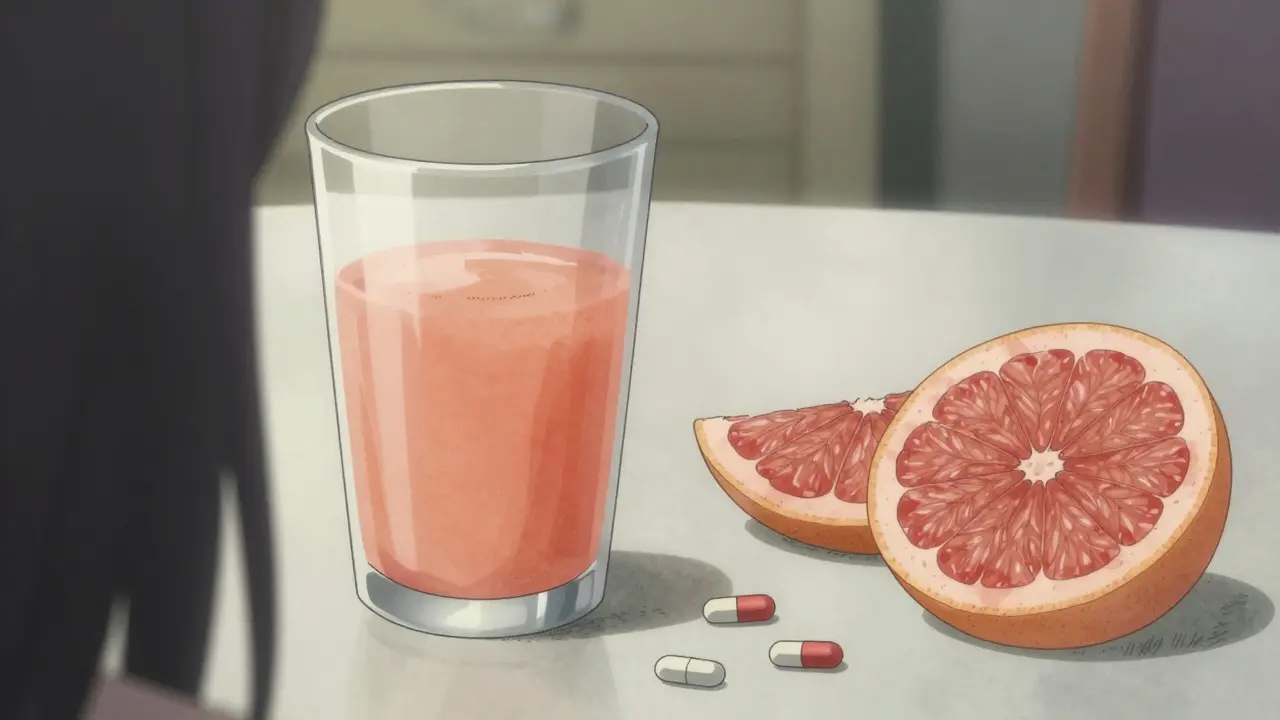
To understand why this happens, we have to look at the "gatekeepers" in your gut. Your body uses specific enzymes to break down drugs before they hit your bloodstream. The most important one here is CYP3A4 is a cytochrome P450 enzyme found in the intestinal lining and liver that metabolizes a huge chunk of our prescription drugs . Grapefruit contains natural chemicals called furanocoumarins (specifically ones called bergamottin). These chemicals are like a lock that snaps shut on the CYP3A4 enzyme. Once the furanocoumarins bind to the enzyme, they disable it. Here is the problem: when the enzyme is disabled, the drug doesn't get broken down in the gut. Instead, it all goes straight into your blood. For some people, a single 250mL glass of juice can increase the amount of medication in their system by 300% to 800%. It's as if you took three or eight times your prescribed dose, even though you only took one pill.Which Medications Are Most at Risk?
Not every drug is affected. The "danger zone" is mostly reserved for medications that rely heavily on the CYP3A4 enzyme for their first pass through the body.| Medication Type | High Risk (Avoid Grapefruit) | Low/No Risk | What Happens? |
|---|---|---|---|
| Statins (Cholesterol) | Simvastatin, Lovastatin | Pravastatin, Rosuvastatin | Increased risk of muscle damage (rhabdomyolysis) |
| Calcium Channel Blockers | Felodipine, Nifedipine | Amlodipine | Dangerous drop in blood pressure/dizziness |
| Benzodiazepines | Midazolam, Triazolam | Varies by drug | Extreme drowsiness or prolonged sedation |
| Antiarrhythmics | Amiodarone | - | Increased heart rate irregularities |
The "Recovery Period": Why You Can't Just Space Them Out
One of the biggest misconceptions is that you can just drink your juice in the morning and take your pill at night. Unfortunately, it doesn't work that way. Because furanocoumarins destroy the CYP3A4 enzymes irreversibly, your body has to actually build new enzymes from scratch before things return to normal. This process takes time. Biopsy studies have shown that it can take up to 72 hours for your intestinal enzyme activity to get back to baseline after you've had grapefruit. If you're taking a high-risk medication, a "buffer window" of a few hours isn't enough. You essentially need a three-day clear window. If the drug is affected by OATP transporters (like certain allergy meds), a 4-hour gap might work, but for the majority of these interactions, total avoidance is the only safe bet.
Are Other Citrus Fruits Dangerous?
If you're craving something citrusy but can't have grapefruit, you might wonder about other fruits. The good news is that regular oranges and tangerines are safe. They don't contain the specific furanocoumarins that disable your enzymes. However, you should be careful with Seville oranges (often used in bitter marmalades) and pomelos. These contain similar chemical compounds to grapefruit and can cause the same dangerous spikes in medication levels. If the fruit tastes bitter and "grapefruit-like," it's probably a bad idea to mix it with your meds.Who is Most at Risk?
While anyone can have a reaction, elderly patients are in the highest danger zone. Many people over 65 are on "polypharmacy"-meaning they take five or more different medications at once. When you combine multiple drugs with a grapefruit-inhibited gut, the risk of a catastrophic interaction increases significantly. Interestingly, not everyone reacts the same way. Some people have a very high natural level of CYP3A4 enzymes, while others have very few. This means two people could drink the same glass of juice, and one might see a massive spike in drug levels while the other sees almost no change. This genetic lottery makes it impossible to say "just a little bit of juice is okay."
Practical Tips for Staying Safe
If you've been told to avoid grapefruit, here are a few rules of thumb to keep you safe:- Read every label: Look for warnings about grapefruit not just on the main bottle, but in the detailed medication guide provided by the pharmacy.
- Check your marmalade: If it's made with Seville oranges, treat it like grapefruit juice.
- Don't rely on "natural" being safe: Just because it's a fruit doesn't mean it's harmless. In this case, the "natural" chemistry is what's causing the problem.
- Ask for alternatives: If you love grapefruit but your medication is high-risk, ask your doctor if there is a similar drug that doesn't use the CYP3A4 pathway (like switching from Simvastatin to Rosuvastatin).
Can I eat grapefruit if I only have a small amount?
No. As little as 200mL (about one small glass) of juice is enough to cause a clinically significant interaction. Because the effect varies by person, even a small amount could potentially push your medication levels into a toxic range.
Does frozen grapefruit concentrate also cause interactions?
Yes. Whether the grapefruit is fresh, frozen, or squeezed into juice, the furanocoumarins remain active and will inhibit the CYP3A4 enzymes in your gut.
How long does the effect last after I stop drinking grapefruit juice?
It can take up to 72 hours (3 days) for your body to synthesize new enzymes and return to normal metabolism levels. You cannot simply wait a few hours after drinking juice to take your medication.
Are there any drugs where grapefruit juice actually helps?
In very rare cases, some drugs like theophylline can actually show decreased plasma concentrations, and some new research suggests certain monoclonal antibodies might have better absorption. However, these are medical exceptions and not a reason to use grapefruit juice as a supplement.
Why are pink grapefruits different from white ones?
White grapefruits generally contain 20-50% higher concentrations of furanocoumarins than pink varieties. While white ones are "stronger," both types are dangerous enough to cause significant drug interactions.