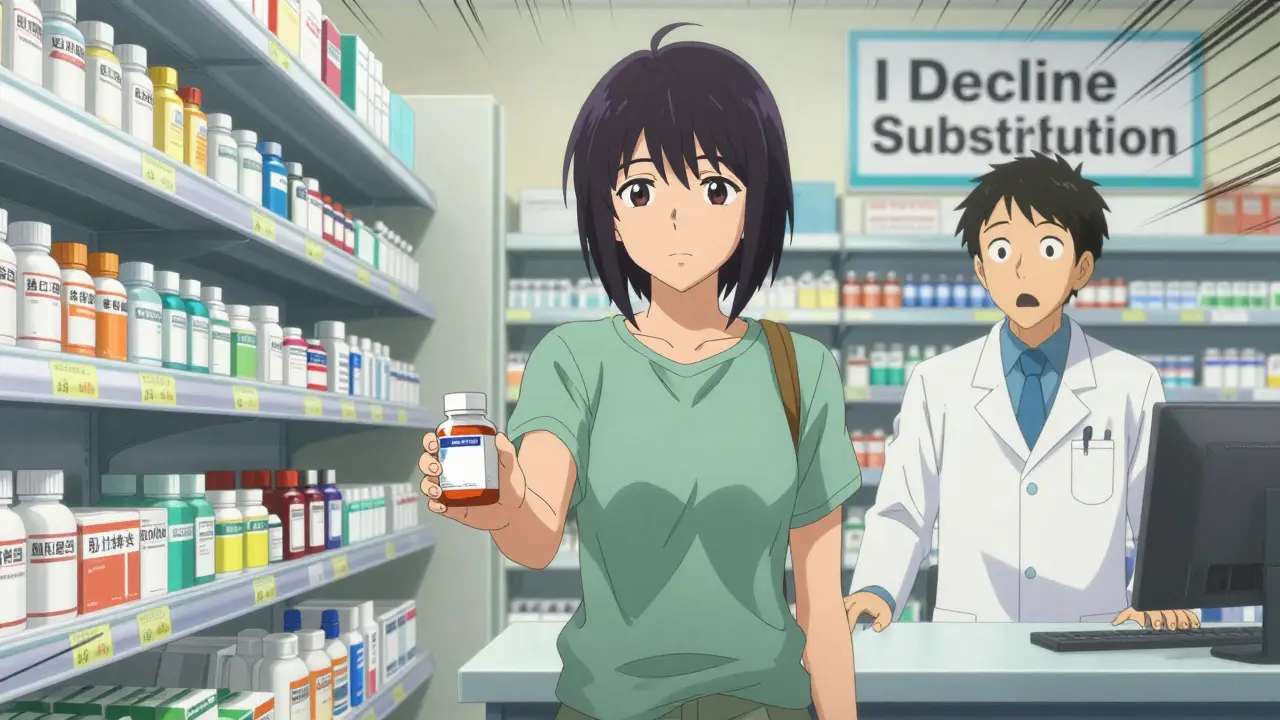
Every time you pick up a prescription, there’s a good chance the pharmacist hands you a generic version instead of the brand-name drug your doctor wrote on the slip. That’s legal - and usually cheaper. But what if you don’t want it? What if you’ve tried generics before and they didn’t work? Or your doctor specifically told you to stay on the brand? You have rights. And knowing them can save you from side effects, confusion, or even dangerous health setbacks.
You Don’t Have to Accept a Generic - Even If the Pharmacist Says You Must
Pharmacists aren’t trying to trick you. They’re following state rules, and in most places, they’re encouraged - even required - to swap brand-name drugs for generics. The goal? Save money. Generic drugs cost 80-85% less than brand-name versions. That’s why insurance companies and pharmacy benefit managers push them hard. But here’s the truth: you have the final say. In 19 states, pharmacists must substitute generics automatically unless the doctor says "do not substitute." But in 7 states - Alaska, Connecticut, Hawaii, Maine, Massachusetts, New Hampshire, and Vermont - plus Washington, D.C., they can’t switch your medication without your clear, verbal or written permission. Even in states where substitution is automatic, you can still refuse. All you need to say is: "I decline substitution." That’s it. Legally, that’s enough in 43 states. Don’t let a pharmacist pressure you. If they say, "I have to give you the generic," they’re wrong. If they say, "It’ll cost more if you don’t," ask them to check the cash price. Thanks to the 2018 Know the Lowest Price Act, pharmacists can now tell you if paying out-of-pocket for the brand is cheaper than using your insurance for the generic. Many people don’t know this - and end up paying more than they need to.When Brand-Name Drugs Are Medically Necessary
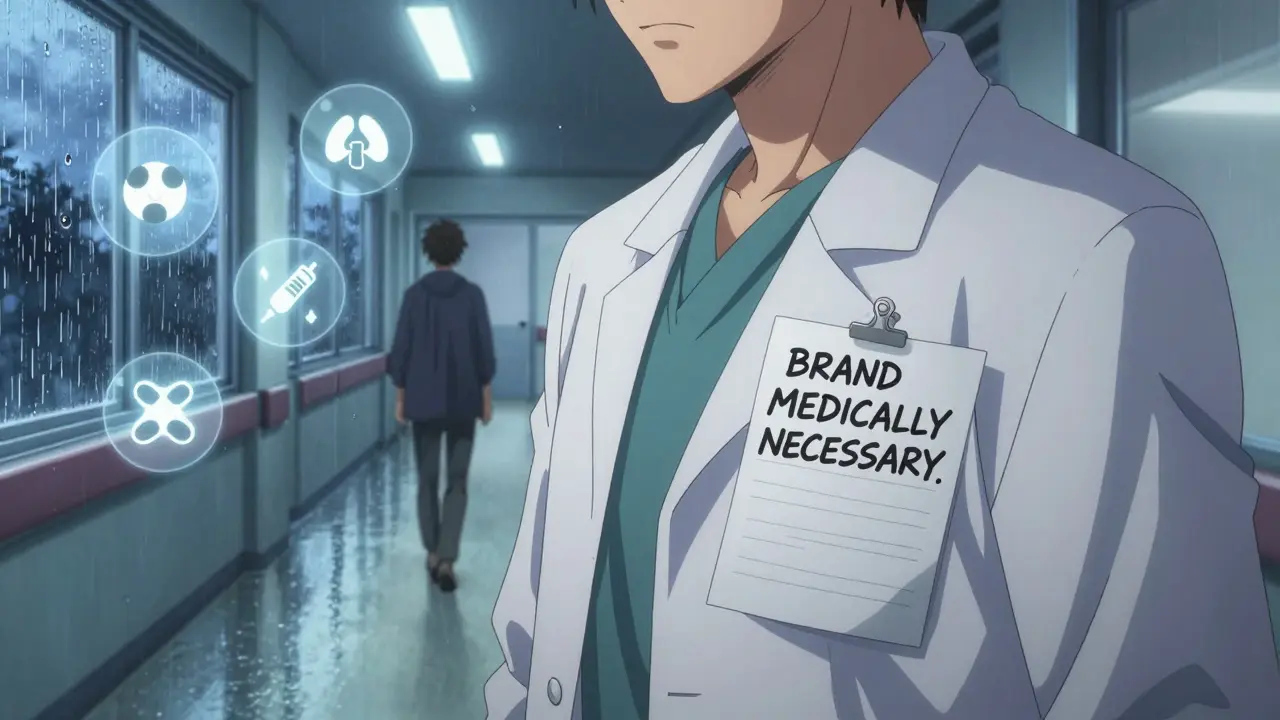
Not all drugs are created equal when it comes to substitution. Some have what’s called a narrow therapeutic index (NTI). That means the difference between a dose that works and a dose that harms you is tiny. Think thyroid meds like Synthroid, epilepsy drugs like phenytoin, or blood thinners like warfarin. Even small changes in how the drug is absorbed can throw your whole system off. Kentucky, Hawaii, and a few other states have official lists of NTI drugs that can’t be swapped without special permission. In Hawaii, pharmacists can’t switch your antiepileptic drug unless both your doctor and you give consent. In other states, the law doesn’t say it outright - but your doctor can. If your doctor writes "dispense as written" or "brand medically necessary" on your prescription, that’s a legal barrier to substitution in 48 states. Patients with chronic conditions often report problems after automatic switches. One user on Diabetes Daily described how switching from Lantus to Basaglar - a biosimilar insulin - made their blood sugar erratic. It took two weeks to figure out what changed. Another Michigan patient had a seizure after their pharmacy substituted an antiepileptic drug without telling them. They sued. And won. If you’ve had bad reactions to generics before - even if it was just a headache or nausea - tell your doctor. Get them to write "brand medically necessary" on your script. Keep a copy. Bring it to the pharmacy. If they push back, ask to speak to the manager. Cite your doctor’s note. Most will back down.What the Law Actually Says - State by State
State laws on generic substitution are a patchwork. There’s no national rule. That’s why it’s so confusing. Here’s what you need to know:- Automatic substitution allowed (19 states): California, Texas, Florida, New York, Illinois, Pennsylvania, Ohio, Georgia, North Carolina, Michigan, New Jersey, Virginia, Washington, Indiana, Tennessee, Missouri, Maryland, Arizona, Colorado. Pharmacists can swap unless the doctor says no.
- Consent required (7 states + DC): Alaska, Connecticut, Hawaii, Maine, Massachusetts, New Hampshire, Vermont. You must say yes before they switch.
- Notification required (31 states + DC): The pharmacist must tell you they’re switching - by phone, text, or in person. You can still refuse.
- Biologics get extra protection: Insulin, rheumatoid arthritis drugs, and other biologics are not the same as regular generics. They’re biosimilars - similar, but not identical. 47 states now require pharmacists to notify your doctor if they switch you to a biosimilar. Only 38 require them to tell you too.
How to Say No - And Make It Stick
Saying "I decline substitution" is simple. But making it stick takes a little strategy.- At the counter: Say it clearly. Don’t say, "Can I get the brand?" Say, "I decline substitution." That’s the legal phrase. It triggers your right.
- Get it in writing: If you’re on a long-term medication, ask your doctor to write "brand medically necessary" on every script. Keep a printed copy in your wallet.
- Call ahead: If you know your pharmacy tends to swap, call before you go. Say, "I need the brand-name version of [drug]. My doctor wrote it as medically necessary. Can you confirm you can fill it?"
- Ask for the manager: If the pharmacist argues, politely ask to speak to the manager. They’re trained on state laws and will usually resolve it.
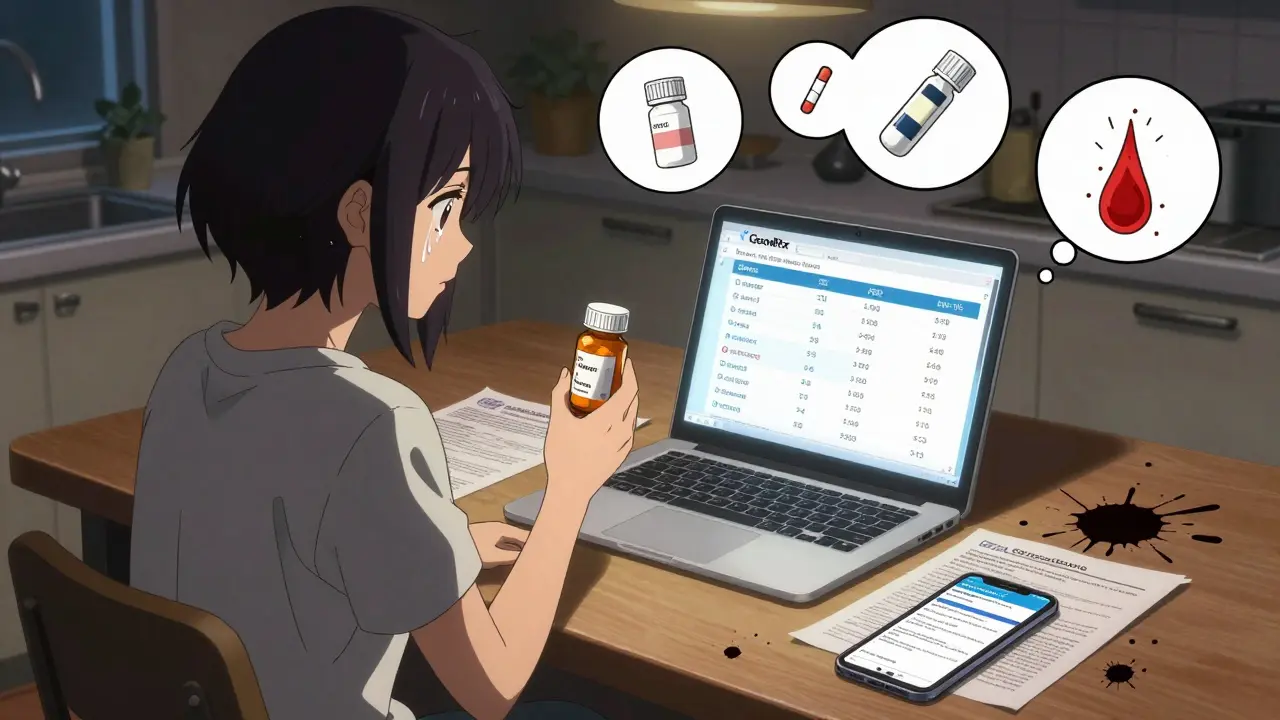
- Know your cash price: Use GoodRx or SingleCare to check the cash price of the brand. Sometimes it’s cheaper than your insurance co-pay for the generic.
What to Do If You’re Forced to Switch
Sometimes, you won’t know a switch happened until you feel off. That’s when you need to act fast.- Check the pill bottle. Look for the manufacturer name. If it’s different from your last fill, you were switched.
- Check the label. It should say "generic equivalent" or list the generic name.
- Call your doctor immediately if you feel different - worse side effects, new symptoms, or changes in how you feel.
- File a complaint with your state pharmacy board. All 50 states have one. You can do it online. They investigate and can fine pharmacies that break the law.
- Report the incident to the FDA’s MedWatch system. This helps track problems with substitution nationwide.
What’s Changing in 2026
The rules are evolving. In 2023, Colorado and Nevada passed new laws requiring pharmacists to notify patients before switching biologics. More states are likely to follow. The FDA is also reviewing how it rates complex generics - especially for drugs like inhalers and injectables - and may soon create a new category that limits substitution. Meanwhile, drug shortages are making substitution harder. In 2023, 287 medications were in short supply. Sometimes, pharmacies can’t get the brand even if you ask. But that’s different from substitution - it’s scarcity. You still have the right to ask for the brand if it’s available.Bottom Line: Know Your Rights, Speak Up
Generic drugs are great - when they work. But they’re not magic. They’re copies. And copies can vary. Your body knows the difference. If you’ve been stable on a brand-name drug, don’t let a pharmacy change it without your permission. You’re not being difficult. You’re being smart. Keep your doctor’s note. Know your state’s law. Say "I decline substitution" - and mean it. If you’re ignored, escalate. File a complaint. Your health isn’t a cost-saving line item. It’s yours.Can a pharmacist refuse to give me my brand-name drug if I ask for it?
No, not if you’re in a state that requires patient consent or if your doctor has marked the prescription as "brand medically necessary." Even in states where substitution is automatic, you have the legal right to refuse. If a pharmacist refuses your request, ask to speak to the manager or file a complaint with your state pharmacy board.
Is it true that generics are always cheaper than brand-name drugs?
Not always. Thanks to insurance co-pays and pharmacy benefit manager contracts, the generic version can sometimes cost more than paying cash for the brand. Always ask the pharmacist for the cash price of both. Use apps like GoodRx to compare. In some cases, the brand is cheaper - especially for older drugs with little generic competition.
What’s the difference between a generic and a biosimilar?
Generics are exact chemical copies of small-molecule drugs like blood pressure or cholesterol meds. Biosimilars are similar - but not identical - copies of complex biologic drugs like insulin or rheumatoid arthritis treatments. They’re made from living cells, so even small changes in manufacturing can affect how they work. That’s why many states require extra notification and consent before switching to a biosimilar.
Can my doctor stop a pharmacy from substituting my medication?
Yes. Your doctor can write "dispense as written" or "brand medically necessary" on your prescription. In 48 states, this legally blocks substitution. Even in states with automatic substitution laws, this notation overrides them. Make sure your doctor understands the importance of this note - especially for NTI drugs like thyroid meds or epilepsy treatments.
What should I do if I think a substitution caused me harm?
Contact your doctor immediately. Document your symptoms and when they started. Get a copy of your prescription history from the pharmacy. File a report with the FDA’s MedWatch system and your state pharmacy board. If you suffered serious harm, consider speaking with a medical malpractice attorney. Many cases have been successfully settled when pharmacies substituted NTI drugs without consent.


Jennifer Phelps
January 12, 2026 AT 02:45I had no idea you could just say 'I decline substitution' and that's it. I've been taking levothyroxine for 12 years and my pharmacy swaps it every time. I felt awful last month and didn't know why until I checked the bottle. Now I say it loud and clear. My doctor even wrote 'brand medically necessary' on my script after I showed him what happened.
Sona Chandra
January 13, 2026 AT 13:26THIS IS WHY PEOPLE DIE IN THIS COUNTRY. Pharmacies treat your life like a spreadsheet. I had a seizure because they switched my epilepsy med without telling me. I had to sue just to get them to stop. And now they act like it's normal. If you don't fight back, they'll keep doing it. Your life is not a cost center.
Monica Puglia
January 14, 2026 AT 07:20Thank you for posting this. I'm a nurse and I see this all the time. Patients don't know their rights. I always tell them to say 'I decline substitution' and to ask for the cash price. So many times the brand is cheaper than the generic with insurance. Also, if you're on insulin or thyroid meds? Never let them swap without your say-so. 💪
Jessica Bnouzalim
January 15, 2026 AT 23:28YES YES YES! I've been screaming this from the rooftops for years. My mom switched from Synthroid to a generic and started having panic attacks, weight gain, hair loss-she thought it was menopause. Turned out it was the generic. She's back on brand now. And guess what? Her insurance didn't charge more because she asked for the cash price first. GoodRx saved her life. 🙌
Jose Mecanico
January 17, 2026 AT 14:35I'm a pharmacist and I want to say I agree with most of this. We're pressured to swap, but we're also trained to respect patient choice. If someone says 'I decline substitution,' we stop. Most of us want to do right by patients. The problem is the system. PBMs push us, insurance limits us, and then patients get mad when we 'force' them. It's not us. It's the middlemen.
Alice Elanora Shepherd
January 17, 2026 AT 17:15Just to clarify for those in the UK: we don't have this exact system, but we do have 'generic prescribing' and 'dispensing as written' requests. If a doctor writes 'DAW' or 'no substitution,' pharmacists must comply. It's not always easy to enforce, but it's legally binding. Always keep a copy of your prescription with the note. It helps.
Eileen Reilly
January 19, 2026 AT 04:45so like if you have a prescription for lantus and they give you basaglar and you dont notice until you start having crazy highs and lows and then you find out they switched it without telling you and you get mad and they say oh we thought it was the same thing and you just want to scream because your blood sugar is all over the place and now you have to go back to the doc and get a new script and you lost a week of your life because someone thought they were saving money
Christina Widodo
January 20, 2026 AT 03:20Has anyone tried refusing substitution for a biologic like Humira? I'm on it for RA and my pharmacy tried to switch me to a biosimilar last month. I said no and they said 'we can't get the brand right now.' I called my doctor and he called them back and they had to order it. Took 3 days. But I got it. Don't let them gaslight you.
gary ysturiz
January 21, 2026 AT 03:39If you're on a chronic med, get your doctor to write 'brand medically necessary' on every script. Keep a printed copy in your wallet. Bring it to the pharmacy. If they argue, ask for the manager. Most will back down. You're not being difficult. You're being smart. And you're protecting your health. That's worth the extra five minutes.
Cecelia Alta
January 22, 2026 AT 16:45Let's be real. This whole system is a joke. We're told generics are 'just as good' but then we're not allowed to know what's in them. Fillers, coatings, binders-these are different in every generic. One person's 'equivalent' is another person's nightmare. And don't even get me started on how the FDA rates these things. They test them on healthy people, not people with thyroid disease or epilepsy. The whole idea that a pill with the same active ingredient is 'the same' is pure corporate BS. You're not a lab rat. You're a human being. And your body knows the difference. If you feel off after a switch, it's not in your head. It's the pill.
Amanda Eichstaedt
January 23, 2026 AT 20:34I'm from a small town in Ohio and I never thought this would matter to me. But my dad's on warfarin. He's had three hospital trips in two years because of INR spikes. We finally figured out it was the generic. We got his doctor to write 'brand medically necessary.' Now he's stable. And here's the kicker: his cash price for the brand is $15 cheaper than the generic with insurance. That's the part no one tells you. They want you to think generics = cheaper. Sometimes it's the opposite. Always ask. Always check. Your life is worth the extra step.
Lawrence Jung
January 24, 2026 AT 11:42So what happens when you're poor and you can't afford the brand even with cash? Do you just die? Or do you take the generic and hope? This isn't about rights. It's about who gets to live and who gets to suffer because the system doesn't care. We talk about patient autonomy like it's a privilege. It's not. It's a survival tactic.
Bryan Wolfe
January 25, 2026 AT 10:04You're not alone. I used to work in a pharmacy and I saw patients cry because they were forced to switch. I started keeping a list of patients who refused substitution and made sure they got the brand. I even helped them call their doctors to get the note. It took time, but it worked. You have power. Use it. And if you feel guilty for asking? Don't. Your health is not negotiable.
Abner San Diego
January 25, 2026 AT 22:28America is so f***ed. We have the most expensive healthcare system in the world and we're still getting ripped off by pharmacies that swap pills like they're trading baseball cards. My cousin died because they switched her antiepileptic drug. She was 27. The pharmacy said 'it's the same thing.' The FDA says it's 'therapeutically equivalent.' But her brain didn't agree. And now her mom has to go to court to get them to stop. We're not a country. We're a corporate experiment.
gary ysturiz
January 26, 2026 AT 19:02One sentence: Say 'I decline substitution.' Then walk out if they argue. Come back tomorrow. They'll give in.