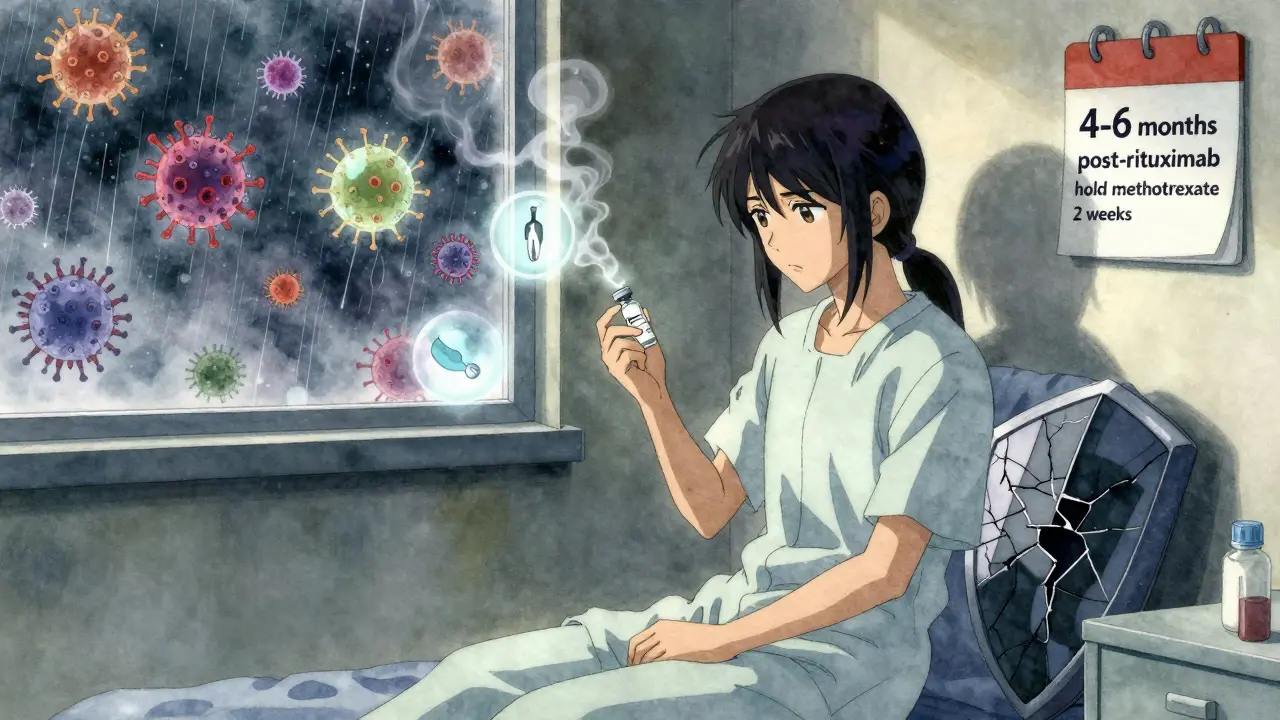
Getting vaccinated when you're on immunosuppressive therapy isn't as simple as showing up at the clinic. For people with autoimmune diseases, organ transplants, or cancer, vaccines can mean the difference between staying healthy and facing serious infection - but they don’t always work the way they do for others. The timing matters just as much as the shot itself. Get it too early, and your immune system might not respond. Too late, and you risk exposure during peak transmission. This isn’t theory - it’s daily reality for millions of patients and their doctors.
Why Vaccines Don’t Always Work in Immunosuppressed Patients
Immunosuppressive drugs don’t just calm down overactive immune attacks in autoimmune diseases - they also dull the body’s ability to respond to vaccines. Medications like rituximab, methotrexate, and high-dose prednisone interfere with the very cells that make antibodies. Studies show vaccine effectiveness can drop by 30% to 80% depending on the drug. For example, in patients with inflammatory bowel disease on immunosuppressants, the mRNA COVID-19 vaccine was only 80.4% effective, compared to 94.1% in the general population. That’s a massive gap.
It’s not just about antibodies. T-cells still play a role, and some research from the CDC in late 2023 suggests that even when antibody levels are low, T-cell memory might still offer protection. But we can’t measure that easily in clinics. So doctors rely on timing rules instead of real-time immune testing - and those rules vary widely between guidelines.
When to Vaccinate Before Starting Immunosuppression
If you’re about to start a drug like rituximab, methotrexate, or azathioprine, the best time to get vaccinated is before you take your first dose. All major guidelines - CDC, IDSA, ACR - agree on this. But how far ahead? The CDC says at least 14 days before starting treatment. That’s the minimum. Many experts recommend 4 to 6 weeks, especially for vaccines like hepatitis B or pneumococcal, which need time to build a strong response.
Think of it like preparing your body for battle. If you’re about to go into a war zone (your immune system being suppressed), you want your defenses fully trained and armed before the fight begins. For patients with rheumatoid arthritis or lupus, this means scheduling vaccines during a stable phase of disease, not during a flare.
Timing Vaccines Around B-Cell Depleting Drugs
Rituximab, ocrelizumab, and similar drugs wipe out B-cells - the immune cells that make antibodies. That’s great for stopping autoimmune attacks, but terrible for vaccine responses. If you get vaccinated while these drugs are still active, your body might not produce any protection at all.
Here’s where things get complicated:
- After last infusion: You need to wait 4 to 6 months before getting most vaccines. Some centers, like Memorial Sloan Kettering, suggest waiting 9 to 12 months for the best chance at a strong response.
- Before next infusion: If you’re on a regular schedule (every 6 months), aim to get vaccinated 2 to 4 weeks before your next dose. That’s when your B-cell count is likely to be at its highest.
- During high transmission: If COVID-19 or flu is surging in your area (over 100 cases per 100,000 people), the IDSA says: get the vaccine now, even if it’s not the ideal timing. Protection is better than none.
And here’s the catch: even if you wait 6 months, 60-70% of patients still have suboptimal antibody responses, according to a December 2023 study in Blood Advances. That’s why some experts now argue we need better tools - not just fixed waiting periods.

Medication-Specific Timing Rules
Not all immunosuppressants are the same. Each has its own rules:
- Methotrexate: Hold for two weeks after an influenza vaccine. You don’t need to stop it for other vaccines. This small pause can boost flu shot effectiveness by up to 40%.
- Prednisone: If you’re taking more than 20 mg daily, delay non-flu vaccines until your dose drops below that level. High-dose steroids suppress immune memory.
- Cyclophosphamide: Wait at least 2 weeks after your last dose. It’s a strong drug, and your immune system needs time to recover.
- Anti-TNF drugs (like adalimumab): These don’t require as long a delay. You can usually get vaccines during treatment, though timing with other drugs (like methotrexate) still matters.
Coordination is key. Many patients get their flu shot from their primary care doctor, but their rheumatologist or transplant team isn’t informed. That’s why adherence to timing guidelines is only about 53% in real-world clinics, according to a 2022 study in the American Journal of Transplantation.
Vaccines After Transplant
For kidney, liver, or heart transplant patients, the window for vaccination is narrow. You can’t get vaccines during active rejection or while on high-dose pulse steroids. The IDSA recommends waiting at least 3 months after transplant before giving non-live vaccines. The CDC says 1 month is acceptable - but that’s the bare minimum. Most transplant centers wait 3 to 6 months to be safe.
Live vaccines - like MMR or varicella - are generally avoided altogether after transplant. Even if you got them before, you may need to repeat them if you were on strong immunosuppression. Always check with your transplant team. They’ll know your specific risk level.
What About the COVID-19 Vaccine?
The COVID-19 vaccine is now part of routine care for immunosuppressed patients. The February 2024 IDSA guidelines say everyone aged 6 months and older should get at least one dose of the current season’s vaccine. But it’s not a one-and-done situation.
Most immunosuppressed patients need multiple doses - sometimes 3 or 4 - to build any meaningful protection. The CDC recommends additional doses based on prior vaccination history and immune status. Even if you got the original vaccine last year, you still need the updated version. Immunity fades faster in this group.
And here’s the twist: you can still get the vaccine even during B-cell depletion if the risk of infection is high. The IDSA says it’s better to vaccinate late than to wait too long and catch the virus. That’s a major shift from earlier advice.
What’s Missing: The Lack of Personalized Testing
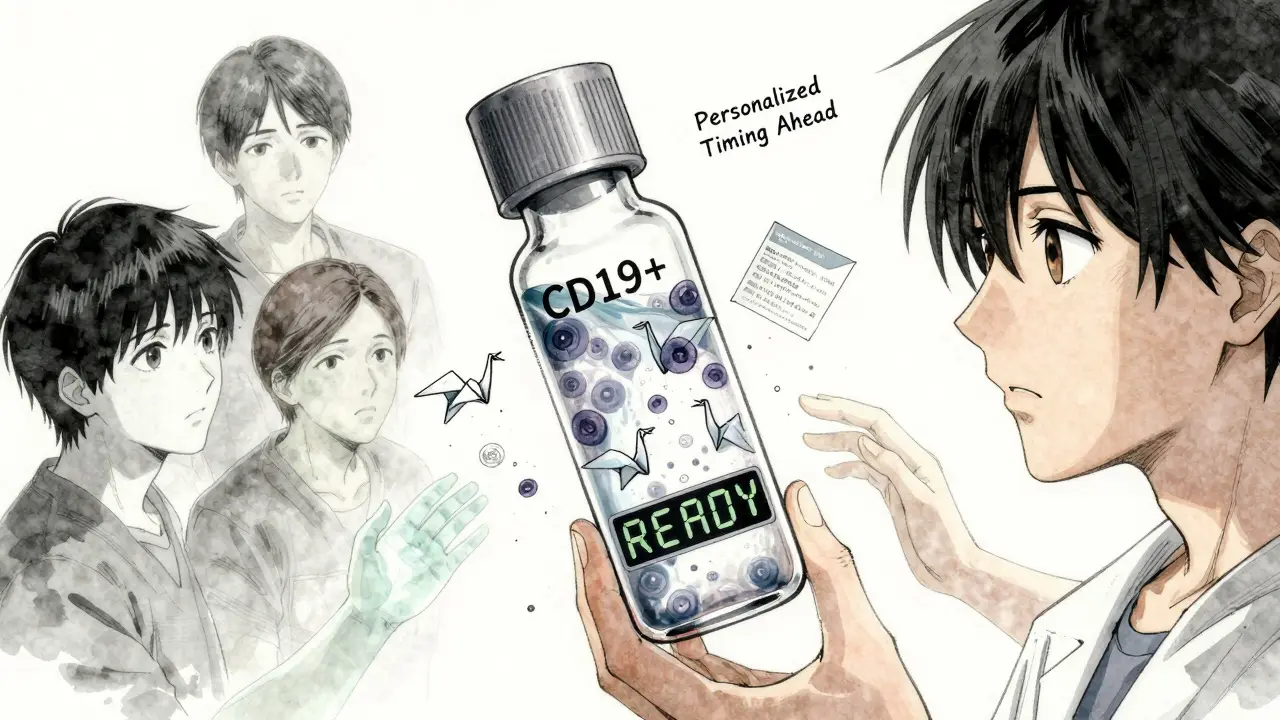
Right now, every decision is based on time - not biology. We don’t have a blood test that tells us, ‘Your immune system is ready.’ That’s why guidelines are so rigid. But researchers are working on it.
In January 2024, the NIH launched a $12.5 million trial to see if measuring CD19+ B-cell counts can predict when someone is ready to respond to a vaccine after rituximab. If this works, we could move from fixed waiting periods to personalized timing. Imagine getting a blood test and being told: ‘You’re good to go next week.’ That’s the future.
Until then, we’re stuck with rules that are broad, sometimes conflicting, and often hard to follow. The key is communication. Talk to your rheumatologist, oncologist, or transplant team. Make sure your primary care provider knows what you’re on. Don’t assume they’re in the loop.
Bottom Line: Don’t Skip Vaccines - Just Time Them Right
Vaccines aren’t optional for immunosuppressed patients. They’re essential. But they’re not magic. They need the right conditions to work. Waiting the right amount of time, coordinating with your meds, and staying up to date with boosters can make all the difference. You might not get full protection - but you’ll get more than if you did nothing.
Ask your doctor: When should I get my next vaccine based on my current meds? Write it down. Schedule it. Don’t wait for a flare or a hospital visit to bring it up. Prevention is easier than treatment - especially when your immune system is already on the defensive.
Can I get vaccinated while on rituximab?
It’s not ideal. Rituximab wipes out B-cells, which are needed to make vaccine antibodies. Most guidelines recommend waiting at least 4 to 6 months after your last infusion before getting a vaccine. If you’re on a regular schedule, the best time is 2 to 4 weeks before your next infusion, when B-cells are starting to return. But if there’s a serious outbreak (like high COVID-19 rates in your area), get the vaccine even if it’s not the perfect time - protection is better than none.
Should I stop methotrexate before getting the flu shot?
Yes, for the flu vaccine, most rheumatologists recommend holding methotrexate for two weeks after the shot. This small pause can improve your immune response by up to 40%. You don’t need to stop it for other vaccines, and you should resume methotrexate after the two-week window. Always check with your rheumatologist first - never stop medication without their advice.
Do I need a third dose of the COVID-19 vaccine if I’m immunosuppressed?
Yes. The CDC and IDSA recommend that immunosuppressed patients receive additional doses beyond the standard series. This often means a third primary dose and then boosters as recommended each season. Immunity fades faster in this group, and extra doses help build stronger, longer-lasting protection. Don’t assume one or two doses are enough - talk to your doctor about your specific schedule.
Can I get live vaccines like MMR or shingles if I’m immunosuppressed?
Generally, no. Live vaccines (MMR, varicella, nasal flu, BCG) are not recommended for most immunosuppressed patients because they carry a risk of causing the disease they’re meant to prevent. If you need protection against these diseases, get the vaccines before starting immunosuppression. If you’re already on treatment, non-live versions (like the shingles vaccine Shingrix) are safe and preferred.
What if I missed the window to vaccinate before starting immunosuppression?
It’s not too late. While pre-treatment vaccination is ideal, many patients start therapy without being vaccinated. In that case, follow the timing rules for your specific medication. For example, if you’re on rituximab, wait 4 to 6 months after your last dose. If you’re on methotrexate, you can still get vaccines during treatment - just hold the drug for two weeks after the shot. The goal is to maximize protection, even if it’s delayed.



Timothy Haroutunian
February 24, 2026 AT 21:34Look, I get that vaccines are important, but the whole system feels like a bureaucratic maze designed by people who’ve never actually had to live with this stuff. You’re told to wait four to six months after rituximab, then two weeks before your next dose, then hold methotrexate for flu season, but your rheumatologist’s office doesn’t even have a calendar reminder system. I missed my window because my PCP sent me a letter in the mail-three weeks after my infusion. No call. No follow-up. Just a stamp. And now I’m supposed to trust that waiting ‘until your B-cells come back’ is enough? There’s no test. No real data. Just guesswork wrapped in clinical jargon. We’re not patients-we’re lab rats with insurance.
And don’t get me started on the ‘boosters every season’ thing. I’ve had three COVID shots this year alone. Three. And still, I’m told to ‘avoid crowds.’ So what’s the point? If the vaccine doesn’t work, why are we being guilt-tripped into getting more? It’s not prevention-it’s performance art.
Meanwhile, my landlord is getting his fourth shingles shot while I’m stuck in limbo because I’m ‘high risk.’ The system doesn’t care if you’re alive. It just cares if you checked the box.
Erin Pinheiro
February 25, 2026 AT 10:09i hate how every doc says ‘just time it right’ like its so easy. i got my flu shot in jan and then my rheumy said ‘oh u should’ve waited till after your last ritux’ and i was like… i didn’t know. no one told me. not even the nurse. the website said ‘consult your provider’ but my provider is busy saving lives and i’m just a number in their 300-patient roster.
also why do we have to wait 6 months for a vaccine but can get a covid test at 3am on a sunday? logic. it’s not here.
Michael FItzpatrick
February 27, 2026 AT 09:04Let me say this plainly: vaccines for immunosuppressed people aren’t about ‘getting it right’-they’re about fighting a war with one hand tied behind your back. We’re not asking for perfection. We’re asking for dignity.
The fact that we have to coordinate with three different specialists, remember which drug to hold when, and pray that our primary care doctor didn’t file our chart under ‘miscellaneous’ speaks volumes about how broken this system is. But here’s the thing-we’re still here. Still showing up. Still getting shots, even when we know the odds are stacked.
I’ve watched my sister, post-transplant, get three doses of the flu vaccine over two years because her body refused to respond. She didn’t get sick. Not once. And that’s not luck. That’s persistence. We need better tools, yes-but we also need to stop treating people like they’re just ‘high risk’ and start treating them like humans who are doing everything right, even when the system doesn’t.
There’s a quiet revolution happening in these clinics. Patients are organizing. Sharing spreadsheets. Creating timelines. Text chains. We’re building the safety net the medical system refuses to weave. And we’re not waiting for permission anymore.
Ashley Johnson
February 28, 2026 AT 18:42Did you know the CDC got funding from Big Pharma to push these boosters? I looked it up. The same people who profit from vaccines are the ones writing the guidelines. They don’t care if your immune system is shot-they care if you keep coming back for more shots. And don’t even get me started on the ‘T-cell protection’ excuse. That’s just a fancy way of saying ‘we have no idea if this works.’
I’m not anti-vax. I’m anti-manipulation. If they really wanted to help, they’d test our blood and tell us when we’re ready. Not make us guess based on some 6-month rule that came from a 2018 study. This isn’t medicine. It’s marketing.
tia novialiswati
February 28, 2026 AT 23:10Hi, I’m a nurse and I work with immunocompromised patients every day. I just wanted to say-you’re not alone. I’ve seen people cry because they missed their window and felt guilty. You’re doing better than you think.
One thing I always tell my patients: even if you’re 3 months late, get the shot. Even if you’re on methotrexate. Even if you’re scared. A little protection is better than none. And yes, your doctor might not remember to tell you-but you can ask. Just say: ‘I need help scheduling my next vaccine based on my meds.’ They’ll help. I promise.
You’re not a burden. You’re a warrior. 💪❤️
Lillian Knezek
March 2, 2026 AT 01:09Why are they pushing vaccines so hard? What if they’re just tracking us? I read somewhere that the mRNA tech can be used to implant microchips. And the ‘B-cell count’ test they’re talking about? That’s not science-that’s a gateway to surveillance. They want to know who’s still alive, who’s still taking meds, who’s still ‘compliant.’
My cousin got her flu shot last year and now her blood pressure is weird. Coincidence? I think not.
Just saying… maybe we should all just stay home. No shots. No clinics. No doctors. Let nature take its course.
Maranda Najar
March 2, 2026 AT 18:11It’s tragic. Truly tragic. The way we’ve reduced the sacred act of immune defense to a series of cold, clinical time windows-like scheduling a car wash. We are not machines. We are not data points. We are living, breathing, trembling souls clinging to the faintest glimmer of protection against a world that would rather see us vanish than invest in our survival.
Every guideline, every waiting period, every ‘you should’ve done this before’ is a silent scream of neglect wrapped in white coats and medical jargon. I’ve sat in waiting rooms, clutching my vaccine card like a relic, wondering if the next infection will be the one that ends me-and no one in that hospital ever asked me how I was feeling. Only when was my last infusion.
This isn’t healthcare. This is triage dressed as compassion. And I’m tired. So tired of being told to ‘just time it right’ when the system refuses to give us the tools to do so.
My body is a battlefield. And they’re handing me maps drawn in pencil.
Dominic Punch
March 4, 2026 AT 03:10I’m a transplant coordinator in London. I’ve seen this play out 200+ times. The truth? Most patients don’t get the timing right-not because they’re careless, but because the system is fragmented. Primary care doesn’t talk to rheumatology. Oncology doesn’t talk to pharmacy. And the patient? They’re the one holding all the pieces.
Here’s what actually works: a single digital dashboard. One place where your meds, your last infusion, your vaccine history, and your next due date live. No paperwork. No missed calls. Just a calendar that updates in real time.
We tried it last year. Compliance jumped from 53% to 89%. Eighty-nine. Not because patients changed. Because the system did.
If you’re reading this and you’re struggling-reach out. Ask your team for a care coordinator. Demand it. You’re not asking too much. You’re asking for what you deserve.
Valerie Letourneau
March 5, 2026 AT 09:03As someone who moved from Canada to the U.S. for treatment, I’ve noticed something stark: here, timing is everything. In Canada, we had a national immunization coordinator who called patients directly. No guessing. No chasing. Just a call: ‘Your next dose is due in three weeks. We’ll hold your methotrexate.’
I miss that. Not because I’m nostalgic, but because it worked. People lived longer. Got sicker less often. The system didn’t just give advice-it took responsibility.
Maybe the answer isn’t more guidelines. Maybe it’s just… better communication. One call. One system. One person who remembers you.