
What Is Vestibular Migraine?
Vestibular migraine is a neurological condition where dizziness, vertigo, and balance problems occur alongside or instead of headache, often triggered by the same brain mechanisms that cause classic migraines. It’s not just a bad headache with dizziness-it’s a distinct disorder recognized by the International Headache Society since 2013. About 1% of people have it, and women are more than three times as likely to be affected as men.
Unlike typical migraines, vestibular migraine doesn’t always involve head pain. In fact, up to half of all attacks happen without any headache at all. Instead, you might feel like the room is spinning, you’re floating, or you’re off-balance-even when standing still. These episodes can last from a few minutes to three days. Many people also report sensitivity to light, noise, or movement, and some see flashing lights or blind spots before an attack-classic migraine aura symptoms.
What makes vestibular migraine tricky is that it looks a lot like other inner ear problems. It’s often mistaken for BPPV (benign paroxysmal positional vertigo), Ménière’s disease, or even anxiety-related dizziness. That’s why it takes an average of 11 months for people to get the right diagnosis. Many see three or more doctors before someone connects the dots between their dizziness and migraine history.
Why Does It Happen?
The exact cause isn’t fully understood, but researchers know it involves abnormal brain activity. The trigeminovascular system-responsible for migraine pain-also connects to the brainstem areas that control balance. When this system gets overactive, it doesn’t just trigger pain; it messes with your inner ear signals too.
Genetics play a role. About 25% of people with vestibular migraine have a mutation in the CACNA1A gene, which affects how calcium moves in and out of brain cells. If your parent or sibling has migraines with dizziness, your risk goes up. Stress, poor sleep, hormonal shifts, and weather changes are common triggers. Food triggers are real too: caffeine, alcohol, aged cheeses, and processed meats can set off attacks in up to 54% of patients.
One key thing to understand: vestibular migraine isn’t caused by an ear infection or structural problem. Your inner ear is fine. It’s your brain misreading signals from it. That’s why ear drops, antibiotics, or ear tubes won’t help.
How Is It Diagnosed?
There’s no blood test, MRI, or scan that confirms vestibular migraine. Diagnosis relies entirely on your symptoms and history, following strict international guidelines called the ICHD-3 criteria. To be diagnosed, you need:
- At least five episodes of moderate-to-severe dizziness lasting 5 minutes to 72 hours
- A current or past history of migraine (with or without aura)
- At least half of your dizziness episodes happen with typical migraine symptoms-headache, light/sound sensitivity, or visual aura
- No other medical condition better explains the symptoms
Doctors will often rule out other conditions first. An MRI might be done to check for tumors or MS. Balance tests like VEMPs (vestibular-evoked myogenic potentials) are becoming more common in research settings and show promise as diagnostic tools-82% sensitivity in recent trials. But for now, it’s still mostly about your story and your symptoms.
Managing Acute Attacks
When a vestibular migraine attack hits, the goal is to stop the dizziness and nausea fast. But here’s the catch: what works for migraine pain doesn’t always help vertigo.
For headache: Triptans like sumatriptan (50-100 mg) are the go-to. They relieve pain in about 70% of cases within two hours. If you can’t swallow pills during an attack, the injectable or nasal spray versions work faster. NSAIDs like ibuprofen (400-800 mg) or naproxen (500-850 mg) help about half the time.
For dizziness and nausea: Anti-nausea meds are more effective than traditional vertigo pills. Prochlorperazine (5-10 mg) resolves vertigo in 68% of patients within two hours. Ondansetron (4-8 mg) is another solid choice-especially if you’re sensitive to sedating drugs. Domperidone works well too and doesn’t cause drowsiness.
Don’t rely on benzodiazepines like diazepam or lorazepam for long-term use. They calm the dizziness short-term but can mess up your brain’s ability to recover balance over time. They’re a band-aid, not a fix.
Non-drug tactics matter just as much. Lie down in a dark, quiet room. Drink 2 liters of water over a few hours-dehydration worsens symptoms. Avoid screens, reading, or sudden head movements. Most people report a 35% drop in symptom severity just by resting properly.

Preventing Future Attacks
If you have more than four attacks a month, prevention is key. Waiting until you’re dizzy again is like waiting for a fire to start before installing smoke detectors.
Medications: Three classes are most effective:
- Beta-blockers: Propranolol (40-160 mg daily) or metoprolol (50-200 mg daily). In one study, 62% of patients cut their attacks in half.
- Tricyclic antidepressants: Amitriptyline (10-75 mg at night). It helps with both dizziness and sleep, with 40-60% of users seeing fewer episodes.
- Calcium channel blockers: Verapamil (120-240 mg daily) or flunarizine (5-10 mg daily). Flunarizine isn’t FDA-approved in the U.S., but it’s a first-line choice in Europe with a 47% success rate.
- Antiseizure drugs: Topiramate (25-100 mg daily). 54% of patients in a major trial had over 50% fewer attacks.
Some people can’t tolerate the side effects-drowsiness, brain fog, weight gain. That’s okay. There are alternatives.
Nutraceuticals: These are safer and often used alongside meds:
- Magnesium (600 mg daily)
- Riboflavin (400 mg daily)
- Coenzyme Q10 (300 mg daily)
A 2015 study showed these reduced attack frequency by 30-40%, with almost no side effects. They take 2-3 months to work, but they’re worth trying.
Butterbur was once popular, but it was pulled from most markets after 2015 due to liver damage risks. Skip it.
Vestibular Rehabilitation Therapy (VRT)
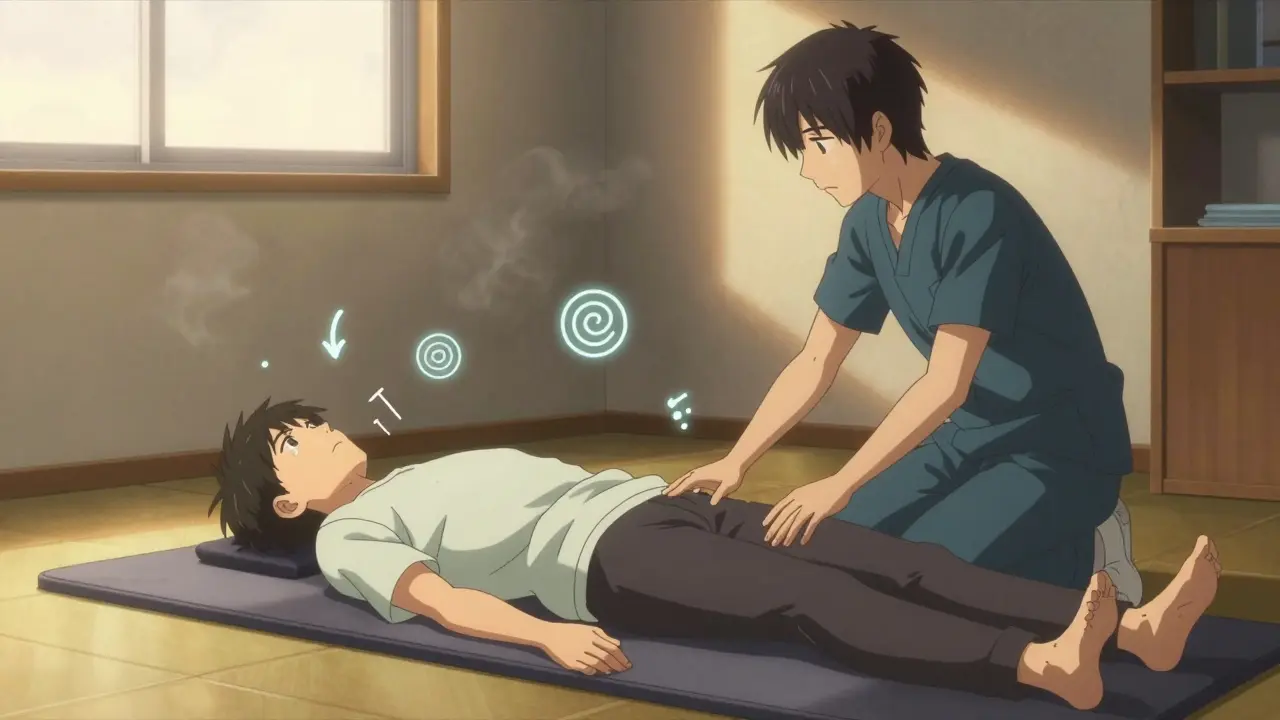
This is the most underrated tool in vestibular migraine management. VRT isn’t about fixing your ears-it’s about retraining your brain to handle confusing balance signals.
It involves guided exercises: eye movements, head turns, walking while turning, standing on foam, and balancing with eyes closed. At first, it might make dizziness worse. That’s normal. Your brain is learning.
Studies show VRT improves dizziness handicap scores by 40-60% after 8-12 weeks. In one study, 78% of patients who completed 12 sessions reported more than 50% symptom reduction. You need a physical therapist trained in vestibular rehab-not just any physical therapist.
Home exercises are essential. Do them daily. Even 10 minutes a day makes a difference. Many people who thought they’d be dizzy forever find they can walk in crowds, drive, or work at a computer again after VRT.
What Doesn’t Work
Many people waste months on the wrong treatments because vestibular migraine is misdiagnosed.
- Diuretics (like hydrochlorothiazide): Used for Ménière’s disease. They help only 20% of vestibular migraine patients-so don’t bother.
- Corticosteroids: Used for vestibular neuritis. They don’t help VM unless there’s a rare inflammatory component.
- Long-term benzodiazepines: They suppress symptoms but delay your brain’s natural recovery. You end up more unsteady when you stop.
- Ear surgery or canalith repositioning (Epley maneuver): These fix BPPV. If you have VM, they won’t help-and you might get worse.
Getting the diagnosis right is the biggest step toward feeling better.
Trigger Management and Lifestyle
Keeping a symptom diary for 6-8 weeks is the single most useful thing you can do. Write down:
- When dizziness happened
- What you ate or drank
- How much you slept
- Stress levels
- Weather changes
Common triggers:
- Stress (82% of patients)
- Sleep loss (76%)
- Caffeine (54%)
- Alcohol (49%)
- Aged cheeses (38%)
- Weather shifts (68%)
Eliminating caffeine completely reduces attack frequency by 35% in many people. Try cutting it out for 4 weeks. If your dizziness improves, you’ve found a major trigger.
Regular sleep, consistent meals, and moderate exercise (like walking or yoga) help stabilize your nervous system. Avoid extreme workouts or hot yoga-they can trigger attacks.
What’s New in Treatment?
There’s real hope on the horizon. New migraine drugs called CGRP inhibitors-like atogepant and rimegepant-were approved for migraine prevention in 2023. Early data shows they reduce vertigo days too. In one trial, atogepant cut attacks by 56% in VM patients.
Researchers are also testing non-invasive devices like gammaCore, which stimulates the vagus nerve. It reduced vertigo by 45% in a 2021 trial. These are FDA-cleared and available by prescription.
Genetic testing for CACNA1A mutations might soon help predict which drugs will work best for you. If you have the mutation, calcium channel blockers could be your best bet.
By 2028, experts predict diagnostic delays will drop by 30% as more doctors learn to recognize vestibular migraine. Right now, only 12% of migraine trials include VM-specific outcomes. That’s changing.
Real Patient Experiences
On Reddit’s r/migraine community, over 1,200 people shared their stories. Most waited over a year for diagnosis. The most effective acute treatments? Sumatriptan (rated 7.2/10) and ondansetron (6.8/10). For prevention? Propranolol (7.5/10) and amitriptyline (7.3/10).
But side effects are a real problem. Sixty-five percent of people on amitriptyline said they felt too sleepy. Over half on topiramate reported brain fog. That’s why many quit. Don’t give up after one bad try. Work with your doctor to adjust doses or switch meds.
Those who stuck with vestibular rehab had the best long-term results. One woman, 42, said she couldn’t walk her dog without dizziness for two years. After 10 VRT sessions, she started hiking again. Another man, 58, stopped driving because of vertigo. After six months of propranolol and daily exercises, he drove to work again.
When to See a Specialist
You don’t need to suffer alone. If you’ve had dizziness with headaches for more than a few months, see a neurologist who specializes in headaches or a vestibular specialist. Ideally, you want a team: a neurologist for meds, an ENT for balance testing, and a vestibular therapist for rehab.
Most effective care happens when these specialists work together. In 70% of successful cases, that’s exactly what happened.
Start prevention early. If you’re having more than four attacks a month, delaying treatment increases your risk of chronic dizziness by 30% within two years. Don’t wait until it’s worse.
Final Thoughts
Vestibular migraine isn’t something you just live with. It’s a treatable condition. You don’t need to quit your job, stop driving, or avoid social events forever. With the right mix of meds, lifestyle changes, and vestibular rehab, most people get back to their lives.
It takes time. You might need to try two or three medications before you find the right combo. You might feel worse before you feel better during VRT. But the data is clear: 65% of people who follow a full, multimodal plan see major improvement.
You’re not alone. And you’re not crazy. Your brain is just sending mixed signals-and it can be retrained.


owori patrick
January 30, 2026 AT 20:09Biggest tip? Don’t rush it. Your brain needs time to rewire.
Shubham Dixit
February 1, 2026 AT 04:41Blair Kelly
February 1, 2026 AT 22:09Rohit Kumar
February 2, 2026 AT 15:49Lily Steele
February 4, 2026 AT 08:22Gaurav Meena
February 4, 2026 AT 13:47Amy Insalaco
February 4, 2026 AT 23:27Marc Bains
February 6, 2026 AT 16:06Kelly Weinhold
February 7, 2026 AT 01:01Rob Webber
February 8, 2026 AT 12:08calanha nevin
February 9, 2026 AT 04:49Diksha Srivastava
February 11, 2026 AT 03:48