
Acromegaly isn’t something you see every day, but if you’ve ever noticed your rings getting tighter, your jawline changing, or your hands swelling without reason, it might be worth paying attention. This rare condition happens when your body makes too much growth hormone - not during childhood, when it would cause gigantism, but in adulthood, after your growth plates have closed. The result? Your bones and soft tissues keep growing in strange, uneven ways. It’s slow, silent, and often missed for years.
What Actually Happens in Acromegaly?
At its core, acromegaly is about one thing: too much growth hormone (GH), which pushes your liver to pump out even more insulin-like growth factor-1 (IGF-1). These two hormones are supposed to help your body grow and repair itself. But when they’re out of control, they turn on your tissues like a faucet left running. Your hands swell. Your jaw juts forward. Your skin thickens. Your voice drops. These aren’t just cosmetic changes - they’re signs your body is being reshaped from the inside.
Over 95% of cases come from a benign tumor on the pituitary gland - a pea-sized organ at the base of your brain. This tumor, called a pituitary adenoma, doesn’t spread like cancer, but it doesn’t need to. It just keeps pumping out GH. Smaller tumors (under 10mm) are called microadenomas. Larger ones (10mm or more) are macroadenomas. The bigger the tumor, the more likely it is to press on nearby nerves, causing headaches or vision problems. About 44% of people with acromegaly develop visual field defects because the tumor squishes the optic nerve.
It’s Not Just About Looks - The Hidden Dangers
Most people don’t realize how dangerous acromegaly is until it’s too late. The physical changes are obvious, but the internal damage is what kills. Untreated, acromegaly doubles or even triples your risk of dying early. Why? Because excess GH and IGF-1 don’t just change your face - they wreck your heart, your blood pressure, and your metabolism.
Over half of untreated patients develop high blood pressure. Nearly two-thirds have heart muscle thickening (myocardial hypertrophy), which can lead to heart failure. About one in three develop type 2 diabetes because GH interferes with insulin. Sleep apnea hits 60% of patients - not because they’re overweight, but because the tongue and throat tissues grow too large and block breathing at night. Joint pain? That’s in 79% of cases. Carpal tunnel syndrome? Nearly half. And if you’re a man, there’s a 40% chance you’ll struggle with erectile dysfunction. Women often get irregular periods.
These aren’t side effects. They’re direct consequences of uncontrolled hormone levels. And the longer you go without treatment, the more damage piles up. A 2012 study in PMC showed that every extra year of high GH levels increases your risk of early death. That’s why early diagnosis isn’t just helpful - it’s life-saving.
Why Diagnosis Takes So Long
It’s not rare to hear someone say, “I didn’t find out until seven years after my first symptoms.” In fact, 68% of patients surveyed by Seeing Differences UK waited over five years for a diagnosis. Why? Because the changes are gradual. Your shoes get a half-size bigger. Your jaw feels heavier. Your coworkers say you look “more rugged.” No one connects it to a hormone problem.
Doctors miss it too. Many primary care providers have never seen a case. Blood tests for IGF-1 are the first clue - but they’re not always ordered. The gold standard test is the oral glucose tolerance test: you drink a sugary solution, and your GH levels should drop. If they don’t, that’s a red flag. Then comes an MRI of the pituitary to find the tumor. But without the right suspicion, the whole chain breaks down.
Some patients have been misdiagnosed with arthritis, sleep apnea, or even aging. One Reddit user, “GrowthHormoneSurvivor,” shared that they were told their enlarged hands were just “from working construction.” It took 11 doctors before someone finally ran the right test.
Treatment Options - Surgery, Medication, Radiation
The goal isn’t just to shrink the tumor. It’s to get your IGF-1 level back to normal - and keep it there. Studies from Penn Medicine show that once IGF-1 is normalized, life expectancy returns to near-normal levels. That’s the real win.
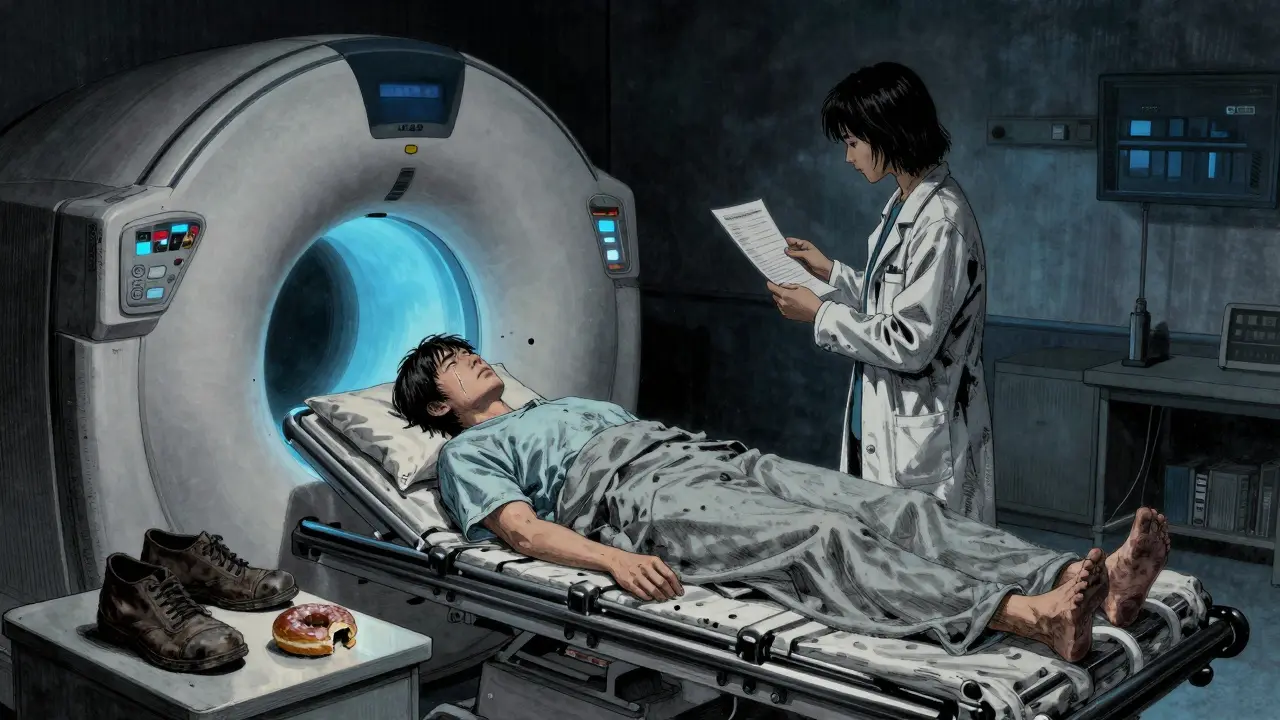
Surgery is the first-line treatment for most people. The procedure, called transsphenoidal surgery, removes the tumor through the nose. It’s less invasive than you’d think. Success rates? Around 80-90% for small tumors. For larger ones, it drops to 40-60%. Recovery takes 2-4 weeks. But even after successful surgery, some people still need medication because not all tumor cells are removed.
Medication comes in three main types:
- Somatostatin analogs (like octreotide LAR and lanreotide): These block GH release. Given as monthly injections. Cost: $6,200-$7,800 per month in the U.S. They work well for about 60% of patients.
- Dopamine agonists (like cabergoline): Less effective, but cheaper - around $150-$300 monthly. Used mostly for mild cases or when other drugs don’t work.
- Growth hormone receptor antagonist (pegvisomant): This blocks GH from working in the body. It doesn’t shrink the tumor, but it brings IGF-1 down. Cost: $12,000-$15,000 monthly. Often used when other drugs fail.
Insurance is a major hurdle. In the U.S., 32% of patients report delays of over 30 days just to get approval for somatostatin analogs. Some have to appeal multiple times.
Radiation therapy is the last resort. It can take years to work - only about half of patients see hormone control after 10 years. And it carries a big risk: 30-50% of people end up with hypopituitarism, meaning their pituitary stops making other essential hormones like cortisol, thyroid hormone, or sex hormones. That means lifelong hormone replacement.
What Success Really Looks Like
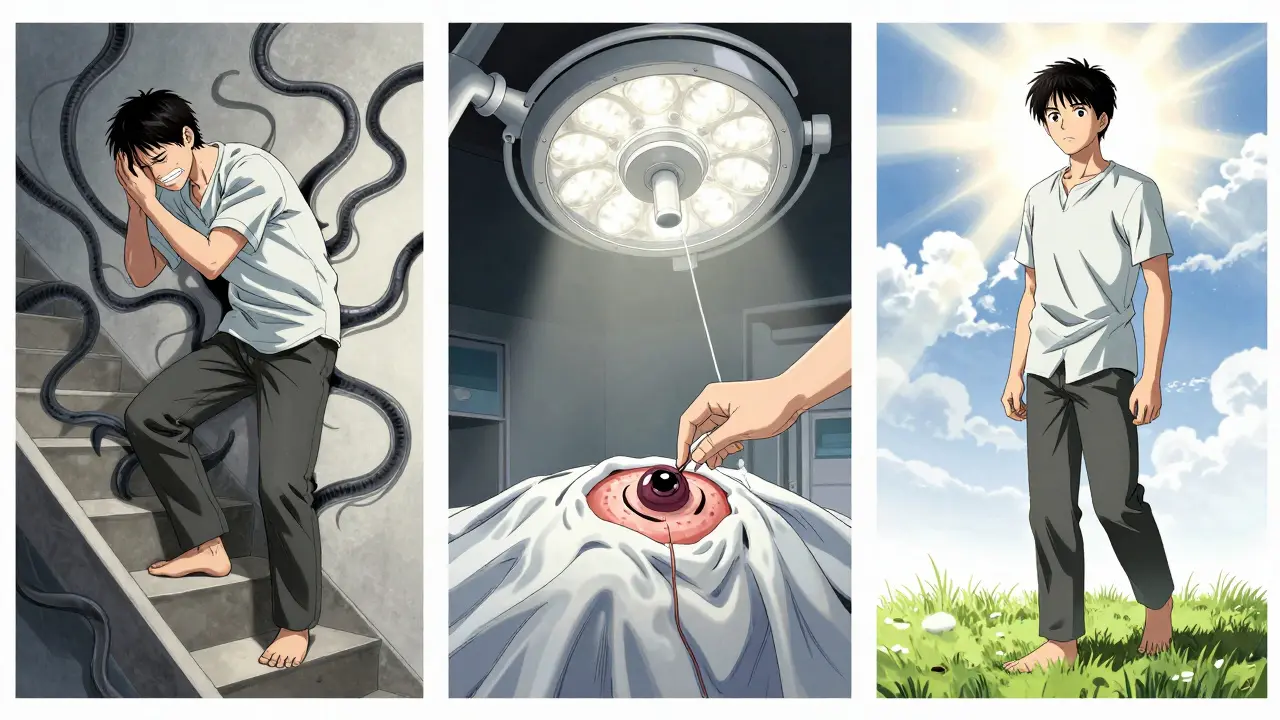
Success isn’t just about numbers on a lab report. Yes, IGF-1 should be below the upper limit of normal for your age. But real improvement is quieter. It’s being able to sleep through the night without a CPAP machine. It’s not needing painkillers for your knees anymore. It’s your ring size dropping from 13 to 10 after 18 months.
One patient in the UK told me, “After surgery, my jaw didn’t go back to normal - but my headaches vanished. I could finally walk up stairs without stopping.” That’s the kind of win that matters.
Even with successful treatment, fatigue lingers for 58% of patients. Why? Because years of hormone overload have left your body worn out. Recovery isn’t instant. It takes time - sometimes years - for joints, sleep, and energy levels to stabilize.
The Future: Better Tools, Still Unequal Access
New tools are emerging. In July 2023, the FDA approved a new long-acting pasireotide that only needs quarterly shots instead of monthly. AI facial recognition software is being tested - it can spot subtle changes in facial structure with 89% accuracy. Imagine a phone app that could flag early signs before you even see a doctor.
But access remains uneven. Rural patients wait 40% longer for diagnosis than urban ones. Biosimilar versions of somatostatin drugs are available in Europe, cutting costs by half. In the U.S., they’re still rare. And while the global market for acromegaly drugs is projected to hit $2.95 billion by 2030, most patients still struggle to afford treatment.
What You Can Do
If you suspect acromegaly - if your hands, feet, or face have changed noticeably over years - don’t wait. Ask your doctor for an IGF-1 blood test. If it’s high, push for an oral glucose tolerance test and a pituitary MRI. Don’t let it slide because “it’s just aging.”
If you’re already diagnosed, find a pituitary specialist. Patients treated at centers doing over 25 acromegaly surgeries per year report 74% satisfaction - compared to 49% at low-volume centers. Coordination between endocrinologists, neurosurgeons, and your primary care doctor is critical.
And if you’re managing treatment: keep track of your IGF-1 levels every 3-6 months. Learn the signs of hypopituitarism - fatigue, dizziness, nausea, low blood pressure - and never skip your steroid replacement if you’ve been told to take it. Missing one dose can be life-threatening.
Is acromegaly the same as gigantism?
No. Gigantism happens in children before their growth plates close, causing them to grow very tall with proportional body size. Acromegaly occurs in adults after growth plates fuse. Instead of getting taller, bones thicken and widen - hands, feet, jaw, and skull change shape. The hormone problem is the same, but the effects are different because the body’s growth potential is already finished.
Can acromegaly be cured?
It can be controlled - but not always cured. Surgery can remove the tumor and normalize hormone levels in many cases, especially with small tumors. But if the tumor is large or has spread, complete removal isn’t always possible. Medications can keep IGF-1 levels normal, allowing people to live full, long lives. The goal isn’t necessarily to erase the tumor - it’s to stop its harmful effects.
Do all patients need lifelong treatment?
Not all, but many do. If surgery fully removes the tumor and hormone levels stay normal for years, some patients can stop medication. But if radiation was used, or if the tumor couldn’t be fully removed, lifelong treatment is common. Even those who seem cured need regular IGF-1 checks - relapse can happen years later.
What are the biggest side effects of acromegaly treatments?
Surgery risks include bleeding, infection, and damage to nearby pituitary tissue - which can cause hormone deficiencies. Medications like somatostatin analogs can cause nausea, diarrhea, and gallstones. Pegvisomant may cause liver enzyme changes, so monthly liver tests are required. Radiation can lead to permanent hormone loss in 30-50% of cases, requiring lifelong replacements for cortisol, thyroid, and sex hormones.
Can lifestyle changes help manage acromegaly?
Lifestyle changes won’t fix the hormone imbalance, but they can help manage complications. Controlling weight reduces joint stress. Regular exercise improves sleep and heart health. Avoiding alcohol and sleeping on your side helps with sleep apnea. A low-sugar diet supports blood sugar control if you’ve developed diabetes. But none of this replaces medical treatment - it just supports it.
Why is IGF-1 the key marker, not GH?
Growth hormone levels fluctuate wildly throughout the day - even in healthy people. That makes a single GH test unreliable. IGF-1, on the other hand, is stable. It’s produced continuously by the liver in response to GH. So its level reflects average GH exposure over days or weeks. That’s why doctors rely on IGF-1 to diagnose and monitor acromegaly.
Is there a genetic cause for acromegaly?
Most cases are spontaneous - no family history. But in less than 5% of cases, it’s linked to inherited conditions like multiple endocrine neoplasia type 1 (MEN1) or familial isolated pituitary adenoma (FIPA). If you have a close relative with acromegaly or pituitary tumors, genetic testing may be recommended. Otherwise, it’s not inherited.
Acromegaly doesn’t have to be a life sentence. With the right diagnosis, the right team, and the right treatment, people live full, active lives. The challenge isn’t just medical - it’s awareness. If you notice changes in your body that don’t make sense, speak up. You might be the one who finally connects the dots.

Richard Harris
March 16, 2026 AT 02:44Been dealing with this for 8 years now. My rings went from 10 to 13. No one believed me until my boss said "dude your jaw looks like it’s trying to swallow your neck." Got the test. Tumor was small. Surgery worked. Still tired. Still have carpal tunnel. But I can sleep. That’s everything.
Don’t let anyone tell you it’s "just aging."
Kandace Bennett
March 17, 2026 AT 09:28OMG this is so important!! 🙌 I live in the US and let me tell you - if you don’t have top-tier insurance, you’re basically screwed. My cousin’s husband had to sell his truck to afford the first shot. 😭 And don’t even get me started on how the VA system just ignores this. We need national screening protocols. Like, now. 🇺🇸
Tim Schulz
March 18, 2026 AT 04:00Wow. Someone actually wrote a coherent article about acromegaly. Who’d have thought? 🤨
Let’s be real - most people wouldn’t know a pituitary adenoma from a pizza topping. And yet somehow, the FDA approves a quarterly injection but can’t fix the $15k monthly price tag? Peak capitalism. 💸
Also - AI facial recognition? Cute. But let’s not pretend rural Iowa has access to that. It’s all just fancy tech for rich people in Boston. Again. 😴
Jinesh Jain
March 18, 2026 AT 13:23Interesting read. In India, diagnosis often takes over 10 years because endocrinologists are scarce outside big cities. Many patients are told it’s arthritis or thyroid. No one thinks of GH. No MRI. No glucose test. Just painkillers and silence.
I hope more doctors read this. It’s not a rare disease - it’s just rarely looked for.
douglas martinez
March 20, 2026 AT 03:41Thank you for this comprehensive overview. The emphasis on IGF-1 as the primary biomarker is clinically accurate and essential for proper diagnosis. I would strongly encourage patients to seek care at high-volume pituitary centers - the data on outcomes is unequivocal. Coordination between endocrinology, neurosurgery, and primary care remains the cornerstone of successful management. Please ensure ongoing monitoring even after normalization of labs. Relapse can occur decades later.
Sabrina Sanches
March 22, 2026 AT 01:58My husband had this. We waited 6 years. 6 years. I kept saying "something’s off" and everyone said "he’s just getting older."
Turns out he couldn’t wear his wedding ring anymore. Couldn’t climb stairs. Couldn’t breathe at night.
Surgery saved him. Not cured. But saved.
Don’t ignore it. Please.
Also I cried reading this. So much. So much.
Thank you.
Shruti Chaturvedi
March 22, 2026 AT 23:50For those in developing countries - yes the drugs are expensive but there are programs. I work with a nonprofit that helps patients get access to generics. It’s not perfect but it’s something. Talk to your local hospital. Ask for the endocrinology ward. Don’t give up.
And if you’re a doctor - run the test. Just once. It takes five minutes.
One test. One life.
Katherine Rodriguez
March 24, 2026 AT 04:01Why are we even talking about this like it’s some mystery? It’s a tumor. You cut it out. Done.
Why are people on here acting like this is some revolutionary discovery? We’ve had transsphenoidal surgery since the 1960s. Why is insurance still fighting patients? Because greed. Pure and simple. And we let it happen. Again. And again. And again.
Stop pretending this is complicated. It’s not. It’s just corrupt.
Devin Ersoy
March 24, 2026 AT 23:17Oh honey, you think this is bad? Try being a woman with acromegaly in 2024. I got told I had "menopause face." Like my jawline was just being dramatic. 🤡
My voice dropped so low I had to re-record my voicemail. My coworkers started calling me "The Duke."
And then - *dramatic pause* - I got the IGF-1 test. Turns out I had a macroadenoma the size of a lemon. And the insurance company? They said "we’ll review in 45 days."
So I took my MRI results to a podcast studio and made a viral TikTok. Now I’m getting calls from doctors. Who knew? 😎
Turns out the cure is visibility. Not just medicine.
Scott Smith
March 26, 2026 AT 06:43This is one of the clearest summaries I’ve seen. The part about fatigue lingering even after treatment? That hit hard. I’ve been in remission for 3 years. Still can’t run. Still nap after lunch. Still get dizzy if I stand too long.
It’s not just about the hormone. It’s about the years your body was fighting a war you didn’t know you were in.
Be gentle with yourself. Recovery isn’t linear. And you’re not broken. Just rebuilt.