
INR Alcohol Risk Calculator
Alcohol Consumption Calculator
Estimate how alcohol affects your INR levels and bleeding risk while on blood thinners.
Estimated INR Impact
Recommendations:
When you're on a blood thinner like warfarin, even a glass of wine can become a medical decision. It’s not about giving up alcohol completely - it’s about understanding how it changes your body’s response to the medication. For millions of people taking warfarin to prevent clots, alcohol isn’t just a social drink. It’s a variable that can push your INR into dangerous territory - and increase your risk of bleeding without warning.
What Is INR, and Why Does It Matter?
INR stands for International Normalized Ratio. It’s a blood test that measures how long it takes your blood to clot. If you’re not on blood thinners, your INR should be around 0.8 to 1.1. But if you’re taking warfarin, your target range is usually between 2.0 and 3.0 - sometimes up to 3.5 if you have a mechanical heart valve. That’s a narrow window. Go below 2.0, and clots can form. Go above 3.5, and you’re at higher risk of serious bleeding.
Every 0.5-point increase above your target INR raises your bleeding risk by 30% to 50%. An INR above 9? That’s a medical emergency. Studies show that among hospitalized patients with INR over 9, 35% had major bleeding and 17% died. Even outside the hospital, 11% of patients with INR above 9 bled. These aren’t rare outcomes. They’re predictable - and often preventable.
How Alcohol Throws Off Your INR
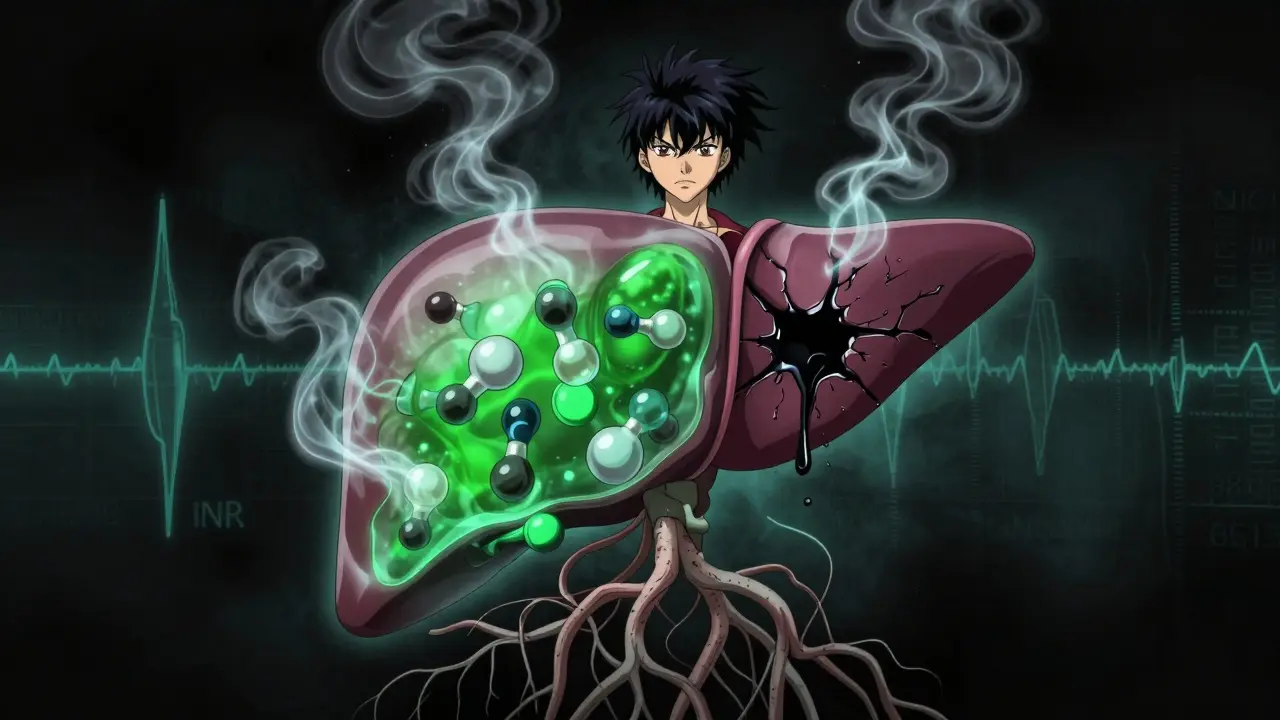
Alcohol doesn’t just make you feel relaxed - it messes with how your liver breaks down warfarin. Your liver uses enzymes like CYP2C9 to process the drug. Alcohol competes for those same enzymes. When you drink, especially in large amounts, warfarin builds up in your system because it can’t be cleared as quickly. That pushes your INR higher.
But it’s not that simple. Sometimes, heavy drinking over days or weeks can actually lower your INR. Why? Because chronic alcohol use damages the liver and reduces vitamin K production - which warfarin already blocks. This creates a rollercoaster effect: your INR spikes after a night out, then drops after prolonged drinking. That’s why consistency matters more than occasional sips.
A 2012 study in the American Journal of Clinical Pathology found that alcohol use was one of the top three factors linked to dangerous bleeding in patients with INR above 9 - alongside older age and kidney problems. Patients who drank heavily were far more likely to have uncontrollable INR spikes that didn’t respond to standard treatments like vitamin K or stopping warfarin. Plasma transfusions were often the only thing that worked.
Real Stories: When a Drink Turns Dangerous
One man in his 60s in Bristol drank six pints of beer over two days. His INR jumped from 2.8 to 5.2. He ended up in the hospital with internal bleeding. Another person on Reddit shared that after four glasses of wine over a weekend, their INR rose from 2.4 to 3.8 - enough for their doctor to cut their warfarin dose.
These aren’t outliers. NHS forums and patient groups are full of similar stories. One woman noticed her menstrual bleeding became much heavier after a few drinks. Another had nosebleeds that wouldn’t stop. These are red flags. You don’t need to be binge drinking to see effects. Even moderate, irregular drinking can trigger dangerous swings.
Warfarin vs. Newer Blood Thinners
Not all blood thinners react the same way to alcohol. Warfarin is the old-school option - effective, cheap, but finicky. It’s affected by food, other meds, and yes - alcohol. That’s why you need regular INR checks.
Newer drugs like apixaban, rivaroxaban, and dabigatran (called DOACs) don’t require INR monitoring. They’re also less affected by alcohol. But that doesn’t mean they’re safe with heavy drinking. Alcohol still increases bleeding risk on its own. It can irritate your stomach lining, raise blood pressure, and make falls more likely - all of which can lead to internal bleeding.
Here’s the catch: if you bleed badly on a DOAC, there’s no quick fix like vitamin K. Reversal agents exist, but they’re expensive and not always available. With warfarin, you can reverse the effect - if you catch it early. So while DOACs are easier to manage, they’re not risk-free with alcohol.
How Much Alcohol Is Safe?
The British Heart Foundation and NHS both say: yes, you can drink alcohol while on warfarin - if you stick to the rules.
The UK Chief Medical Officers recommend no more than 14 units of alcohol per week. That’s about six pints of average-strength beer or six 175ml glasses of wine. Spread it over three or more days. Don’t save it all for Friday night.
Why? Because binge drinking - even once a week - causes wild INR swings. One study showed that patients who drank heavily on weekends had INR spikes that lasted 48 hours or longer. That’s long enough to bleed internally after a minor bump or fall.
Medical News Today defines heavy drinking as more than 14 drinks per week for men or 7 for women. But the real danger isn’t just quantity - it’s inconsistency. If you usually have one drink a week and then have five on Saturday, your body doesn’t adjust. Your INR spikes. Your risk goes up.
Genetics also play a role. People with certain gene variants - CYP2C9*2/*3 or VKORC1 1173G>A - break down warfarin slower. If you have these, even small amounts of alcohol can be risky. If you’ve had unexplained INR changes before, ask your doctor about genetic testing.
Signs of Bleeding You Can’t Ignore
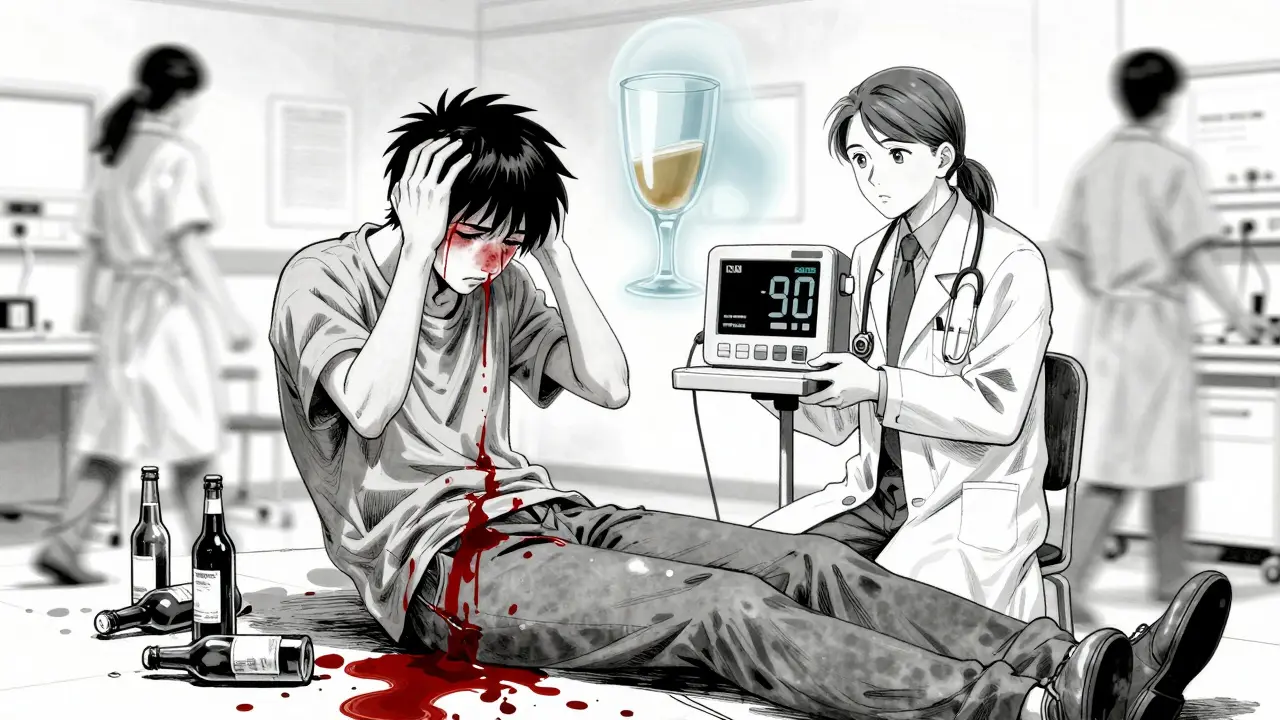
If your INR is too high, bleeding can happen quietly. You might not notice until it’s serious. Watch for:
- Red or brown urine
- Tar-like or bright red stools
- Bleeding gums or nosebleeds that won’t stop
- Unusually heavy periods
- Brown or bright red vomit
- Unexplained bruising, especially on your arms or legs
- Severe headaches, dizziness, or confusion (could mean bleeding in the brain)
If you see any of these - especially after drinking - get medical help immediately. Don’t wait. Don’t assume it’s just a hangover.
What to Do If You’ve Been Drinking
If you’ve had more than your usual amount of alcohol:
- Call your anticoagulation clinic. Tell them you drank. They may want to check your INR sooner.
- Don’t skip your next INR test - even if you feel fine.
- Write down how much you drank and when. Bring it to your next appointment.
- Avoid alcohol for at least 48 hours after a big night out to let your liver catch up.
Some clinics now offer telehealth programs that include alcohol counseling. Patients in these programs have seen a 25% drop in INR-related emergencies. It’s not about guilt - it’s about control.
Bottom Line: Consistency Is Your Best Defense
You don’t need to quit alcohol. But you do need to treat it like part of your treatment plan. Think of it like salt or vitamin K-rich foods - it’s a factor that changes how your medication works.
Stick to the limits. Spread your drinks out. Avoid bingeing. Tell your doctor if you’ve been drinking more than usual. Get your INR checked regularly - especially after any change in your habits.
The goal isn’t perfection. It’s predictability. If your INR stays steady, your risk stays low. Alcohol doesn’t have to be off-limits - but it does have to be managed.


Kat Peterson
January 25, 2026 AT 04:36Himanshu Singh
January 25, 2026 AT 06:45Jamie Hooper
January 26, 2026 AT 23:05Sawyer Vitela
January 27, 2026 AT 12:11Shanta Blank
January 28, 2026 AT 19:59Dolores Rider
January 29, 2026 AT 14:50Sharon Biggins
January 30, 2026 AT 18:33Michael Camilleri
February 1, 2026 AT 11:47lorraine england
February 2, 2026 AT 02:35Kevin Waters
February 3, 2026 AT 07:10