
Serotonin Syndrome Risk Calculator
Risk Assessment
This tool helps you understand your risk of serotonin syndrome when taking antiemetics with serotonergic medications. It is not a substitute for medical advice.
It’s not rare for someone on an SSRI to get prescribed ondansetron for nausea - maybe after chemotherapy, surgery, or even a bad stomach bug. But what if that simple combination could trigger something dangerous? Serotonin syndrome isn’t a myth. It’s real, it’s serious, and it’s happening more often than most doctors and patients realize.
What Exactly Is Serotonin Syndrome?
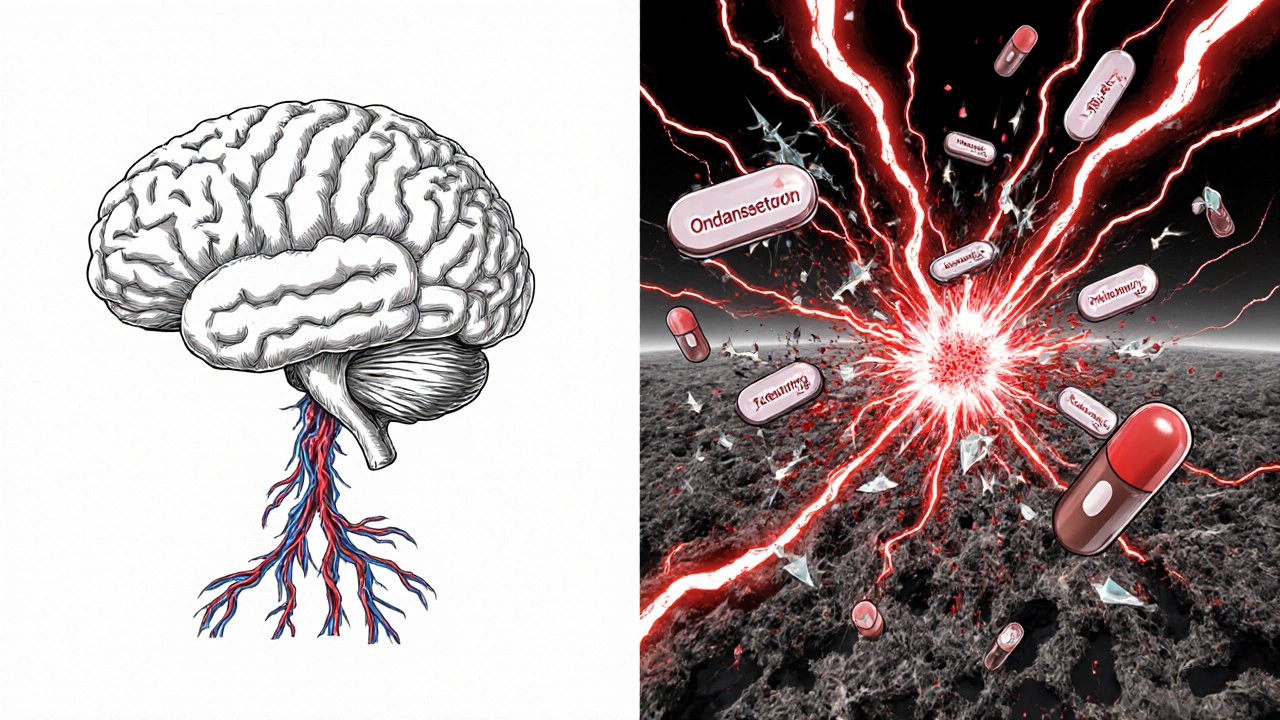
Serotonin syndrome happens when your body has too much serotonin - a chemical that helps regulate mood, digestion, sleep, and more. It’s not about having too much serotonin in your brain alone. It’s about too much stimulation of serotonin receptors across your nervous system. This overload can turn your body into overdrive: muscles twitch uncontrollably, your heart races, you sweat profusely, and your mind gets foggy or confused. In severe cases, it can lead to seizures, high fever, kidney failure, or death.
The condition was first noticed in the 1960s when people were taking older antidepressants like MAOIs with newer drugs. Today, it’s mostly linked to combinations of medications that increase serotonin levels - especially SSRIs, SNRIs, and certain painkillers like tramadol. But here’s the twist: antiemetics like ondansetron (Zofran), granisetron, and dolasetron are being pulled into this mix more than ever.
Why Do Antiemetics Like Ondansetron Matter?
Ondansetron is one of the most commonly prescribed anti-nausea drugs in the U.S. In 2022 alone, over 22 million prescriptions were filled. It’s effective, fast-acting, and generally well-tolerated. But here’s what most people don’t know: while ondansetron blocks the 5-HT3 receptor to stop vomiting, it doesn’t just sit there quietly. Some research suggests it may have off-target effects - meaning it could interfere with serotonin reuptake or metabolism in ways we’re still learning about.
A 2017 case report in the Journal of Medical Toxicology described a 62-year-old man who developed serotonin syndrome after taking ondansetron along with citalopram. No MAOIs. No other risky drugs. Just those two. That’s not an outlier. Data from the FDA’s adverse event database shows that ondansetron was involved in over 3% of all serotonin syndrome cases tied to antiemetics - and that number is rising.
Even more concerning: patients over 65 make up 41% of these cases, even though they’re only 19% of the population. Why? Aging slows down liver metabolism. Many older adults are also on multiple medications. A single extra dose of ondansetron can push their serotonin levels over the edge.
Not All Antiemetics Are the Same
There are several types of antiemetics, and their risks vary widely.
- 5-HT3 antagonists (ondansetron, granisetron, palonosetron): These are the most commonly used. They block nausea signals in the gut and brain. While they’re not supposed to increase serotonin, evidence shows they can contribute to serotonin syndrome - especially when combined with SSRIs or when patients are poor metabolizers of CYP2D6.
- Dopamine antagonists (metoclopramide, prochlorperazine): These carry a moderate risk. Metoclopramide has weak serotonin reuptake inhibition. Between 2004 and 2018, the FDA recorded 17 confirmed cases of serotonin syndrome linked to metoclopramide plus SSRIs.
- NK1 antagonists (aprepitant, fosaprepitant): These are used mainly in cancer care. They don’t directly affect serotonin, but they block the CYP3A4 enzyme, which can cause SSRIs like sertraline or fluoxetine to build up in the blood. This indirect interaction is responsible for about 13% of antiemetic-related serotonin syndrome cases.
- Dexamethasone: This steroid is often used alongside antiemetics in chemotherapy. It has zero serotonergic activity. For high-risk patients, it’s often the safest choice.
Here’s the bottom line: if you’re on an SSRI or SNRI, not all antiemetics are created equal. Some are low-risk. Others? Not so much.
Who’s at the Highest Risk?
It’s not just about what drugs you take - it’s about how your body handles them.
- People taking multiple serotonergic drugs: 85% of serotonin syndrome cases involve two or more drugs. Combining an SSRI with ondansetron is the most common combo.
- Older adults: As we age, our liver enzymes slow down. CYP2D6 and CYP3A4 - the enzymes that break down both SSRIs and ondansetron - become less efficient. That means drugs stick around longer, building up to dangerous levels.
- Genetic poor metabolizers: About 7-10% of people of European descent have a genetic variation that makes CYP2D6 work poorly. If you’re one of them and you take ondansetron with fluoxetine or paroxetine, your ondansetron levels can spike 2.3 times higher than normal. That’s not a small difference - it’s enough to trigger symptoms.
- People on MAOIs: This is the biggest red flag. MAOIs are rarely used today, but if you’re on one (like phenelzine or tranylcypromine), never take ondansetron. The American Geriatrics Society Beers Criteria (2023) explicitly warns against it.
What Do the Symptoms Look Like?
Recognizing serotonin syndrome early can save your life. The classic signs fall into three categories:
- Neuromuscular: Tremors, muscle rigidity, overactive reflexes (hyperreflexia), clonus (involuntary muscle contractions - especially in the foot or ankle).
- Autonomic: High blood pressure, fast heart rate, sweating, fever, diarrhea.
- Psychiatric: Agitation, confusion, hallucinations, anxiety, restlessness.
The Hunter Serotonin Toxicity Criteria is the gold standard for diagnosis. It’s simple: if you have one of these, you likely have serotonin syndrome:
- Serotonin agent use + spontaneous clonus
- Serotonin agent use + inducible clonus + agitation or diaphoresis
- Serotonin agent use + ocular clonus + agitation or diaphoresis
- Serotonin agent use + tremor + hyperreflexia
- Serotonin agent use + hypertonia + temperature above 38°C + ocular or inducible clonus
Studies show this criteria catches 84% of true cases and misses only 3% of false ones. That’s better than most diagnostic tools in medicine.
What Should You Do If You’re on an SSRI and Need Anti-Nausea Meds?
You don’t have to go without treatment. But you do need to be smart.
- Ask your doctor about alternatives. Dexamethasone is often just as effective for nausea, especially in cancer patients, and carries zero serotonin risk.
- If you must use ondansetron, ask about your CYP2D6 status. If you’re a poor metabolizer, your dose may need to be cut in half.
- Don’t double up. If you’re on fluoxetine or paroxetine (both strong CYP2D6 inhibitors), avoid ondansetron unless absolutely necessary.
- Know the signs. If you start feeling tremors, sweating, or mental confusion after starting a new antiemetic, stop it and call your doctor immediately.
- Never mix with MAOIs. This combination is a medical emergency waiting to happen.
Some hospitals now use a three-tiered risk tool for antiemetic selection. Ondansetron is labeled “moderate risk” with SSRIs and “high risk” with MAOIs. That’s not just bureaucracy - it’s a lifesaving framework.

What If Serotonin Syndrome Happens?
Time is critical. The first step is always stopping all serotonergic drugs - including the antiemetic, the antidepressant, and any other contributing medications.
The standard antidote is cyproheptadine, an antihistamine that blocks serotonin receptors. The typical dose is 4 mg orally, then 2 mg every 2 hours until symptoms improve. In severe cases, doctors may use benzodiazepines to calm agitation and muscle rigidity - but newer research suggests dexmedetomidine (a sedative that reduces serotonin release) may work even better.
There’s no magic pill. But with quick action, most people recover fully within 24 to 72 hours. The key is recognizing it early - and not waiting to see if it “gets better.”
The Bigger Picture
The global antiemetic market is worth nearly $5 billion. Ondansetron is a top seller. But behind the numbers are real people - older adults, cancer patients, post-op patients - who are being prescribed these drugs without full awareness of the risks.
Pharmaceutical companies have updated labels. The FDA has issued warnings. Clinical guidelines have changed. But many primary care doctors still don’t think twice about prescribing ondansetron to someone on an SSRI.
That’s changing. The Clinical Pharmacogenetics Implementation Consortium now recommends testing for CYP2D6 status in patients who need ondansetron and are on SSRIs. Palonosetron, a newer 5-HT3 blocker, appears to carry lower risk - one 2023 study showed a 63% drop in serotonin syndrome cases when switching from ondansetron to palonosetron.
This isn’t about avoiding antiemetics. It’s about using them wisely. Nausea is debilitating. But serotonin syndrome can be deadly. The goal isn’t to scare you - it’s to make sure you’re informed.
Final Takeaway
If you’re taking an SSRI or SNRI and your doctor prescribes ondansetron, don’t assume it’s safe. Ask: “Could this interact with my other meds?” “Am I on a drug that slows down how my body breaks this down?” “Is there a safer option?”
Serotonin syndrome is rare - but it’s not rare enough. And it’s preventable. With better awareness, better testing, and better communication between patients and providers, we can keep people safe without sacrificing relief from nausea.



Richard Wöhrl
November 22, 2025 AT 01:02Just had a patient last week-72, on sertraline, got ondansetron for post-op nausea, and by hour 6 was trembling, sweating buckets, and couldn’t tell me her daughter’s name. We pulled everything, gave cyproheptadine, and she bounced back by morning. This isn’t theoretical. It’s happening in real time, in every ER. Doctors need to stop treating antiemetics like harmless Band-Aids.
Pramod Kumar
November 22, 2025 AT 21:37Man, this hits different when you’ve seen your uncle go through chemo and then end up in ICU because they gave him Zofran ‘because it’s safe.’ He was on escitalopram for anxiety. No one asked about interactions. No one even mentioned it. We lost three weeks of his life to confusion and muscle spasms. If this post saves even one person from that nightmare, it’s worth a thousand shares.
Brandy Walley
November 23, 2025 AT 17:08shreyas yashas
November 24, 2025 AT 08:54Real talk? I’m a nurse in Mumbai. We don’t even test for CYP2D6 here. Most people just get whatever’s cheapest and fastest. Ondansetron’s everywhere. We’ve had two cases this year-both elderly, both on SSRIs. One didn’t make it. The other’s still in rehab. I wish we had better guidelines. But we don’t. So we wing it. And that’s scary.
Suresh Ramaiyan
November 26, 2025 AT 00:39It’s not about avoiding meds-it’s about respecting the complexity of the human body. We treat depression like a broken lightbulb you swap out, and nausea like a glitch you reboot. But we’re not machines. Our enzymes, our genes, our ages-they all matter. Maybe the real problem isn’t the drugs. It’s how we think about them.
Katy Bell
November 26, 2025 AT 14:31I had a friend who got serotonin syndrome after a dental procedure. They gave her ondansetron and she didn’t know she was on an SSRI. She ended up in the ICU for three days. She said the worst part wasn’t the fever or the shaking-it was the terror of not being able to control her own body. Please, if you’re on antidepressants, just ask. Just one question could save you.
Ragini Sharma
November 26, 2025 AT 23:49Linda Rosie
November 27, 2025 AT 15:08Consideration of pharmacogenetic variability in antiemetic selection is a critical component of personalized medicine. The clinical evidence supporting CYP2D6 genotyping prior to 5-HT3 antagonist administration in SSRI users is robust and warrants integration into standard care protocols.
Vivian C Martinez
November 27, 2025 AT 15:54You’re not alone in worrying about this. Many patients feel like they’re being blamed for not knowing enough. But the truth? The system should’ve told you. If your doctor didn’t mention the risk, it’s not your fault. Keep asking questions. You’re doing the right thing by being informed.
Ross Ruprecht
November 28, 2025 AT 21:08Ugh. Another ‘dangerous drug’ post. Next they’ll say coffee causes serotonin syndrome. Chill. If you’re on an SSRI and get nauseous, take the pill. If you die, you die. It’s not that complicated.
Bryson Carroll
November 30, 2025 AT 05:38People who get serotonin syndrome are usually just bad at taking meds. They’re on 12 drugs, don’t read labels, and blame the pharmacy when their body melts. This isn’t a systemic failure-it’s a personal failure. Stop making excuses for ignorance.
Jennifer Shannon
November 30, 2025 AT 10:00I remember when I first learned about serotonin syndrome-was in med school, reading a case from 1998 where a woman on fluoxetine took tramadol for back pain and ended up in a coma. I thought, ‘That’s so rare.’ Then I worked in oncology. Saw three cases in six months. All on ondansetron. All elderly. All on SSRIs. One was my own neighbor. She didn’t even know she was on an SSRI-her doctor had switched her from an older drug and never told her. We missed it. And she almost didn’t make it. That’s when I realized: it’s not about the drugs. It’s about the silence between them. The unspoken assumptions. The ‘everyone knows this’ that no one actually knows. We need to talk. Not just to patients-but to each other. To pharmacists, nurses, residents, attendings. Because if we keep treating this like a footnote, someone else’s grandmother is going to be next.
Casper van Hoof
November 30, 2025 AT 16:28While the clinical data presented is compelling, it is worth noting that the prevalence of serotonin syndrome remains statistically low in the general population, even among polypharmacy cohorts. The risk-benefit calculus must be evaluated on an individual basis, and the fear of rare adverse events should not unduly deter the use of effective antiemetics in patients with significant nausea. Evidence-based guidelines, not anecdotal case reports, should drive clinical decision-making.