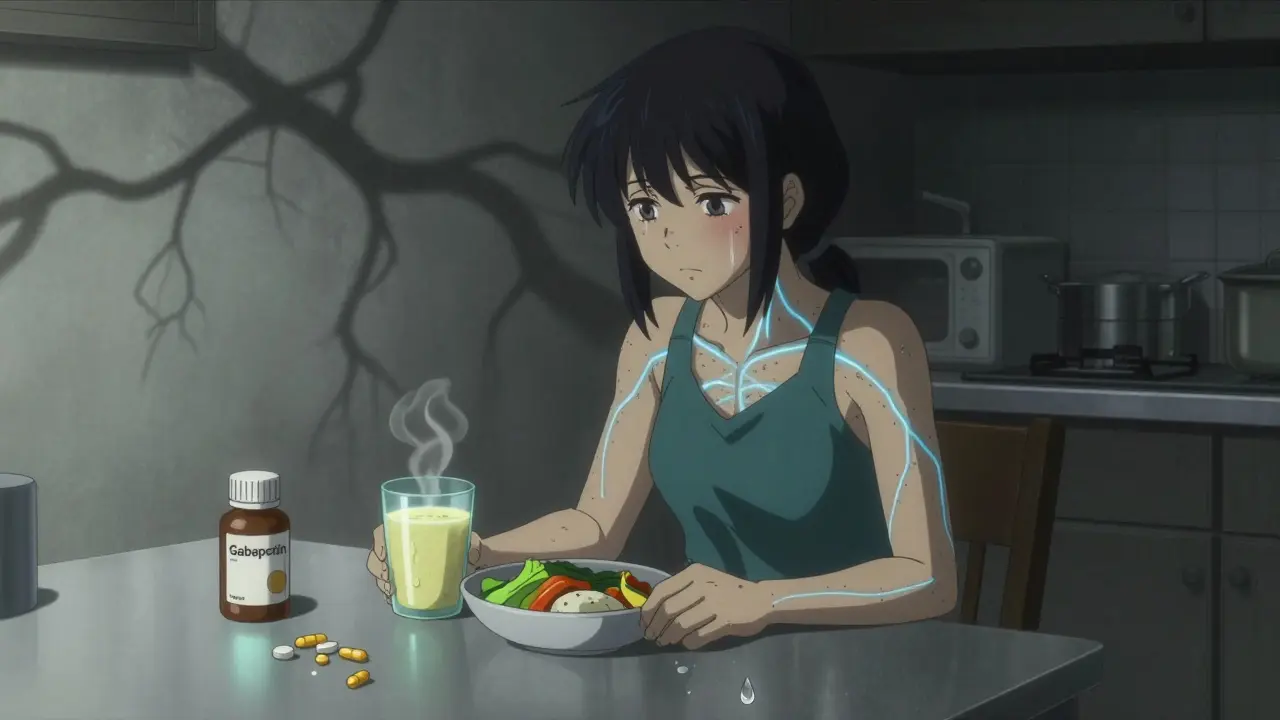
Chronic pancreatitis isn't just a diagnosis-it's a daily battle. For many, it means waking up with pain that doesn't fade, struggling to eat without discomfort, and wondering if the next pill or dose of enzymes will finally bring relief. Unlike acute pancreatitis, which comes and goes, chronic pancreatitis is a slow, relentless erosion of the pancreas. Over time, the organ loses its ability to digest food and regulate blood sugar, and pain becomes a constant shadow. About 80-90% of people with this condition live with persistent abdominal pain, according to a 2021 review in PMC. This isn't occasional discomfort. It's the kind of pain that cancels plans, disrupts sleep, and makes even simple tasks feel impossible.
Why Pain Won't Go Away
The pain in chronic pancreatitis doesn't always come from inflammation alone. As the pancreas scars and hardens, nerves get trapped, damaged, or irritated. This turns the pain into a neuropathic condition-like a faulty wiring system sending false signals. That's why common painkillers often fail. Ibuprofen or acetaminophen might help a little, but they rarely touch the deeper, burning, or stabbing sensations. Studies show that 60-70% of patients still have moderate to severe pain even after trying standard treatments.
Doctors follow a step-by-step approach, often based on the WHO pain ladder. First-line treatment is usually acetaminophen, up to 4,000 mg a day. If that doesn’t work, they turn to medications that target nerve pain: gabapentin or pregabalin. These aren’t painkillers in the traditional sense-they calm overactive nerves. A 2019 meta-analysis found that tricyclic antidepressants like amitriptyline helped 50-60% of patients. It sounds odd, but these drugs have been used for decades to treat nerve-related pain, not depression.
When those fail, opioids come into play. Tramadol is often the go-to because it’s less addictive than stronger opioids like oxycodone. But even then, 25-30% of patients get side effects like nausea or constipation. The National Pancreas Foundation reports that about 30% of patients eventually need stronger opioids, but doctors are cautious. Long-term use leads to dependence in 25-30% of cases, and the risk of addiction is real. That’s why many clinics now combine medications with non-drug options like yoga. One University of Pittsburgh study found biweekly yoga sessions improved quality of life scores by 35% over 12 weeks.
Enzyme Therapy: More Than Just Digestion
If you have chronic pancreatitis, your body can’t produce enough digestive enzymes. That means fat, protein, and vitamins slip through undigested-leading to weight loss, greasy stools, and nutrient deficiencies. Pancreatic enzyme replacement therapy (PERT) isn’t optional. It’s essential. The standard dose is 25,000 to 80,000 lipase units per meal, but many patients need even more.
Here’s the catch: not all enzymes work the same. Some are coated to survive stomach acid; others aren’t. If you’re on an uncoated formula, you’ll need to take a proton pump inhibitor (PPI) like omeprazole to protect the enzymes. Otherwise, they get destroyed before they can help. Brands like Creon®, Zenpep®, and Pancreaze® are common, but they’re expensive. Monthly costs can range from $300 to over $1,200 without insurance. Many patients stop taking them because of the cost or because they have to swallow 6-12 pills a day.
Surprisingly, enzyme therapy may also help with pain. A 2017 meta-analysis found that high-dose PERT reduced pain scores by 2-3 points on a 10-point scale in 45% of patients. The theory? When enzymes are properly delivered, they reduce the pancreas’s need to overwork, which may calm inflammation. But this effect is strongest in early-stage disease. In advanced cases, where the pancreas is mostly scar tissue, enzymes help with digestion but rarely ease pain.
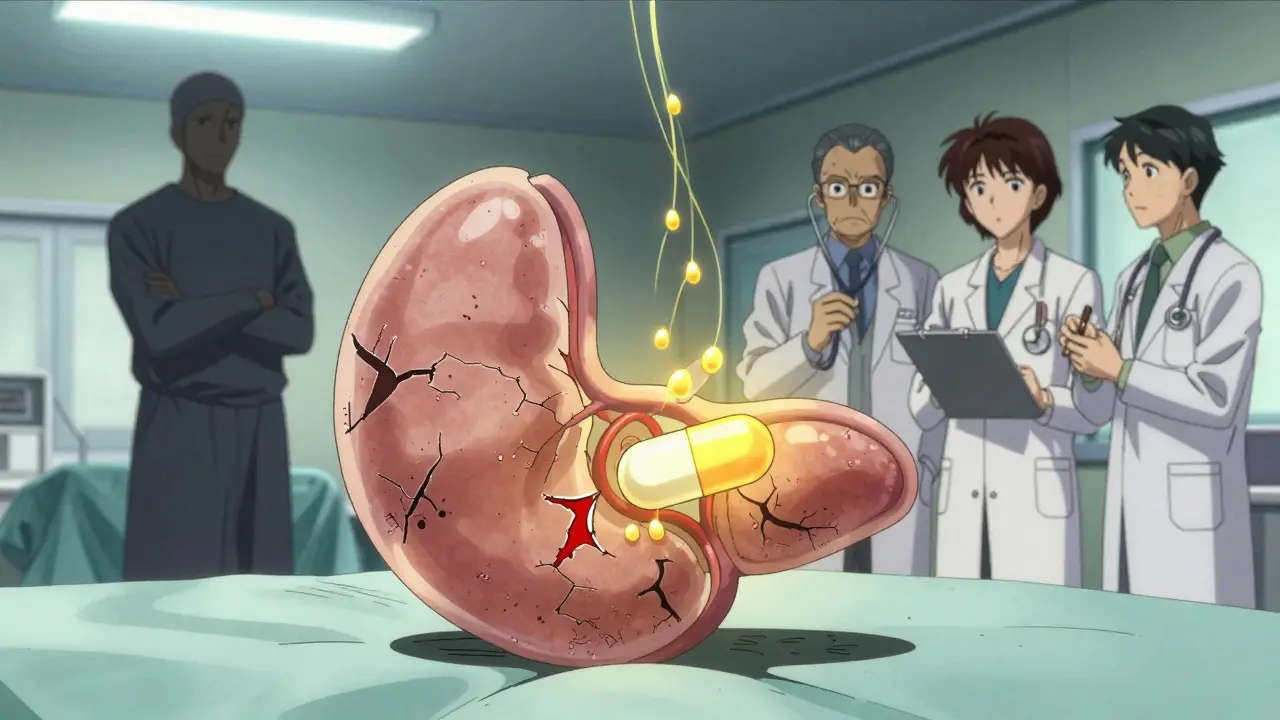
What to Eat (and What to Avoid)
Diet isn’t just about nutrition-it’s a pain trigger. Many patients find that fatty meals send their pain through the roof. The National Institute for Health and Care Excellence (NICE) recommends a low-fat diet of 40-50 grams of fat per day. That means saying goodbye to fried food, butter, cream, and most desserts. But here’s the twist: some studies show the evidence for low-fat diets reducing pain is weak. The real key might be not the total fat, but the type.
Medium-chain triglycerides (MCTs) are different. Unlike regular fats, they don’t need pancreatic enzymes to be absorbed. They go straight from the gut into the bloodstream. That’s why formulas like Peptamen® (which contains MCTs and pre-digested proteins) are often recommended. A 2010 study of eight patients found that drinking three cans a day for 10 weeks cut pain scores by 30%. You don’t have to rely on medical formulas-MCT oil can be added to smoothies, coffee, or salad dressings.
Another surprising tool? Antioxidants. A 2013 study in Gastroenterology gave patients a daily mix of selenium, beta-carotene, vitamin C, vitamin E, and methionine. After six months, 52% of them had reduced pain compared to just 23% in the placebo group. It’s not a cure, but for some, it’s a meaningful drop in pain intensity.
And don’t forget vitamins. About half of all chronic pancreatitis patients are deficient in fat-soluble vitamins: A, D, E, and K. That can lead to bone weakness, poor vision, and slow healing. Regular blood tests and supplements are often needed. Many dietitians recommend a daily multivitamin with extra D and E, especially if enzyme therapy isn’t fully controlling malabsorption.
When Medications and Diet Aren’t Enough
Some patients reach a point where pills and diets just don’t cut it. That’s when procedures come in. Endoscopic treatments like ERCP with stents can relieve pressure in blocked pancreatic ducts. About 60-70% get initial relief, but nearly half have pain return within a year. Celiac plexus blocks-where alcohol or steroids are injected near nerves around the pancreas-can give 3-6 months of pain relief. One patient described it as “nine months of near-complete relief after two years of agony.”
Surgery is the last resort, but it can be life-changing. The Frey procedure removes part of the pancreas and connects the duct to the intestine. In expert centers, 70-80% of patients report long-term pain relief. The most dramatic option is total pancreatectomy with islet autotransplantation (TPIAT). The pancreas is removed, but insulin-producing cells are harvested and reinfused into the liver. This eliminates pain in 85-90% of cases. The trade-off? Lifelong insulin dependence. For patients trapped in constant pain and opioid dependence, many say it’s worth it.

The Bigger Picture
Chronic pancreatitis isn’t just about the pancreas. It’s about addiction, isolation, and frustration. The average person waits 2-3 years to get diagnosed. By then, damage is done. Insurance often denies coverage for high-dose enzymes, forcing patients to choose between food and medication. And while new treatments are emerging-like a pH-sensitive enzyme called LipiGesic™ and nerve-stimulating devices-access is limited. Most of these advances are only available in academic medical centers, not local clinics.
The most effective care happens in teams: gastroenterologists, pain specialists, dietitians, and addiction counselors working together. But only 25% of community hospitals have these teams. The rest rely on fragmented care, where one doctor handles pain, another handles nutrition, and no one connects the dots.
One thing is clear: quitting alcohol and tobacco is non-negotiable. The NHS reports that complete abstinence improves pain control in 40-50% of patients within six months. That’s more than most medications offer. And while there’s no cure yet, the right combination of enzymes, diet, pain control, and lifestyle changes can turn a life of constant suffering into one of manageable symptoms.
What Works for Some Might Not Work for You
There’s no one-size-fits-all. One patient might find relief with gabapentin and MCT oil. Another might need a nerve block. A third might be on the waiting list for surgery. What matters is persistence. Don’t give up if the first treatment fails. Keep working with your team. Track your pain, your meals, and your symptoms. Small changes add up. And remember-you’re not alone. Thousands are on this journey. The goal isn’t perfection. It’s finding a rhythm that lets you live.
Can enzyme therapy really reduce pain in chronic pancreatitis?
Yes, in some cases. High-dose pancreatic enzyme replacement therapy (PERT) can reduce pain by 2-3 points on a 10-point scale in about 45% of patients, according to a 2017 meta-analysis. This is thought to happen because proper enzyme delivery reduces the pancreas’s overwork, which may lower inflammation. The effect is strongest in early-stage disease, not advanced scarring.
Why is a low-fat diet recommended if evidence is weak?
While studies on low-fat diets specifically for pain reduction are limited, many patients report that high-fat meals trigger pain. Doctors recommend 40-50g of fat per day as a practical starting point. The real focus is shifting to medium-chain triglycerides (MCTs), which bypass pancreatic enzyme needs and may offer better pain control without strict fat restriction.
Are antioxidants effective for managing chronic pancreatitis pain?
Yes. A 2013 study in Gastroenterology showed that a daily supplement of selenium, beta-carotene, vitamin C, vitamin E, and methionine reduced pain in 52% of patients over six months-compared to 23% in the placebo group. It’s not a cure, but for some, it’s a meaningful reduction in pain intensity.
How long does it take for enzyme therapy to start working?
Enzymes work immediately with meals, but noticeable improvements in digestion (less bloating, fewer greasy stools) usually take 1-2 weeks. Pain relief, if it occurs, may take longer-up to 4-6 weeks-especially if the dose needs adjustment. Consistency is key: take enzymes with every meal and snack.
Is surgery ever the best option for chronic pancreatitis pain?
For patients who’ve tried all medications, endoscopic treatments, and lifestyle changes without relief, surgery can be life-changing. The TPIAT procedure removes the pancreas and transplants insulin-producing cells into the liver, eliminating pain in 85-90% of cases. The trade-off is lifelong insulin dependence. Many patients who undergo this procedure say the trade-off is worth it after years of uncontrolled pain and opioid dependence.


Roland Silber
March 7, 2026 AT 21:27And yes, MCT oil in coffee? Life-saving. I put 1 tbsp in my morning brew. No more bloating by 10am.
Susan Purney Mark
March 8, 2026 AT 10:06Joey Pearson
March 8, 2026 AT 12:59Patrick Jackson
March 10, 2026 AT 02:10Amina Aminkhuslen
March 10, 2026 AT 23:54Ian Kiplagat
March 11, 2026 AT 23:50Bridget Verwey
March 13, 2026 AT 07:26Aaron Pace
March 15, 2026 AT 07:19Andrew Poulin
March 15, 2026 AT 15:02amber carrillo
March 17, 2026 AT 11:04Adebayo Muhammad
March 17, 2026 AT 18:38Joe Prism
March 18, 2026 AT 06:03Pranay Roy
March 19, 2026 AT 00:26Tim Hnatko
March 20, 2026 AT 05:54