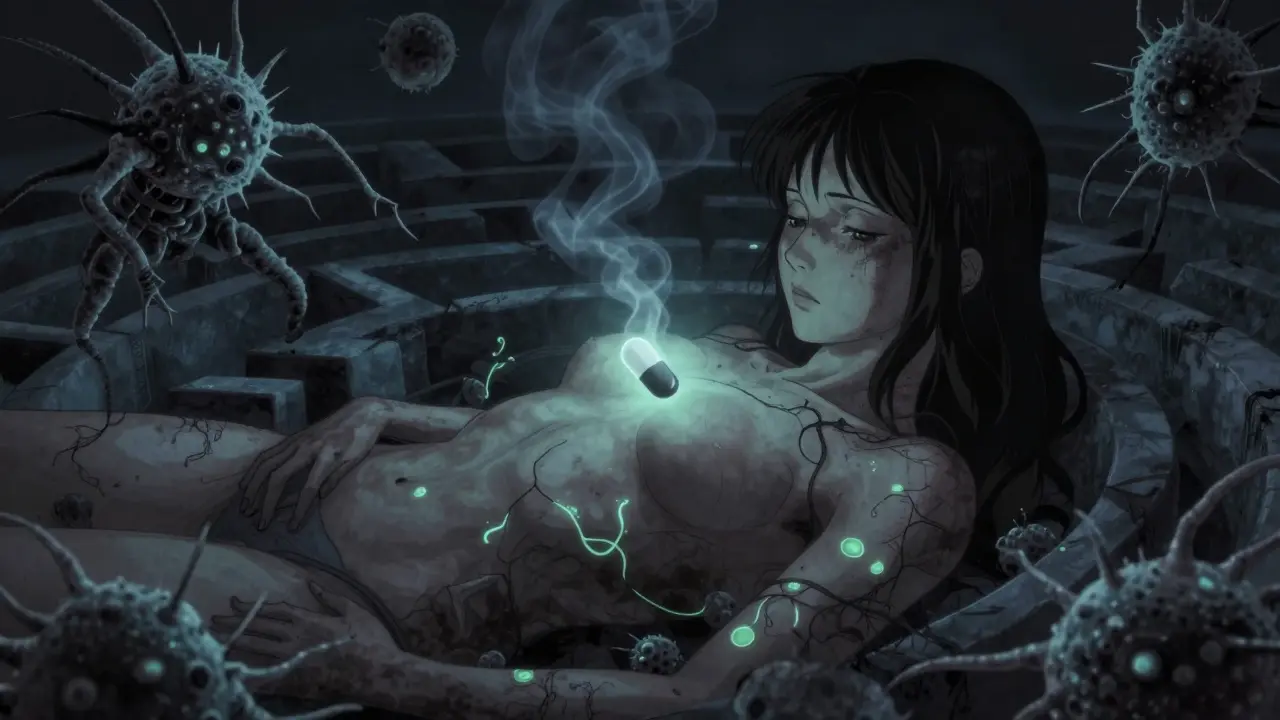
Antibiotic Resistance Progression Calculator
Every antibiotic course leaves behind resistant bacteria. As shown in the article, repeated use creates a breeding ground for microbes that no longer respond to common drugs.
Results will appear here after calculation
Every time you take an antibiotic, you're not just treating an infection-you're also shaping the future of medicine. If you've taken antibiotics multiple times over the years-maybe for a sinus infection, a urinary tract infection, or even a dental procedure-you might not realize you've been part of a silent, growing crisis. The bacteria in your body aren't just disappearing. Some of them are learning how to survive. And they're passing that knowledge to others. This isn't science fiction. It's happening right now, in hospitals, homes, and communities around the world.
How Bacteria Become Invincible
Antibiotics don't kill all bacteria. They kill the weak ones. The ones that survive? They're the ones with genetic tricks-mutations or borrowed genes-that let them shrug off the drug. These survivors multiply. Their offspring inherit the same defenses. Soon, what was once a rare trait becomes common. That's how drug-resistant bacteria form.
It's not just about overuse. It's about repeated use. Every course of antibiotics, even when taken correctly, leaves behind a population of bacteria that have been tested-and passed-that trial. Over time, your body becomes a breeding ground for microbes that no longer respond to common drugs. The World Health Organization calls this antimicrobial resistance (AMR) a "silent pandemic." And the numbers don't lie.
In the U.S., infections from carbapenem-resistant Enterobacterales (CRE)-a group of bacteria that laugh at last-resort antibiotics-jumped 460% between 2019 and 2023. One strain, NDM-CRE, now kills nearly half of the people who get bloodstream infections. In 2020 alone, CRE caused over 12,700 infections and 1,100 deaths in the U.S. And it's not just CRE. Methicillin-resistant Staphylococcus aureus (MRSA) shows up in 35% of cases. One in five urinary tract infections caused by E. coli no longer respond to standard antibiotics like ampicillin or fluoroquinolones.
The Hidden Costs: More Than Just Longer Hospital Stays
When antibiotics stop working, the consequences aren't just medical-they're personal, emotional, and financial.
One patient in the UK spent six months fighting MRSA after hip surgery. She went through 11 different antibiotic regimens. Three more surgeries. The pain was bad. But what hurt more? "Knowing conventional treatments might not work," she said, "was almost worse than the physical pain."
At Johns Hopkins, a 32-year-old with cystic fibrosis spent 18 months on continuous IV antibiotics. Her treatment cost over $1.2 million. She didn't die. But she lost years of her life to hospital rooms, failed treatments, and uncertainty.
A 2024 survey across 12 countries found that patients with resistant infections waited an average of 9.3 days before getting the right treatment. Their hospital stays? 14.7 days on average-three times longer than for patients with treatable infections. Nearly 30% suffered permanent damage: kidney failure, nerve damage, organ scarring.
And it's not just adults. Kids are getting resistant infections too. A child with a simple ear infection might need a stronger, more toxic antibiotic because the first one didn't work. And if that one fails? The next one might not even exist.
Why New Antibiotics Are Hard to Find
You might think: "Just make a new drug." But that's not simple.
Back in the 1980s, pharmaceutical companies discovered over 100 new antibiotics every year. Today? Only 39 are in clinical development. Only 8 of them are truly new-meaning they work in ways current drugs don't. The rest are tweaks of old ones. And why? Because antibiotics aren't profitable.
Companies lose money on them. A 2023 analysis found that for every dollar invested in antibiotic research, companies get back just 20 cents. Seven of the 15 big drugmakers that made antibiotics in 1990 have left the business entirely. Why bother, when a patient takes a 7-day course and never needs it again?
Meanwhile, resistance keeps growing. The Organization for Economic Cooperation and Development predicts that by 2035, resistance to last-resort antibiotics like carbapenems will double compared to 2005 levels. The Global Research on Antimicrobial Resistance (GRAM) Project warns that without action, AMR could kill 10 million people a year by 2050-more than cancer.
It’s Not Just Antibiotics
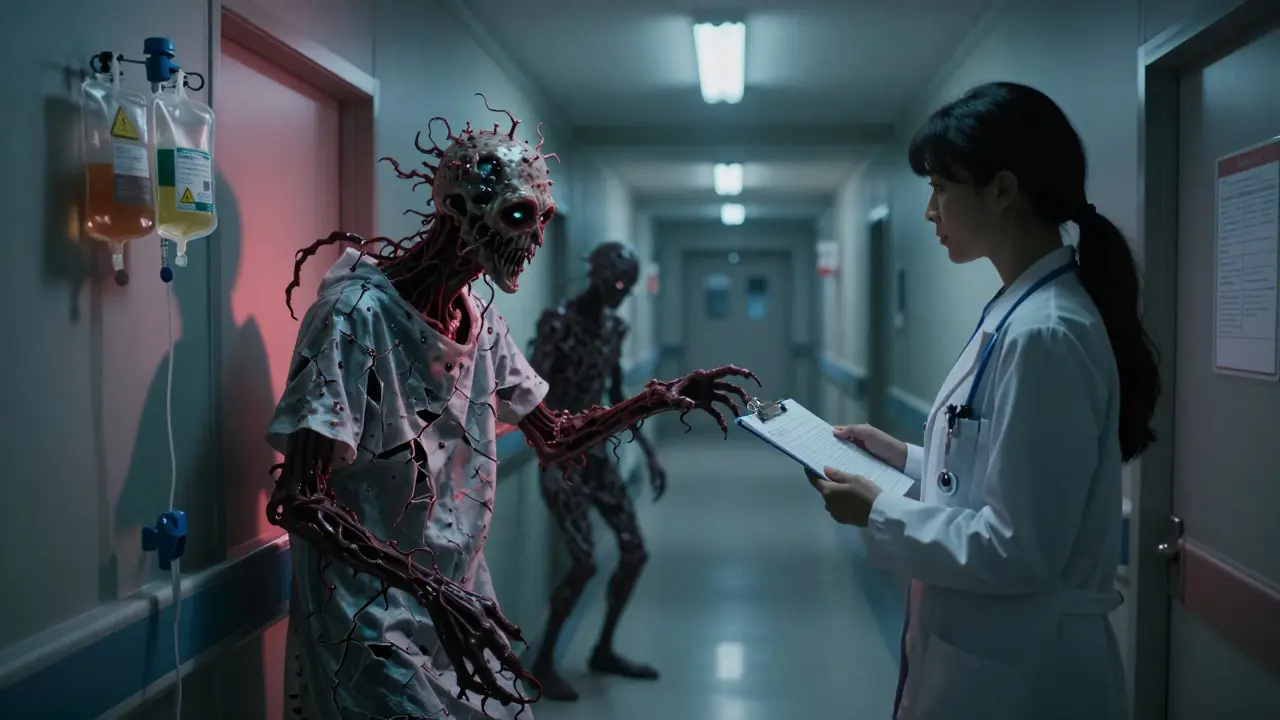
Here’s something most people don’t know: you don’t need to take antibiotics to help create superbugs.
A 2025 study in Nature Communications found that common non-antibiotic drugs-like heart medications, antidepressants, and even some over-the-counter painkillers-can trigger resistance mechanisms in bacteria. They don’t kill the bugs. But they stress them. And stressed bacteria mutate faster. They swap genes more readily. They become harder to kill-even without antibiotics being used.
This means the problem isn’t just about doctors overprescribing. It’s about everything we put into our bodies. Even if you never take an antibiotic, your environment might still be feeding resistance.
What’s Being Done-And What’s Not
Some places are fighting back. Sweden’s "Strama" program, launched in 1995, cut antibiotic use by 28% and resistance rates by 33%. Hospitals that follow the CDC’s seven-step stewardship program-like tracking prescriptions, educating staff, and reporting data-saw 22% fewer inappropriate antibiotic uses and 17% fewer cases of deadly C. diff infections.
But globally? Only 12% of countries have full national action plans with real funding. In Southeast Asia, nearly 90% of antibiotics are bought without prescriptions. In many low-income countries, people self-medicate because they can’t afford a doctor. And in the U.S., only 38% of community hospitals can test for resistant strains like NDM-CRE. That means doctors are guessing-which leads to more wrong treatments, more resistance, and more deaths.
There’s one glimmer of hope: the FDA approved cefepime-taniborbactam in January 2025. It’s the first new antibiotic in years specifically designed to beat NDM-CRE. In trials, it worked in 89.3% of cases. But it’s not a cure-all. It’s one tool. And it’s expensive. And it won’t help if we keep using antibiotics like they’re candy.
What You Can Do-Even If You’re Not a Doctor
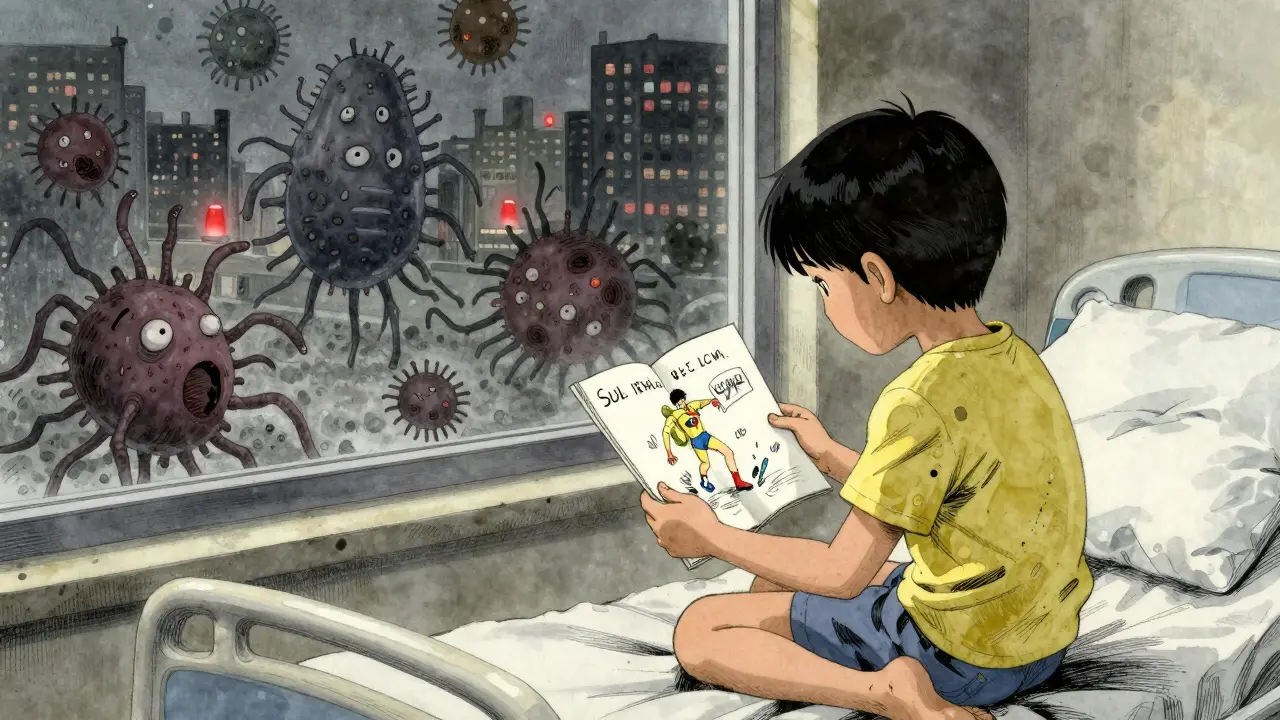
You don’t need to be a scientist to help stop this crisis. Here’s what actually works:
- Don’t ask for antibiotics for colds, flu, or sore throats. These are viruses. Antibiotics don’t work on them.
- Take every pill if your doctor prescribes antibiotics. Stopping early lets the toughest bacteria survive.
- Never share antibiotics or use leftover pills. That’s how resistance spreads in homes.
- Ask if a test is needed before taking antibiotics. A simple urine or blood test can tell if bacteria are involved-and which ones.
- Support better policies. Push for better diagnostics in your local hospital. Advocate for funding for new antibiotic research.
The truth? We’re all in this together. Every unnecessary antibiotic you take, every pill you save, every time you ask a doctor to justify a prescription-you’re helping shape the next decade of medicine.
The Future Is Not Set
We could be heading toward a world where a scraped knee leads to amputation. Where a C-section becomes a death sentence. Where chemotherapy fails because the body can’t fight off the infections it causes.
Or we could choose differently. We could invest in diagnostics. We could reward drugmakers for creating truly new antibiotics-not just more of the same. We could make sure every country can track resistance. We could stop treating antibiotics like they’re infinite.
The science is clear. The data is terrifying. But we’re not powerless. The next time you’re handed a prescription, ask: "Is this really necessary?" Your answer might save lives-yours, your family’s, and maybe even the future of modern medicine.
Can you get resistant bacteria from someone else?
Yes. Drug-resistant bacteria spread easily through direct contact, contaminated surfaces, or even food and water. You don’t need to have taken antibiotics yourself to catch a resistant infection. Hospitals, nursing homes, and crowded living conditions are hotspots for transmission. MRSA, for example, is often passed in gyms, locker rooms, and households.
Are natural remedies effective against drug-resistant bacteria?
No. While some natural substances like honey, garlic, or tea tree oil have shown antibacterial effects in lab studies, none have been proven to treat serious resistant infections in humans. Relying on them instead of proven medical care can delay treatment and lead to life-threatening complications. Antibiotic resistance requires medical intervention-not home remedies.
Why don’t we just develop more antibiotics?
Because it’s not profitable. Developing a new antibiotic costs over $1 billion and takes 10-15 years. But once approved, doctors use it sparingly-only as a last resort-to delay resistance. This means companies can’t recoup their investment. As a result, most big drugmakers have left the market. Only a handful of small biotech firms are still trying, and they lack funding.
Is antibiotic resistance getting worse because of COVID-19?
Yes. During the pandemic, antibiotics were widely overused-often given to COVID patients who didn’t have bacterial infections. Hospitals saw a 78% spike in CRE infections between 2020 and 2022. The disruption of infection control, increased use of ventilators, and longer hospital stays created perfect conditions for resistant bacteria to spread. The progress made over the previous decade was erased in just two years.
Can you test for antibiotic resistance at home?
No. There are no reliable at-home tests for antibiotic resistance. Testing requires specialized lab equipment to grow bacteria and expose them to different drugs. Even hospitals struggle with this-only 38% of U.S. community labs can test for the most dangerous strains like NDM-CRE. If you suspect a resistant infection, see a doctor and ask for culture and sensitivity testing.
What’s the difference between MRSA and CRE?
MRSA (methicillin-resistant Staphylococcus aureus) is resistant to common skin and soft tissue antibiotics like penicillin and methicillin. It’s serious but often treatable with other drugs. CRE (carbapenem-resistant Enterobacterales) resists nearly all antibiotics, including the last-resort carbapenems. CRE infections have mortality rates of 40-50% and are much harder to treat. CRE is considered an "urgent" threat by the CDC; MRSA is "serious."
What Happens Next?
If nothing changes, the next decade will be defined by untreatable infections. A child with pneumonia won’t respond to amoxicillin. A diabetic with a foot ulcer won’t heal because the infection spreads. A hip replacement becomes a death sentence.
But change is possible. It’s happened before. In the 1990s, Sweden cut antibiotic use by 28% and resistance dropped by 33%. The U.S. reduced MRSA in hospitals by 50% through strict hygiene and stewardship programs.
The tools exist. The science is clear. What’s missing is urgency. And public pressure. If enough people demand better testing, smarter prescribing, and real investment in new drugs, we can still turn this around. The bacteria are evolving. It’s time we did too.


John Smith
February 23, 2026 AT 10:00Shalini Gautam
February 23, 2026 AT 10:55Natanya Green
February 23, 2026 AT 18:48Steven Pam
February 25, 2026 AT 11:50Timothy Haroutunian
February 26, 2026 AT 04:21Erin Pinheiro
February 26, 2026 AT 07:40Brandice Valentino
February 27, 2026 AT 01:30Larry Zerpa
February 28, 2026 AT 11:26Gwen Vincent
March 1, 2026 AT 16:02Nandini Wagh
March 3, 2026 AT 08:02Holley T
March 4, 2026 AT 08:04Lou Suito
March 5, 2026 AT 06:33Joseph Cantu
March 7, 2026 AT 00:43Lisandra Lautert
March 7, 2026 AT 09:41