When a brand-name drug’s patent runs out, you might think generics hit the shelves right away. But in reality, it often takes years before you can buy a cheaper version-even after the patent officially expires. This isn’t a glitch. It’s the system. And it’s costing patients billions every year.
Why Don’t Generics Show Up Right After the Patent Expires?
The clock starts ticking when a drug’s 20-year patent is filed. But by the time the drug hits the market, 8 to 10 years are already gone-used up in clinical trials, FDA reviews, and manufacturing setup. That means the actual time a company has to make profits before generics arrive is often only 7 to 12 years. And even then, it’s not over. The U.S. has layers of legal protections that delay generic entry. The FDA grants New Chemical Entity (NCE) exclusivity for 5 years, meaning no generic can even apply during that time. If the drug was tested for a new use, it gets an extra 3 years of exclusivity. Orphan drugs? That’s 7 years. Add on 6 months for pediatric studies, and you’ve got a drug protected for over a decade-even before any patent challenges begin.The Hatch-Waxman Act: The Rules of the Game
The Hatch-Waxman Act of 1984 created the modern system for generic drugs. It lets companies skip expensive clinical trials by proving their version is bioequivalent-same active ingredient, same dose, same effect. They file an Abbreviated New Drug Application (ANDA) instead of a full New Drug Application. But here’s the catch: if a generic company believes a patent is invalid or not infringed, they must file a Paragraph IV certification. That’s a legal challenge. The brand-name company then has 45 days to sue. If they do, the FDA is forced to delay approval for up to 30 months. That’s called the 30-month stay. But here’s what most people don’t realize: the 30-month stay isn’t the main reason generics are late. Research shows that even after the 30 months end, it takes another 3.2 years on average for the generic to actually launch. Why? Because the real delays happen before the lawsuit even starts.Patent Thickets: The Hidden Barrier
Brand-name companies don’t rely on just one patent. They file dozens. Active ingredient? Patented. Specific pill coating? Patented. How it’s made? Patented. How it’s used for a new condition? Patented again. These are called patent thickets. A drug might have 14 or more patents listed in the FDA’s Orange Book. Each one creates a legal hurdle. Generic manufacturers must either wait for each patent to expire or challenge them one by one. A 2022 study found that drugs with more than 10 Orange Book patents take 37% longer to reach the market. Cardiovascular drugs? On average, generics take 3.4 years to arrive after patent expiration. Dermatology drugs? Just 1.2 years. Why the difference? Complex drugs with more patents face more legal roadblocks.The 180-Day Exclusivity Race
The first generic company to successfully challenge a patent gets a special reward: 180 days of market exclusivity. No other generic can enter during that time. Sounds fair, right? Not always. That 180-day window creates pressure. The first filer has to get their manufacturing perfect, get FDA approval, and launch within 75 days of approval-or they lose the exclusivity. Many don’t make it. About 22% of first filers delay launch because of production issues. Another 10% lose out because of court rulings. This race can backfire. Sometimes, the first filer doesn’t even launch at all. They strike a deal with the brand-name company to delay entry. These are called reverse payment settlements. The brand pays the generic to stay off the market. The FTC estimates these deals cost consumers $3.5 billion a year.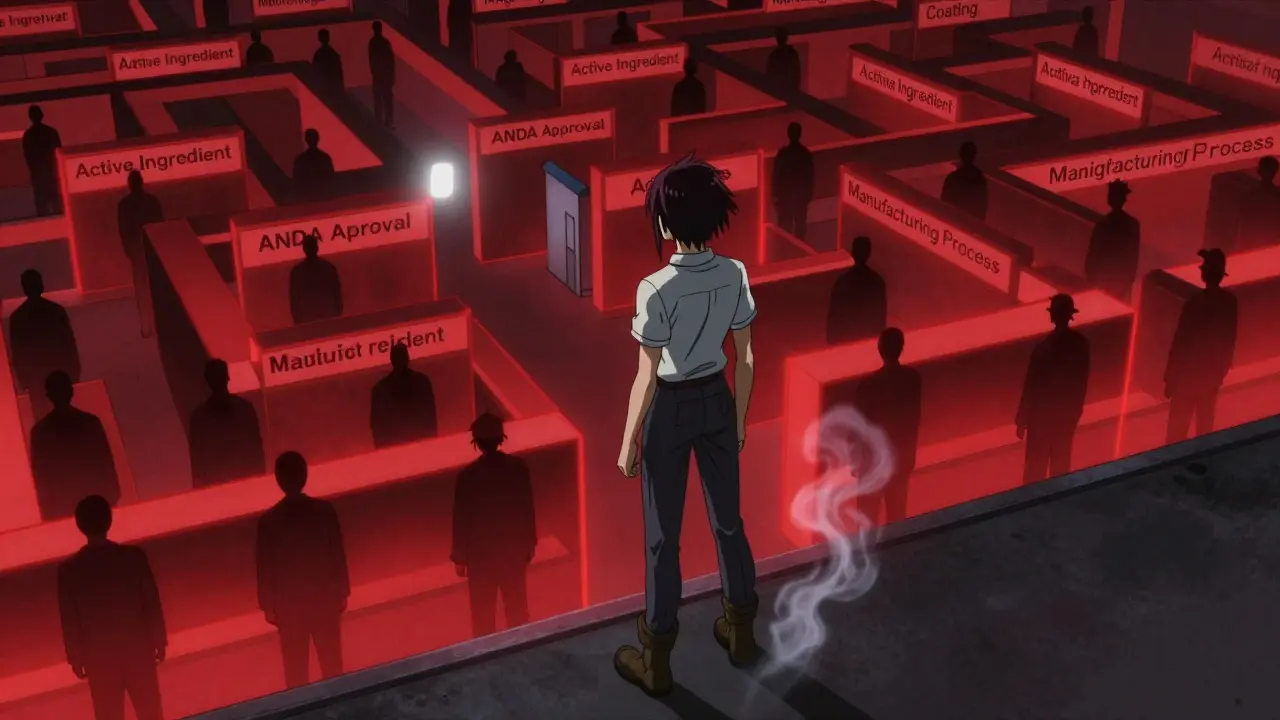
Why Some Generics Never Make It to Market
Even when the FDA approves a generic, it doesn’t mean it’s available. In 2022, only 62% of approved generics hit pharmacies within six months. Why? Three reasons:- Patent litigation-lawsuits drag on, and manufacturers wait for legal clarity.
- Manufacturing delays-making a generic isn’t easy. Some drugs require rare chemicals or complex production processes.
- Supply chain issues-many generic manufacturers rely on overseas suppliers. A single factory shutdown can delay everything.
Who Controls the Generic Market?
The generic drug industry is concentrated. Three companies-Teva, Viatris, and Sandoz-control 45% of the U.S. market. That gives them power. They can afford to fight long patent battles. Smaller companies often can’t. This concentration also affects prices. When only one or two companies make a generic, competition is weak. Prices drop slower. When multiple companies enter, prices crash. That’s why the 180-day exclusivity period is so important-it’s the only thing that forces the first competitor in.What’s Changing? New Rules, New Challenges
There’s been progress. The CREATES Act of 2019 stopped brand-name companies from blocking access to samples needed for testing. The Orange Book Transparency Act of 2020 forced companies to list patents more accurately. Since 2023, patent listing disputes have dropped by 32%. The FDA is also trying to speed things up. Under GDUFA II, they promised to review complex generics in 24 months instead of 36. But only 62% of applications met that target in 2024. The biggest threat now? Patent evergreening. Brand-name companies make tiny changes-switching from a tablet to a capsule, changing the release mechanism-and file new patents. A 2024 study found 68% of drugs get at least one new patent within 18 months of the original expiration. That keeps generics out longer.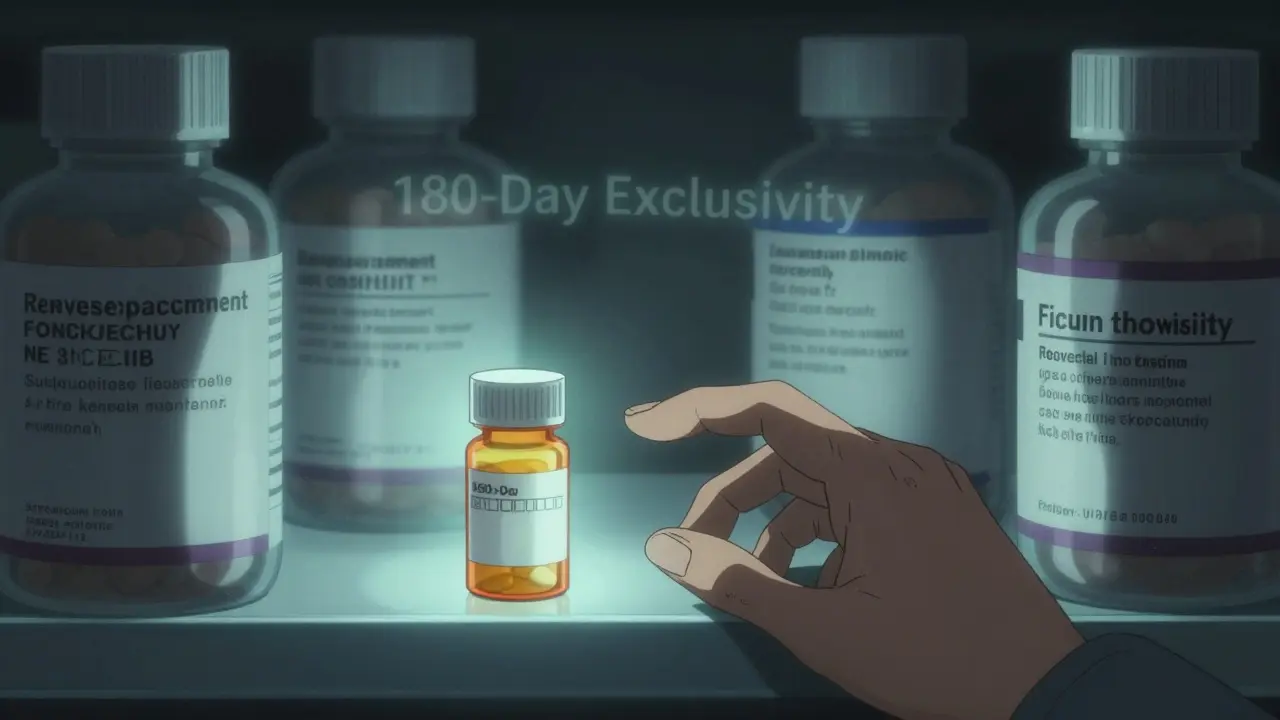
What’s the Real Wait Time?
The FDA says the median time from patent expiration to generic availability is 18 months. But that’s an average. For some drugs, it’s a few weeks. For others, it’s over five years. Complex biologics-like insulin or rheumatoid arthritis drugs-are the worst. They’re made from living cells, not chemicals. The rules for their generics (called biosimilars) are stricter. On average, biosimilars take 4.7 years to arrive after the original patent expires. And here’s the kicker: even when generics are available, many patients still pay full price. Pharmacists aren’t always required to substitute. Doctors don’t always prescribe generics. Insurance plans sometimes don’t cover them well. So the system may be working-but patients still don’t always benefit.What You Can Do
If you’re paying for a brand-name drug, ask your pharmacist: Is there a generic? If there is, ask why you’re not getting it. Sometimes it’s just a formulary issue. Other times, the doctor hasn’t updated the prescription. Check the FDA’s Orange Book online. You can see which patents are still active and whether a generic has been approved. If a generic exists but isn’t on the shelf, call your pharmacy. Ask them to order it. And if you’re on a tight budget, consider mail-order pharmacies or patient assistance programs. Many generic manufacturers offer discounts directly.What’s Next?
The FDA is testing AI tools to speed up bioequivalence testing. That could cut development time by 25%. Biosimilars are expected to capture 45% of the biologic market by 2030-potentially saving $150 billion a year. But until patent thickets, reverse payments, and evergreening are fully addressed, the gap between patent expiration and real availability will remain. The system was designed to balance innovation and access. Right now, it’s tilted too far toward the former.How long after a patent expires does a generic drug usually become available?
On average, generic drugs become available about 18 months after patent expiration. But this varies widely-from a few weeks for simple drugs to over five years for complex biologics or those with multiple patent protections. Delays are often caused by legal challenges, manufacturing issues, or reverse payment settlements.
What is the Hatch-Waxman Act and how does it affect generic drugs?
The Hatch-Waxman Act of 1984 created the legal framework for generic drug approval in the U.S. It allows manufacturers to prove bioequivalence through an Abbreviated New Drug Application (ANDA), skipping costly clinical trials. It also established the 30-month stay for patent litigation and the 180-day exclusivity period for the first generic challenger. While it was meant to balance innovation and affordability, it’s now used by brand-name companies to delay competition.
Why do some generic drugs never reach the market even after FDA approval?
Even after FDA approval, many generics don’t launch due to patent litigation, manufacturing delays, or supply chain issues. Some first-filer companies forfeit their 180-day exclusivity because they can’t ramp up production in time. Others strike deals with brand-name companies to delay entry. About 38% of approved generics don’t hit shelves within six months of approval.
What are patent thickets and how do they delay generics?
Patent thickets are multiple overlapping patents on a single drug-covering the active ingredient, formulation, manufacturing process, and uses. Brand-name companies use them to create legal barriers. A drug with over 10 Orange Book-listed patents takes 37% longer to reach the generic market. Generic manufacturers must challenge each patent individually, which takes years and costs millions.
What’s the difference between a generic drug and a biosimilar?
Generics are exact copies of small-molecule drugs made from chemicals. Biosimilars are similar-but not identical-copies of complex biologic drugs made from living cells. Because biologics are harder to replicate, biosimilars require more testing and face longer approval times. While generics usually arrive within 1-2 years of patent expiry, biosimilars take an average of 4.7 years.
Can I ask my pharmacist to switch me to a generic?
Yes. In most cases, pharmacists can substitute a generic unless the prescription says "Dispense as Written" or "Brand Necessary." If your doctor hasn’t specified that, ask your pharmacist if a generic version is available and approved. If it is, they’re legally allowed to switch it unless you object.
Rulich Pretorius
December 15, 2025 AT 11:02The system isn't broken-it's working exactly as designed to protect profits, not patients. We call it innovation, but it's just legal gymnastics with a side of greed. The 180-day exclusivity loophole? That's not competition-it's a cartel handshake. And biosimilars taking nearly five years? That's not science, that's sabotage dressed up as regulation.
It's not about whether generics can be made-it's about whether anyone's allowed to make them. The FDA doesn't block them; the lawyers do. And the worst part? We all pay for it-in co-pays, in delayed treatments, in silent suffering.
We need to dismantle the Orange Book as a weapon, not a directory. No more patent thickets. No more 30-month stays without real cause. And absolutely no more reverse payments. If a patent is valid, let it stand. If it's not, let the market decide.
This isn't about pharma being evil-it's about a system that rewards delay over delivery. And until we stop rewarding that, patients will keep losing.
Natalie Koeber
December 15, 2025 AT 23:50so like… are u telling me the fda is in on it?? like the whole thing is a scam?? i mean, i knew drugs were expensive but this is like… government-sanctioned robbery??
who even owns the fda?? is it just big pharma employees with badges??
also why do i have to pay $400 for insulin when the pill is literally just… sugar??
Dwayne hiers
December 16, 2025 AT 09:22Let’s clarify a common misconception: the 18-month median isn’t the norm-it’s the outlier. The mean time-to-market is closer to 3.2 years due to heavy skew from biologics and complex molecules. The Hatch-Waxman Act was never intended to be a tool for patent extension-it was a compromise. But the industry weaponized Paragraph IV certifications and the 30-month stay into de facto extensions.
What’s worse is the administrative burden. The FDA’s GDUFA timelines are aspirational. Only 62% of complex generics meet the 24-month review window because the agency is understaffed and underfunded. Meanwhile, brand-name companies hire entire legal teams to file redundant patents-sometimes 20+ per drug.
The CREATES Act helped, but enforcement is spotty. And without congressional action to cap patent listings or ban reverse payments, we’re just rearranging deck chairs on the Titanic.
Edward Stevens
December 17, 2025 AT 21:26So let me get this straight-we’ve got a system where the only way to get a cheap drug is to sue the company that made it… and then wait three years while they pay you to not sell it?
Wow. Just… wow. I didn’t know we were running a Shakespearean tragedy with more lawsuits than soliloquies.
Next up: the FDA starts charging interest on expired patents. Pay $500 to unlock your generic. Pay $1000 for the right to breathe while taking it.
Daniel Thompson
December 18, 2025 AT 23:50As someone who works in regulatory compliance, I can confirm the delays are real-but not because of malice. It’s systemic inertia. The FDA has to verify every single excipient, every manufacturing line, every stability study. One typo in a batch record can delay approval for months. And generics? They’re made in factories with 1990s equipment in countries with sketchy oversight.
Don’t blame the regulators. Blame the lack of investment in global supply chain resilience. And stop pretending this is about ethics. It’s logistics. It’s quality control. It’s risk mitigation. The system isn’t broken-it’s just not optimized for speed.
Also, if you think generics are cheaper, check your insurance formulary. Many plans still prefer brand-name drugs for rebates. You’re not saving money-you’re just paying someone else to pocket it.
Alexis Wright
December 19, 2025 AT 18:53Let’s be brutally honest: this isn’t about health. It’s about control. The pharmaceutical industry doesn’t want you healthy. They want you dependent. A $3 insulin pill doesn’t make money. A $300 insulin pen that you need for life? That’s a goldmine.
They don’t just patent the drug-they patent your suffering. They patent your fear. They patent your desperation.
And the worst part? You’re still buying it. You’re still paying. You’re still thanking them for the ‘option’ to live.
Wake up. This isn’t capitalism. It’s medical feudalism. And you’re the serf.
Rich Robertson
December 20, 2025 AT 05:20In India, generics hit the market within weeks of patent expiry-because they don’t play the same game. No 30-month stays. No patent thickets. No reverse payments. Just science and competition.
But here? We’ve turned medicine into a courtroom drama. The same companies that spend billions on ads telling you to ask your doctor for their $500 pill are the ones suing anyone who tries to make a $5 version.
It’s not just unethical-it’s culturally insane. We celebrate innovation, but punish affordability. We cheer on breakthroughs, then bury the solutions.
Maybe it’s time we stop treating medicine like a luxury and start treating it like a right.
Thomas Anderson
December 22, 2025 AT 00:25Simple answer: if you need a generic, ask your pharmacist. They know what’s approved. If it’s not on the shelf, they can order it. Most of the time, it’s just a formality. No lawsuit needed. No drama. Just a phone call.
Also, check GoodRx. Sometimes the cash price for the generic is cheaper than your copay for the brand. Crazy, right?
Don’t wait for Congress. Just ask.
Wade Mercer
December 22, 2025 AT 01:39People who complain about drug prices are the same people who want free healthcare but won’t pay taxes to fund it. You want cheap drugs? Then fund the FDA. Then fund the labs. Then fund the inspectors. Stop blaming corporations and start blaming your own refusal to pay for the system that makes this possible.
Also, if you can’t afford your meds, you’re not a victim-you’re irresponsible. There are assistance programs. You just don’t want to do the work.
Jonny Moran
December 22, 2025 AT 10:10Hey, I know this stuff is frustrating-but there’s hope. The FDA’s AI tools for bioequivalence testing? That’s a game-changer. If they cut development time by 25%, we’re talking about generics hitting shelves in under a year for most drugs.
And biosimilars? They’re coming fast. By 2030, we could be saving $150 billion a year. That’s not a dream-it’s a projection.
Yes, the system is broken. But we’re fixing it. Slowly. Messily. But still.
Keep pushing. Keep asking. Keep demanding. Change doesn’t come from silence.
Sarthak Jain
December 22, 2025 AT 13:24bro in india we get generic insuline for like 200 rs... like 2.50 dollars... and here u say 18 months? bro its 5 years??
how is this even legal??
u guys have so much money but still people die cause they cant afford pills??
plz help
Tim Bartik
December 22, 2025 AT 15:15THEY’RE STUFFING OUR MEDS WITH CORPORATE GREED AND CALLING IT ‘INNOVATION’!!
THEY’RE NOT MAKING DRUGS-THEY’RE MAKING PRISONERS.
IF YOU’RE STILL BUYING BRAND-NAME, YOU’RE PAYING FOR THEIR YACHTS.
AMERICA: WHERE HEALTHCARE IS A GAME AND PATIENTS ARE THE PIONS.
WE NEED A REVOLUTION. OR AT LEAST A REALLY BIG CLASS ACTION SUIT.
Sinéad Griffin
December 22, 2025 AT 21:09so like… if i buy a generic… is it gonna work?? or is it just a placebo with a cheaper label?? 😭
also why do i feel like the FDA is just… taking a nap?? 🛌💤
pls someone tell me my insulin isn’t a scam 😭💖
jeremy carroll
December 24, 2025 AT 10:13I used to think generics were sketchy… until my dad started taking them for his blood pressure. Same pill. Same effect. $3 instead of $120.
Turns out, the only thing different was the price tag.
So if you’re scared to switch? Don’t be. Talk to your doc. Ask your pharmacist. You’ve got nothing to lose but the overcharge.
Daniel Wevik
December 26, 2025 AT 02:47Let’s not forget the real heroes: the generic manufacturers who risk millions to challenge patents, navigate regulatory mazes, and build sterile facilities with outdated tech-all for pennies on the dollar.
The system is rigged, but these companies still show up. They don’t get ads. They don’t get parades. They just make the pills.
And every time you choose a generic, you’re voting for a fairer system.
Don’t underestimate the power of that choice.
Rulich Pretorius
December 27, 2025 AT 01:03And yet, the real tragedy isn’t the delay-it’s the silence. Patients don’t know they’re being played. They think the drug is expensive because it’s ‘better.’ They don’t realize the pill in their hand is chemically identical to the one that costs 1/20th the price.
Education is the only real antidote here. Not legislation. Not lawsuits. Just awareness.
So if you read this? Share it. Tell someone. Ask your pharmacist. Make noise.
Because when people stop accepting the lie, the system has to change.