
Fluid Retention Management Tool
Reduce Moon Face with Smart Fluid Management
This tool helps you track sodium intake and calculate optimal hydration based on corticosteroid treatment guidelines. Use it daily to manage fluid retention and reduce facial swelling.
Based on your steroid duration and sodium intake. Reducing sodium below 1,500 mg/day may significantly improve facial swelling.
When you’re taking corticosteroids like prednisone to control inflammation from conditions like rheumatoid arthritis, Crohn’s disease, or lupus, you might not expect to wake up one day and barely recognize your face. The roundness, the puffiness, the way your jawline seems to disappear - this is moon face, a common and deeply unsettling side effect of long-term steroid use. It’s not just about looks. It’s about feeling like a stranger in your own skin, avoiding mirrors, skipping social events, and wondering if the medication that’s saving your health is ruining your sense of self.
Why Does Moon Face Happen?
Moon face isn’t caused by gaining fat everywhere. It’s fat being pulled to your face - and fluid building up under your skin. Corticosteroids mimic cortisol, your body’s natural stress hormone. When you take them for weeks or months, your body gets flooded with cortisol-like signals. This tricks your fat cells into storing more fat in your cheeks, chin, and neck. At the same time, your kidneys hold onto sodium and water. That extra fluid swells your face, making it look puffy and full, even if you haven’t eaten much. This isn’t random. Studies show that about 25-30% of people on long-term steroid therapy develop this change. The risk goes up with higher doses - especially above 7.5 mg of prednisone daily - and after three months or more of continuous use. Women and younger adults are more likely to notice it, possibly because of how their bodies naturally store fat. It’s not dangerous by itself, but it’s a visible sign that your body is under metabolic stress. Moon face often comes with other changes: weight gain around the belly, thinning skin, easy bruising, and sometimes high blood sugar.It’s Not Just Cosmetic - It Affects Your Treatment
Many patients don’t talk about how much moon face hurts emotionally. One person on a Crohn’s disease forum said they avoided family photos for months because they didn’t recognize themselves. Another shared that friends stopped inviting them out, assuming they were “just gaining weight.” The psychological toll is real. A 2024 study found that body image distress from steroid side effects directly lowers how likely people are to stick with their treatment. In fact, 23% of patients with inflammatory bowel disease stopped taking their steroids - even when they still needed them - just because of how they looked. This is a dangerous trade-off. Stopping your medication without medical guidance can cause adrenal crisis - a life-threatening drop in cortisol levels. So managing moon face isn’t about vanity. It’s about staying on the treatment that keeps your disease under control while minimizing the side effects.What You Can Do: Practical Management Strategies
There’s no magic fix. You can’t “spot-reduce” moon face with facial exercises or special creams. But you can slow it down, reduce the swelling, and make it easier to live with - while still taking your medicine safely.1. Work With Your Doctor to Lower Your Dose
The single most effective way to reduce moon face is to take the lowest possible dose for the shortest time. Your doctor may be able to switch you to an alternate-day dosing schedule, or slowly taper you down as your condition improves. Never stop or cut back on steroids on your own. Abruptly stopping can cause fatigue, nausea, low blood pressure, and even shock. Always adjust under medical supervision.2. Cut Back on Salt - A Lot
Sodium is the main driver of fluid retention. The NHS and Cleveland Clinic both recommend limiting sodium to under 1,500 mg per day if you’re on steroids. That’s less than half the average American’s daily intake. Processed foods, canned soups, bread, sauces, and even breakfast cereals are loaded with hidden salt. Read labels. Cook at home. Use herbs, lemon, and vinegar instead of salt to flavor food. Even small changes - like skipping the soy sauce on your stir-fry or choosing unsalted nuts - add up.3. Drink More Water
It sounds backwards, but drinking more water helps your body flush out excess sodium. When you’re dehydrated, your body holds onto every drop of fluid. When you drink enough - at least 2 to 3 liters a day - your kidneys work better and release the extra water. One patient reported noticeable facial swelling reduction within two weeks of switching to 3 liters of water daily. Don’t wait until you’re thirsty. Keep a bottle with you and sip steadily.4. Eat More Potassium-Rich Foods
Potassium helps balance sodium in your body. Bananas, sweet potatoes, spinach, avocados, beans, and oranges are all good sources. While this isn’t a cure, it supports your body’s natural fluid regulation. Pairing potassium-rich foods with low-sodium choices can make a real difference in how puffy you feel.5. Monitor Blood Sugar
Corticosteroids raise blood sugar. Moon face often appears alongside insulin resistance. If you’re on steroids for more than a few months, ask your doctor to check your fasting glucose every 3-6 months. If your levels start climbing, you might need dietary changes or medication to prevent steroid-induced diabetes - which can make weight gain even harder to manage.6. Move Gently - But Don’t Overdo It
Steroids cause muscle weakness, so intense workouts might leave you exhausted or injured. But gentle movement helps. Walking, swimming, or light resistance training with bands can help maintain muscle mass and improve circulation. Avoid high-intensity cardio that causes stress - that can trigger more cortisol release. Focus on consistency, not intensity.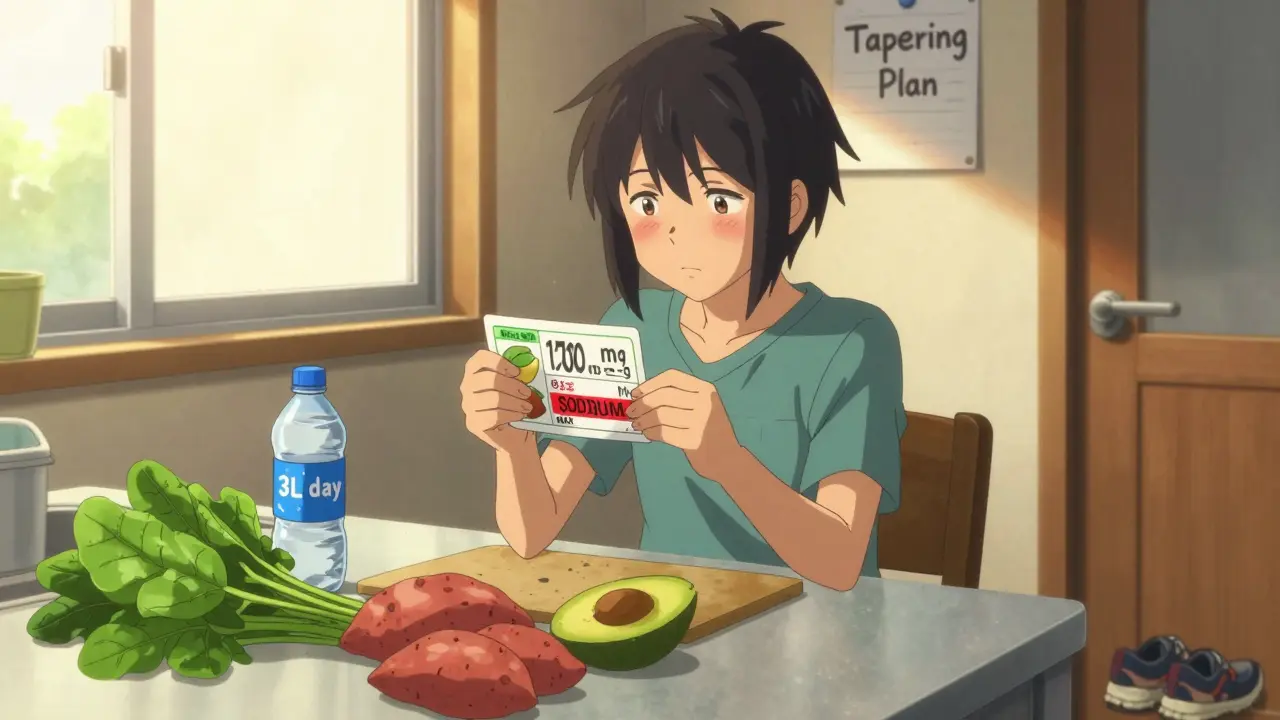
How Long Does Moon Face Last?
The good news: it usually goes away. Once you stop taking steroids - and only after your doctor safely tapers you off - your body begins to rebalance. Facial swelling typically starts to improve within a few weeks, but full recovery can take 6 to 12 months. The longer you were on steroids, the longer it may take. Patience is key. Some people notice their face returning to normal faster if they’ve followed the dietary and hydration tips above.When to Seek Help Beyond Diet and Dose
If you’ve been off steroids for over a year and moon face hasn’t improved, talk to your doctor. In rare cases, persistent facial fullness could point to an underlying condition like Cushing’s syndrome caused by a tumor. If you also have purple stretch marks, easy bruising, high blood pressure, or muscle weakness, get checked. Also, don’t ignore the emotional side. If you’re avoiding social situations, feeling depressed, or obsessing over your appearance, consider talking to a counselor. The Cushing’s Support & Research Foundation reports that nearly half of their members seek psychological help specifically for body image issues tied to steroid use. You’re not alone - and support exists.
What’s Coming Next?
Researchers are working on new steroid-like drugs called SEGRMs (selective glucocorticoid receptor modulators). Early trials show these can reduce inflammation without causing as much weight gain or moon face - down to 63% fewer cases compared to traditional steroids. But these aren’t available yet. For now, the best tools are the ones you already have: smart dosing, low-sodium eating, hydration, and medical supervision.Final Thoughts
Moon face isn’t a personal failure. It’s a side effect of powerful medicine. You’re not lazy. You’re not out of control. You’re managing a chronic illness with a drug that has unavoidable trade-offs. The goal isn’t to look exactly like you did before - it’s to feel strong, healthy, and confident enough to live your life while your body heals. Start small. Cut one salty snack. Drink an extra glass of water today. Talk to your doctor about your dose. You’re not powerless. You have more control than you think - and you’re not alone in this.Can moon face be reversed without stopping steroids?
Yes, you can reduce the swelling without stopping steroids by lowering sodium intake, drinking more water, and eating potassium-rich foods. These steps help your body release excess fluid and reduce puffiness. However, the full reversal of moon face usually happens only after steroid doses are lowered or stopped under medical supervision.
How long does it take for moon face to go away after stopping prednisone?
Most people see improvement in facial swelling within 4-8 weeks after stopping prednisone, but full recovery typically takes 6 to 12 months. The duration depends on how long you were on steroids, your dose, and your metabolism. Sticking to a low-sodium, high-water diet can speed up the process.
Is moon face the same as Cushing’s syndrome?
Moon face is one symptom of Cushing’s syndrome, but they’re not the same. Cushing’s syndrome is a medical condition caused by too much cortisol - either from a tumor or long-term steroid use. When steroids cause it, it’s called iatrogenic Cushing’s. Moon face alone doesn’t mean you have Cushing’s, but if you have other signs like purple stretch marks, high blood pressure, or muscle weakness, you should get checked.
Can exercise get rid of moon face?
Exercise alone won’t remove moon face, because it’s not caused by excess fat in your face - it’s caused by fluid retention and fat redistribution. But gentle movement like walking or yoga helps circulation and reduces overall swelling. High-intensity workouts may worsen fluid retention in some people, so focus on low-impact, consistent activity instead.
Are there any supplements that help with steroid-induced weight gain?
No supplement has been proven to reverse moon face or steroid weight gain. Avoid products claiming to “burn steroid fat” - they’re unregulated and potentially dangerous. The only proven methods are medical supervision, low-sodium diet, hydration, and gradual dose reduction. Focus on whole foods and lifestyle changes, not pills.
Why does my face look puffy even though I’m not eating much?
Corticosteroids change how your body stores and moves fat and fluid. Even if you’re eating less, the drugs cause fat to move to your face and your kidneys to hold onto water. It’s not about calories - it’s about hormones. That’s why people on steroids often gain weight in their face and belly while staying thin elsewhere.
Should I be worried if moon face appears after only a few weeks on steroids?
It’s unusual, but not impossible. Moon face typically develops after 3 months or more of use. If you notice facial swelling earlier, especially with other symptoms like high blood pressure, acne, or mood changes, tell your doctor. You may be more sensitive to steroids, or your dose might be too high for your condition.



Dan Gaytan
December 24, 2025 AT 04:22Chris Buchanan
December 24, 2025 AT 15:31Wilton Holliday
December 25, 2025 AT 07:17Raja P
December 26, 2025 AT 05:12Joseph Manuel
December 26, 2025 AT 17:50Harsh Khandelwal
December 28, 2025 AT 08:20Andy Grace
December 29, 2025 AT 09:33Delilah Rose
December 29, 2025 AT 23:43Spencer Garcia
December 31, 2025 AT 04:44Bret Freeman
January 1, 2026 AT 08:51Lindsey Kidd
January 2, 2026 AT 15:52Austin LeBlanc
January 4, 2026 AT 00:02Dan Gaytan
January 4, 2026 AT 09:08