Knowing when your medication expires isn’t just about avoiding waste-it could mean the difference between getting better and getting sicker. You’ve probably opened a medicine bottle, squinted at a date, and wondered: is this still good? The answer isn’t as simple as ‘if it’s past the date, toss it.’ Some pills are fine months after expiration. Others can become dangerous. Here’s how to read expiration dates correctly and what to do next.
What an Expiration Date Actually Means
The date on your pill bottle isn’t a ‘use-by’ warning like milk. It’s a manufacturer’s guarantee: until this date, the drug will work as intended and be safe. That means full potency, correct chemical structure, and no harmful breakdown products. The U.S. Food and Drug Administration (FDA) requires this date on all prescription and over-the-counter meds since 1979. Manufacturers test each drug under heat, humidity, and light to see how long it stays stable. Most last 1 to 5 years from manufacture.
But here’s the catch: that date assumes you stored the medicine properly. If you left your insulin in a hot car or kept your antibiotics in a steamy bathroom, it could degrade long before the printed date.
How Expiration Dates Are Shown on Packaging
There’s no single format. You’ll see different labels depending on where the drug was made or sold:
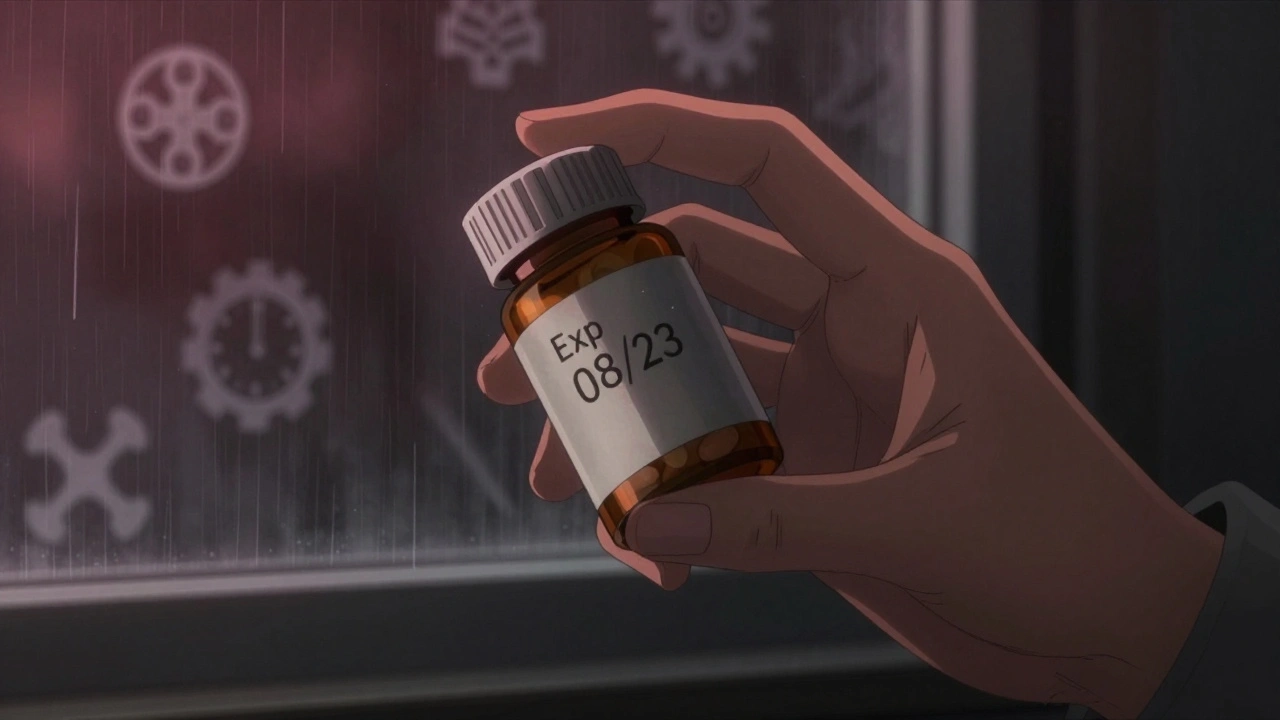
- MM/YY or MM/YYYY - Common in the U.S. If it says 08/23, it expires on August 31, 2023.
- DD/MM/YYYY - Used in the EU and Australia. 15/06/2025 means June 15, 2025.
- YYYY-MM-DD - Becoming standard globally. 2025-12-09 means December 9, 2025.
Look for words like: Expires, Expiry, Exp, Use by, Use before, Discard after. If you only see a month and year, assume it’s the last day of that month. Don’t guess-check the packaging again. If it’s faded or smudged, don’t risk it.
Pharmacy Labels vs. Manufacturer Dates
When you pick up a prescription, the pharmacy puts on their own label. That date is often earlier than the manufacturer’s. Why? Because once you open a bottle or the drug is mixed into a liquid (like an antibiotic syrup), it starts breaking down faster.
For example:
- A bottle of amoxicillin suspension might have a manufacturer expiration date of 2027, but the pharmacy label says ‘discard after 14 days.’ That’s because liquid antibiotics grow bacteria after two weeks, even if refrigerated.
- Most other prescriptions get a ‘discard after’ date of one year from dispensing, even if the original bottle says 2028.
Always follow the pharmacy’s date unless you’re told otherwise. If you’re unsure, ask. Don’t assume the longer date is safer. The pharmacy’s date is based on real-world handling-not ideal lab conditions.
Which Medications Are Dangerous After Expiration?
Most pills are harmless past their date-but not all. Some can lose effectiveness or turn toxic. Here’s what to avoid:
- Insulin - If it’s expired, your blood sugar can spike dangerously. Even a small drop in potency can throw off your entire treatment.
- Birth control pills - A weakened dose could lead to unintended pregnancy.
- Thyroid meds (like levothyroxine) - Even 10% loss of potency can cause fatigue, weight gain, or heart issues.
- Anti-platelet drugs (like aspirin or clopidogrel) - If they’re not working, your risk of stroke or heart attack rises.
- Antibiotics - They don’t become poisonous, but if they’ve lost strength, they won’t kill the infection. That can lead to antibiotic resistance.
Dr. Sarah Pace, an internal medicine physician, says: ‘If you’re treating something serious-like an infection, heart condition, or hormonal imbalance-don’t gamble with an expired drug.’
What About Common Pain Relievers?
For things like ibuprofen, acetaminophen, or antihistamines, expiration is less urgent. Studies show many remain effective for years past the printed date-if stored properly. The FDA’s Shelf Life Extension Program found that 90% of stockpiled drugs retained potency 15 to 66 months beyond expiration.
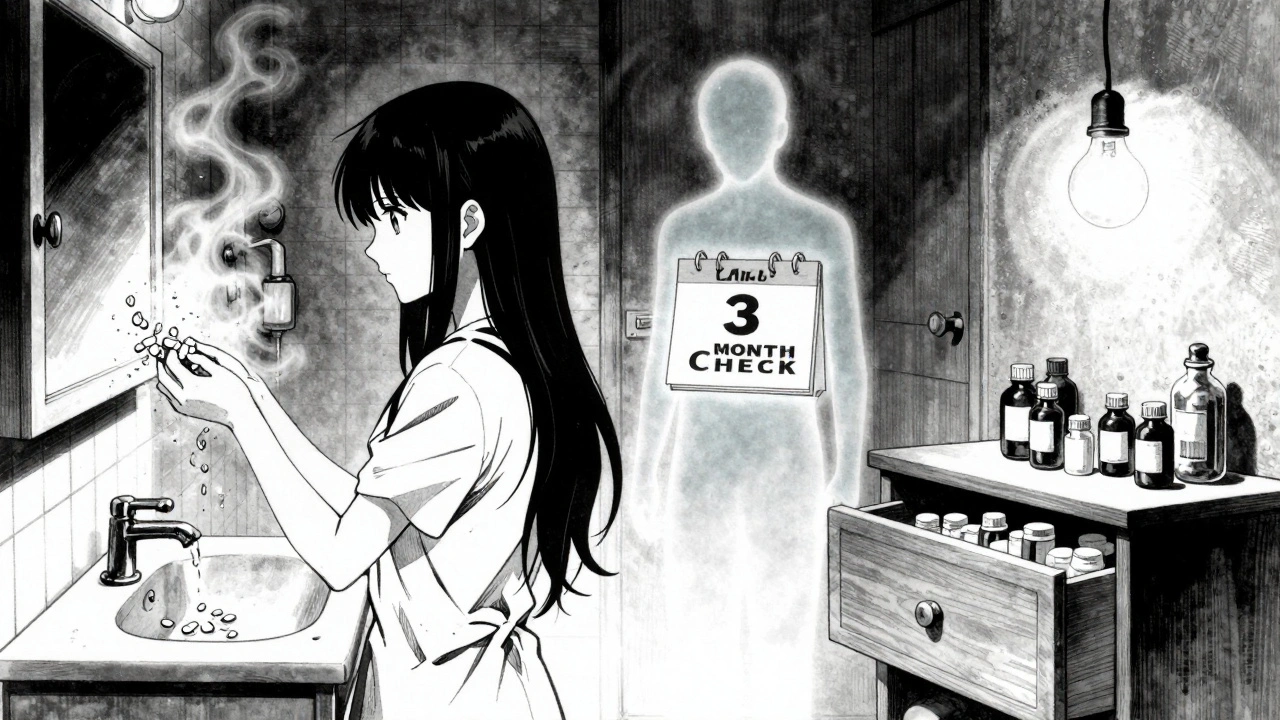
But here’s the line: if it’s been sitting in your bathroom for three years, or if the pills are cracked, discolored, or smell weird, toss it. You’re not saving money-you’re risking your health. A pill that’s 95% potent might still work. One that’s 50% potent? Won’t touch your headache.
How to Tell If a Medication Has Gone Bad
Some signs are obvious. Others aren’t. Look for:
- Change in color - Pills turning yellow, brown, or cloudy
- Change in texture - Tablets crumbling, capsules sticking together
- Unusual smell - Sour, moldy, or chemical odors
- Liquid meds turning cloudy or forming particles
- Eye drops changing color or becoming cloudy
But here’s the hard truth: most expired meds show no visible signs of degradation. That’s why you can’t rely on looks alone. If the date’s passed and it’s something critical, don’t wait for symptoms-get a new one.
Storage Matters More Than You Think
Heat, moisture, and light are the real killers of medication. Your medicine cabinet? Often too hot and humid. The bathroom? Worst place on earth for pills.
Best storage tips:
- Keep meds in a cool, dry place-like a bedroom drawer.
- Avoid windows or near the stove, dishwasher, or shower.
- If the label says ‘refrigerate,’ keep it in the fridge-not the door, where temperatures swing.
- Leave meds in original bottles. They’re designed to block light and moisture.
- Keep childproof caps closed. Kids opening bottles can expose meds to air and humidity.
Merck now uses smart labels on insulin that change color if exposed to heat. It’s a step forward. But until that’s everywhere, you’re the last line of defense.
What to Do When You Find an Expired Medication
Don’t flush it. Don’t throw it in the trash. Don’t give it to someone else.
Take it to a pharmacy drop-off. Most pharmacies in Australia, the U.S., and Canada have take-back programs. If you can’t find one, mix the pills with coffee grounds or cat litter, seal them in a bag, and throw them in the trash. That stops kids or pets from finding them.
And if you’re unsure? Call your pharmacist. They’ll tell you if it’s safe, if you need a refill, or if it’s worth keeping for emergencies.
How to Stay on Top of Expiration Dates
People forget. That’s normal. Here’s how to make it easy:
- Every 3 months, do a quick medicine cabinet check. Set a calendar reminder.
- Write the expiration date on a sticky note and stick it to the bottle.
- Use apps like MedSafe or MyTherapy to track all your meds and get alerts.
- When you get a new prescription, ask the pharmacist: ‘What’s the manufacturer’s expiration date?’ Write it down.
- For critical meds (insulin, heart meds, seizure drugs), replace them 1-2 months before they expire. Don’t wait until the last day.
One Reddit user shared they threw out a $200 prescription because they misread the pharmacy label. They didn’t know the manufacturer’s date was still good. Don’t be that person.
What’s Changing in the Future
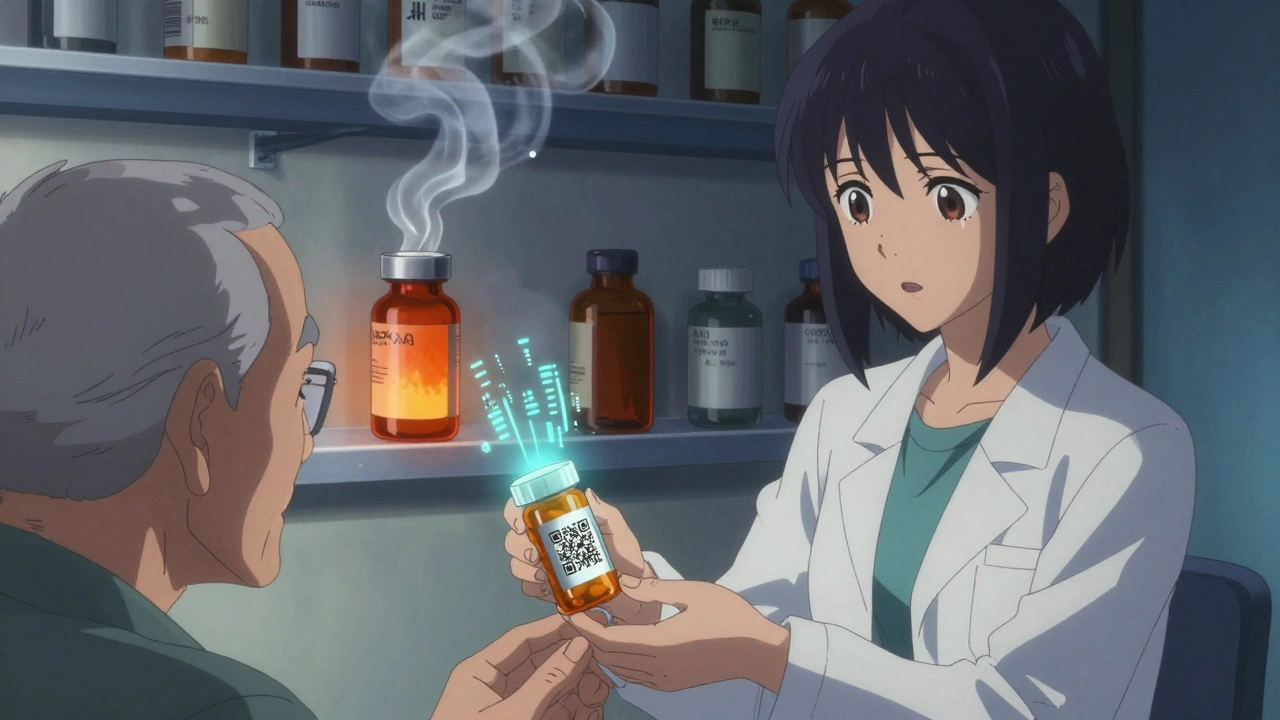
Pharmaceutical companies are starting to use QR codes on packaging. Scan it, and you’ll see the real expiration date, storage instructions, and recall info. The European Union now requires thermochromic ink on labels-color changes if the drug got too hot.
These aren’t gimmicks. They’re safety upgrades. But until they’re everywhere, you still need to know how to read the date yourself.
Final Rule: When in Doubt, Get a New One
Medication isn’t like bread. You can’t smell it and know if it’s bad. You can’t taste it and guess if it’s still working. If you’re not 100% sure, replace it. A $10 pill is cheaper than a hospital visit.
And if you’re elderly, have liver or kidney problems, or take multiple meds-be extra careful. Your body processes drugs differently. Expired meds can build up and cause harm.
Expiration dates exist to protect you. Don’t ignore them. But don’t panic either. Know the difference between ‘might not work’ and ‘could hurt you.’ That’s the line.
What does 'Exp 08/23' mean on a pill bottle?
It means the medication expires on August 31, 2023. When only a month and year are shown, the expiration is the last day of that month.
Can I take expired ibuprofen?
If it’s only a few months past the date and stored properly, it’s likely still safe and effective. But if it’s years old, or the pills look cracked or discolored, don’t take it. Potency drops over time, and you won’t get the pain relief you need.
Why does my pharmacy give a different expiration date than the bottle?
The pharmacy’s date is based on how the medication will be used after you open it. For example, liquid antibiotics degrade quickly once mixed, so the pharmacy sets a shorter ‘discard after’ date-usually 14 days or one year. Always follow the pharmacy’s label unless told otherwise.
Is it dangerous to take expired antibiotics?
They usually don’t become poisonous, but they can lose strength. That means the infection won’t clear, and bacteria may survive and become resistant. Never use expired antibiotics for a new infection without a doctor’s advice.
Where should I store my medications?
Keep them in a cool, dry place away from heat and moisture-like a bedroom drawer. Avoid the bathroom or kitchen. If the label says ‘refrigerate,’ store it in the fridge, not the door.
What should I do with expired medication?
Take it to a pharmacy drop-off program. If that’s not available, mix pills with coffee grounds or cat litter, seal them in a bag, and throw them in the trash. Never flush or give them to someone else.
Do all medications expire at the same rate?
No. Injections and insulin last 2-5 years, eye drops 6 months to 2 years, and liquid antibiotics often only 14 days after being mixed. Always check the label for specific guidance.
Gilbert Lacasandile
December 10, 2025 AT 14:07Been using this info for years and it’s saved me a few times. Had a bottle of amoxicillin from 2021 that looked fine, but I tossed it anyway after reading this. Better safe than sorry, right?
Also, never realized the pharmacy date trumps the manufacturer’s. Learned something new today.
Morgan Tait
December 10, 2025 AT 17:44So the FDA’s just telling us what they want us to believe. You ever wonder how many of these ‘expiration dates’ are just corporate profit tricks? I mean, look at the Shelf Life Extension Program-90% of drugs still work years later. Why are we being sold new ones every 12 months? Someone’s making bank off our fear.
And don’t get me started on the ‘don’t flush’ thing. They’re just trying to make you pay for a drop-off program so they don’t have to deal with the waste. Smart, huh?
Nikhil Pattni
December 12, 2025 AT 00:38Guys, I’m from India and we’ve been doing this differently for decades. Here, if the pill looks okay and it’s not more than 2-3 years past the date, we use it-especially for painkillers or antihistamines. Our climate is hot and humid, so we’re used to meds not lasting forever anyway.
Also, in rural areas, people can’t just run to the pharmacy every time a bottle runs out. So they use what’s there. I’ve seen grandmas take expired thyroid meds and still be fine. But yeah, insulin? Don’t mess with that. That’s a no-go.
And the pharmacy date thing? Totally true. My cousin got a liquid antibiotic and the doc said ‘use in 7 days’ but the bottle said 2027. He followed the doc. Smart move.
Also, don’t store meds in the bathroom. I used to, then my azithromycin turned into a chalky mess. Learned the hard way.
Pro tip: Use a small plastic container with silica gel packs. Keeps everything dry. Works like a charm.
And for the love of god, stop throwing pills in the trash without mixing them with coffee grounds. Dogs get into that stuff and die. Been there. Seen it. Not worth it.
Also, QR codes on meds? Finally. Took long enough. We need this in India too. No one reads tiny print here.
Arun Kumar Raut
December 12, 2025 AT 21:06Just wanted to say thanks for this. My mom’s on a bunch of meds and I was worried she was taking some old ones. This cleared up a lot of confusion.
Now I’m going to go check her cabinet and write dates on sticky notes like you said. Simple, but genius.
Also, storing meds in the bedroom drawer? That’s what we’ve been doing wrong. Always thought the bathroom was fine. Nope. Lesson learned.
precious amzy
December 14, 2025 AT 06:25One must question the epistemological foundations of pharmaceutical expiration dates. Is the FDA’s mandate not a performative act of institutional control, wherein the illusion of safety is commodified to sustain consumer dependency? The very notion of ‘potency’ is a reductive metric-reducing the ontological complexity of pharmacological interaction to a binary of ‘works’ or ‘doesn’t.’
Furthermore, the cultural imposition of ‘discard after’ dates reflects a neoliberal ethos of disposability, wherein the human body is rendered a passive recipient of corporate temporality.
And yet, one cannot deny the pragmatic utility of your advice. A paradox, perhaps?
Maria Elisha
December 14, 2025 AT 23:40So basically, just don’t take old pills unless they’re ibuprofen and you’re desperate. Got it. Easy enough.
Andrea Beilstein
December 15, 2025 AT 01:19My grandma used to say if the pill didn’t taste weird it was fine. She lived to 98. I don’t know if that’s science or luck but I’m starting to think she knew something we don’t
Also why do we treat medicine like it’s a science experiment when it’s just a tool to make us feel better
People overthink everything
Ronald Ezamaru
December 16, 2025 AT 11:51This is one of the most practical guides I’ve read on this topic. I used to ignore expiration dates until my sister had a bad reaction to an old antihistamine-swelling, breathing issues. Turned out it had degraded in her purse over summer.
Now I check every 3 months. Write dates on the bottle. Use the MyTherapy app. It’s a habit now.
Also, the part about insulin and thyroid meds? Critical. Don’t gamble with those. Ever.
And yes, the bathroom is a death trap for pills. I used to keep mine there. Never again.
Ryan Brady
December 18, 2025 AT 05:52USA has the best drug regulations in the world. Other countries? They’re just winging it. I saw a video from India where people are taking pills from 2015 and calling it ‘traditional medicine.’ That’s not medicine, that’s Russian roulette.
And don’t get me started on the EU with their fancy color-changing ink. We don’t need gimmicks-we need common sense. If it’s expired, toss it. Period.
Raja Herbal
December 19, 2025 AT 04:35So you’re telling me the guy who saved his $200 insulin for 3 years past expiry… didn’t die? And now you want us to believe the FDA knows best?
Meanwhile, my cousin in Mumbai took expired antibiotics for a fever and now he’s a doctor. Coincidence? I think not.
Also, QR codes? Cute. But in India, most people don’t even have smartphones. Maybe stop designing for Silicon Valley and start designing for the real world?