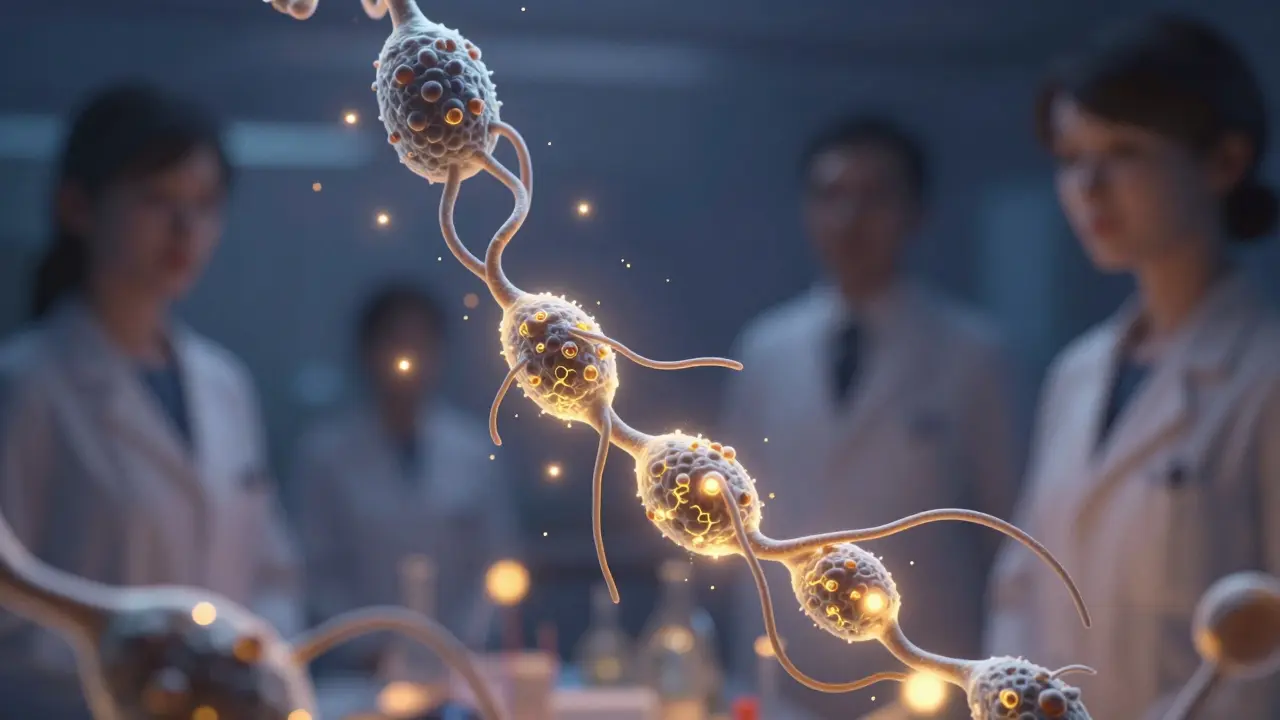
The difference between a generic drug and a biosimilar isn’t just in the name-it’s in the science. While a generic pill can be copied exactly because it’s made of simple chemicals, biosimilars are made from living cells. That means even tiny changes in how they’re made can change how they work in the body. This is why manufacturing biosimilars is one of the most complex tasks in modern medicine. It’s not about copying a recipe-it’s about reverse-engineering a living system you can’t fully see.
Why Biosimilars Can’t Be Exact Copies
Biosimilars are designed to be highly similar to an original biologic drug-like Humira or Enbrel-but they are not identical. That’s not because manufacturers are cutting corners. It’s because biology doesn’t work like chemistry. Small-molecule drugs are made in controlled chemical reactions. If you use the same ingredients and conditions, you get the same molecule every time. But biosimilars are proteins grown inside living cells-usually Chinese hamster ovary cells. These cells are sensitive. A shift in temperature, a different nutrient mix, or even a slight change in oxygen levels can alter the final product. That’s why experts say: the process defines the product.Imagine trying to recreate a handmade sourdough loaf without knowing the starter, the fermentation time, or the oven temperature. You might get bread-but will it rise the same? Will it taste the same? Will your body react to it the same? That’s the challenge biosimilar makers face every day.
The Glycosylation Problem
One of the biggest hurdles is glycosylation. This is the process where sugar molecules attach to the protein backbone of a biologic. These sugars aren’t just decoration-they control how long the drug stays in the body, how well it binds to its target, and whether the immune system reacts to it. Even a 5% change in glycosylation can make a difference in effectiveness or safety.But glycosylation depends entirely on the cell’s environment. The type of cell line used, the pH of the culture medium, how much oxygen is pumped in, how fast the bioreactor spins-all of it affects the sugar patterns. The original manufacturer keeps these details secret. So biosimilar developers have to run hundreds of experiments to guess the right conditions. They use advanced tools like mass spectrometry to map the sugar structures, comparing their product to the reference drug molecule by molecule. It’s like trying to match fingerprints without ever seeing the original print.
Scaling Up Is Like Building a New Engine Mid-Race
Getting a biosimilar to work in a lab is one thing. Making thousands of liters of it for patients is another. When you scale up from a 10-liter bioreactor to a 2,000-liter one, things change. Mixing becomes uneven. Oxygen doesn’t distribute the same way. Temperature gradients form. Cells that thrived in the small tank might struggle-or die-in the big one.Manufacturers have to tweak stirring speed, feeding schedules, and pressure settings just to make sure the cells behave like they did at small scale. It’s not just about volume-it’s about environment. A single bioreactor can cost millions. Get it wrong, and you lose a whole batch worth hundreds of thousands of dollars. Smaller companies often can’t afford the equipment needed for large-scale production. That’s why many rely on contract manufacturers, but even those have limits on space and capacity.
The Cold Chain Is a Fragile Lifeline
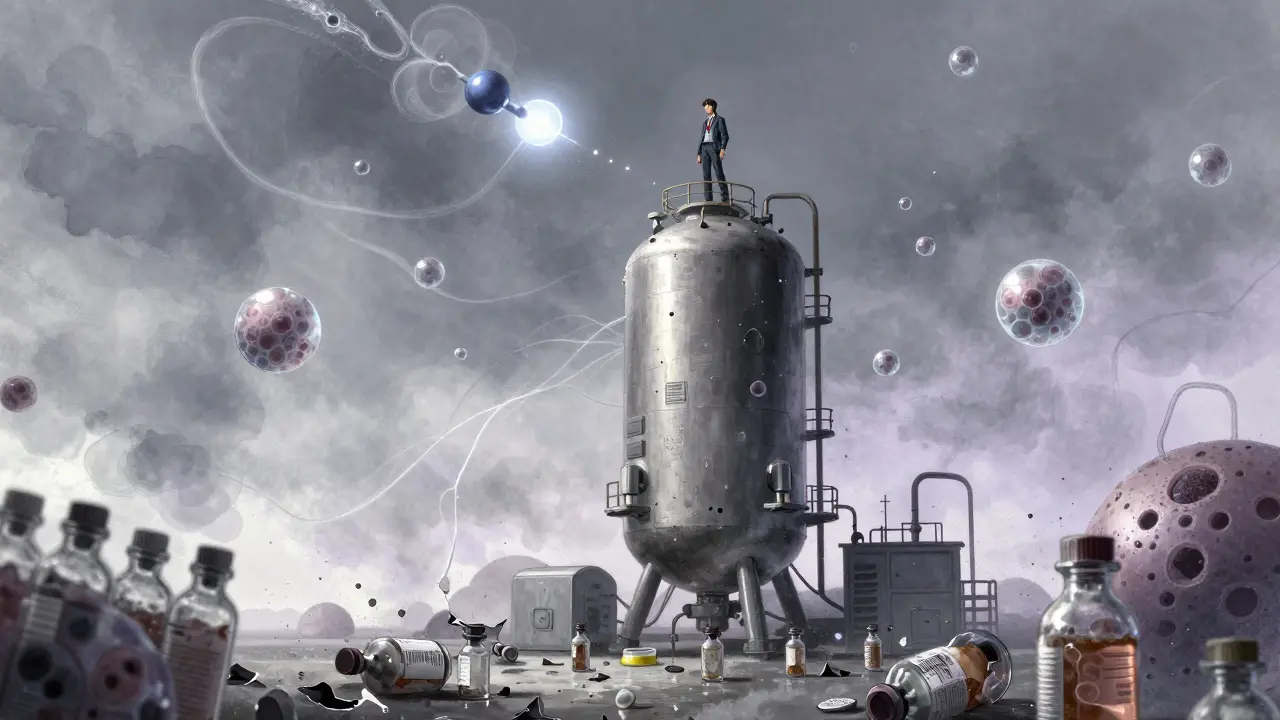
Biosimilars don’t just need careful manufacturing-they need careful handling after they’re made. Most must be kept cold, from the moment they leave the bioreactor until they reach a patient’s hospital or pharmacy. A broken refrigerated truck, a power outage, or a mislabeled container can ruin an entire shipment.Unlike pills that sit on shelves for years, biosimilars are fragile. Some proteins unfold if they get too warm. Others clump together if they’re shaken too hard. Even the type of bag or vial used for storage matters. A single break in the cold chain can lead to product loss, delays in treatment, or worse-patients receiving a drug that no longer works as intended.
Regulation Is a Moving Target
Getting approval for a biosimilar isn’t like getting a generic approved. You can’t just show bioequivalence with a blood test. Regulators like the FDA and EMA require a mountain of evidence: structural analysis, functional assays, animal studies, and even clinical trials comparing immune response and efficacy to the original drug. And the rules keep changing.In 2023, the FDA updated its guidance to require more detailed comparisons of post-translational modifications-like glycosylation and oxidation. That means manufacturers now need access to high-end labs with advanced analytical tools: liquid chromatography, capillary electrophoresis, nuclear magnetic resonance. Not every company can afford this. Those who can’t are getting left behind.
Technology Is the New Lifeline
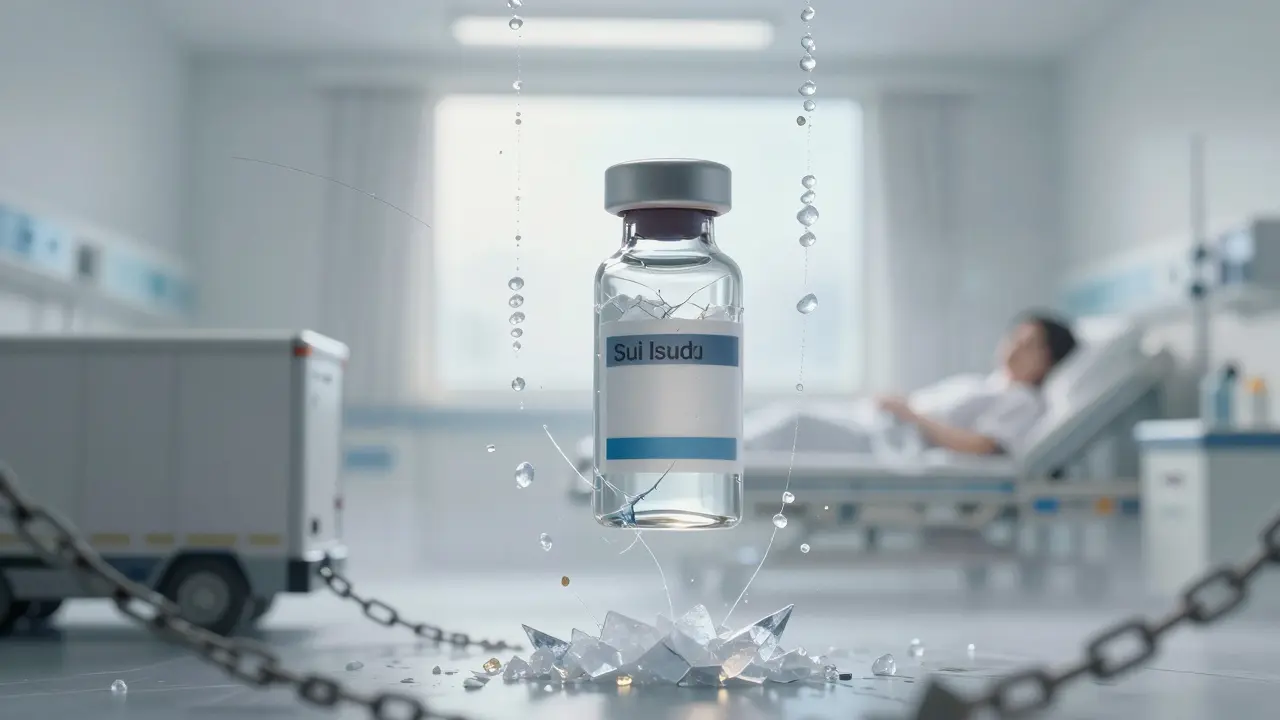
To survive these challenges, biosimilar makers are turning to new tech. Single-use bioreactors are replacing stainless steel tanks. They’re cheaper to set up, eliminate cleaning validation, and reduce contamination risk. Closed automated systems minimize human handling-cutting errors and losses. Process analytical technology (PAT) lets manufacturers monitor critical quality attributes in real time, adjusting conditions on the fly.Some are even using AI to predict how changes in temperature or nutrient levels will affect protein quality. Machine learning models trained on years of production data can flag potential issues before a batch is even made. Continuous manufacturing-where the product flows through the system without stopping-is also gaining traction. It reduces batch-to-batch variation and could make production more consistent.
The Market Is Growing, But Only the Strong Survive
The global biosimilars market was worth $7.9 billion in 2022. By 2030, it’s expected to hit $58.1 billion. That’s a massive opportunity. But the barrier to entry is steep. Only about 20 companies worldwide have the expertise, equipment, and capital to bring a biosimilar to market. Most are large biotech firms with decades of experience in biologics.Smaller players struggle with the cost of compliance, the risk of failure, and the time it takes to get approval-often five to seven years. The result? A market that’s growing, but becoming more concentrated. Companies that can master process control, regulatory strategy, and supply chain reliability are the ones winning. The rest are being pushed out.
What’s Next?
The next wave of biosimilars will include even more complex molecules: bispecific antibodies, antibody-drug conjugates, fusion proteins. These aren’t just harder to make-they’re harder to analyze. Each adds new steps, new risks, and new points of failure. A single mistake in purification or refolding can render the whole batch useless.But innovation is happening. New analytical tools are getting faster and more precise. Regulatory agencies are working to harmonize guidelines across countries. And manufacturers are learning how to build more flexible, agile production lines. The future won’t be about making exact copies. It’ll be about mastering variability-turning biology’s unpredictability into something reliable, repeatable, and affordable.
Why can’t biosimilars be identical to the original biologic?
Biosimilars can’t be identical because they’re made from living cells, not chemicals. Even tiny changes in temperature, nutrients, or oxygen levels during production can alter the protein’s structure-especially its sugar attachments (glycosylation). Unlike small-molecule generics, where exact chemical replication is possible, biosimilars must be highly similar, not identical, because biology itself introduces natural variability.
What is meant by "the process defines the product"?
This phrase means that how a biosimilar is made directly determines its final properties. The cell line, culture conditions, purification steps, and storage methods all affect the protein’s shape, stability, and function. Even if two companies use the same DNA sequence, differences in manufacturing can lead to different outcomes. That’s why regulators require full disclosure and validation of the entire production process-not just the final product.
How do manufacturers prove a biosimilar is similar enough?
Manufacturers use a battery of advanced tests: mass spectrometry to compare protein structure, chromatography to analyze purity, cell-based assays to check biological activity, and immunogenicity studies to see if the body reacts differently. They must show that critical quality attributes-like glycosylation patterns, charge variants, and aggregation levels-are within strict limits compared to the reference product. This often requires over 100 analytical tests before any clinical trials even begin.
Why is glycosylation so important in biosimilars?
Glycosylation affects how long a drug lasts in the bloodstream, how well it binds to its target, and whether it triggers an immune response. For example, a change in the sugar structure on a monoclonal antibody can reduce its ability to kill cancer cells or cause unwanted inflammation. Because glycosylation is controlled by the living cells used in production, manufacturers must precisely replicate the original’s sugar profile-without knowing how it was done.
Can biosimilars be made cheaper than the original biologics?
Yes-but not easily. While biosimilars are generally 15% to 35% cheaper than the originator drug, the upfront costs to develop and manufacture them are extremely high. Building a compliant facility, running hundreds of analytical tests, and navigating global regulations can cost over $100 million. Only companies with deep pockets and technical expertise can afford to enter the market, which limits competition and keeps prices higher than they could be.


Prathamesh Ghodke
March 18, 2026 AT 10:55Man, this post hits hard. I work in pharma logistics in India, and I've seen biosimilars sit in a non-cooled warehouse for 14 hours because someone thought 'it's just protein, it'll be fine.' It wasn't fine. Patients got subpotent doses. We had to recall 300 vials. The cold chain isn't a footnote-it's the whole damn book.
And don't get me started on glycosylation. I once watched a team spend 9 months tweaking a single feed stock just to get the sialic acid ratio right. They finally nailed it. The FDA approved it. But the original manufacturer? They changed their process three months later. No one told us. We were left with a product that now looked like a stranger.
It's not about copying. It's about guessing what a ghost made.
Stephen Habegger
March 20, 2026 AT 09:16Love how this breaks it down. The sourdough analogy? Chef's kiss.
It’s wild that we treat biology like a black box and then act shocked when it behaves unpredictably. We’ve built entire industries on controlling chaos-this is just the next frontier.
Paul Ratliff
March 21, 2026 AT 06:25they just dont get it. its not about the molecule. its about the vibe. the cells have a mood. if they're stressed, the protein gets angsty. you cant just copy a recipe when the ingredients are alive and judging you.
Gaurav Kumar
March 21, 2026 AT 09:02India makes biosimilars? lol. You think we can replicate German precision with power outages and half-trained technicians? This isn't manufacturing-it's a lottery with a syringe.
Real science happens in the US and EU. The rest are just trying to piggyback on patents while the West pays for R&D. Don't pretend you're innovating-you're reverse-engineering in a garage.
Ryan Voeltner
March 22, 2026 AT 01:41Manufacturing biosimilars requires a deep understanding of biological systems that cannot be reduced to chemical formulas. The regulatory frameworks must evolve to recognize that variability is inherent in living systems. What matters is not absolute identity but functional equivalence and clinical safety. We must avoid the trap of demanding chemical perfection where biology demands nuance.
The path forward lies in collaboration between regulators, manufacturers, and researchers-not in rigid benchmarks designed for small molecules.
SNEHA GUPTA
March 22, 2026 AT 06:28It's fascinating how we treat biology as something to be controlled rather than understood. Biosimilars force us to confront the limits of reductionism. We want identical outcomes from inherently variable processes. It's like demanding two snowflakes be the same because they're both made of water.
Perhaps the real innovation isn't in replicating the molecule, but in accepting that difference can still be safe. That’s a philosophical shift as much as a technical one.
David Robinson
March 24, 2026 AT 01:58Look, I get it. Biosimilars are hard. But let's be real-this whole industry is built on loopholes. The original biologics cost $200K a year. Biosimilars cost $100K. That's not savings, that's just less profit for the big pharma guys. Meanwhile, patients still can't afford them because insurance won't cover them unless you jump through 17 hoops.
And don't get me started on the 'advanced tech' they're bragging about. Single-use bioreactors? Yeah, cool. But they still need a $2M cleanroom and a team of 12 PhDs to babysit them. This isn't democratizing medicine. It's just making the elite richer with fancier machines.
Jeremy Van Veelen
March 25, 2026 AT 22:04THEY SAY IT'S ABOUT GLYCOSYLATION. BUT IT'S NOT. IT'S ABOUT CONTROL. WE WANT TO CONTROL LIFE. WE WANT TO MAKE A LIVING SYSTEM BEHAVE LIKE A MACHINE. AND WHEN IT DOESN'T? WE CALL IT 'VARIABILITY.'
IT'S NOT A PROBLEM TO BE SOLVED. IT'S A TRUTH TO BE ACKNOWLEDGED.
THE CELL ISN'T WRONG. WE ARE.
Andrew Muchmore
March 26, 2026 AT 18:41Every time someone says biosimilars are just generics with a fancy label, I cringe. This post nails it. The process defines the product isn't jargon-it's gospel. If you don't control every variable from the bioreactor to the vial, you're not making medicine. You're making a gamble.
And yes, the cold chain is fragile. But it's not a flaw-it's a feature of biology. We need to stop pretending biology is a bug to be fixed and start treating it as the masterpiece it is.