Blood Clot Risk & Symptom Checker
Step 1: Check Your Medication
Step 2: Monitor Symptoms
Select your medication category and any symptoms to see an assessment.
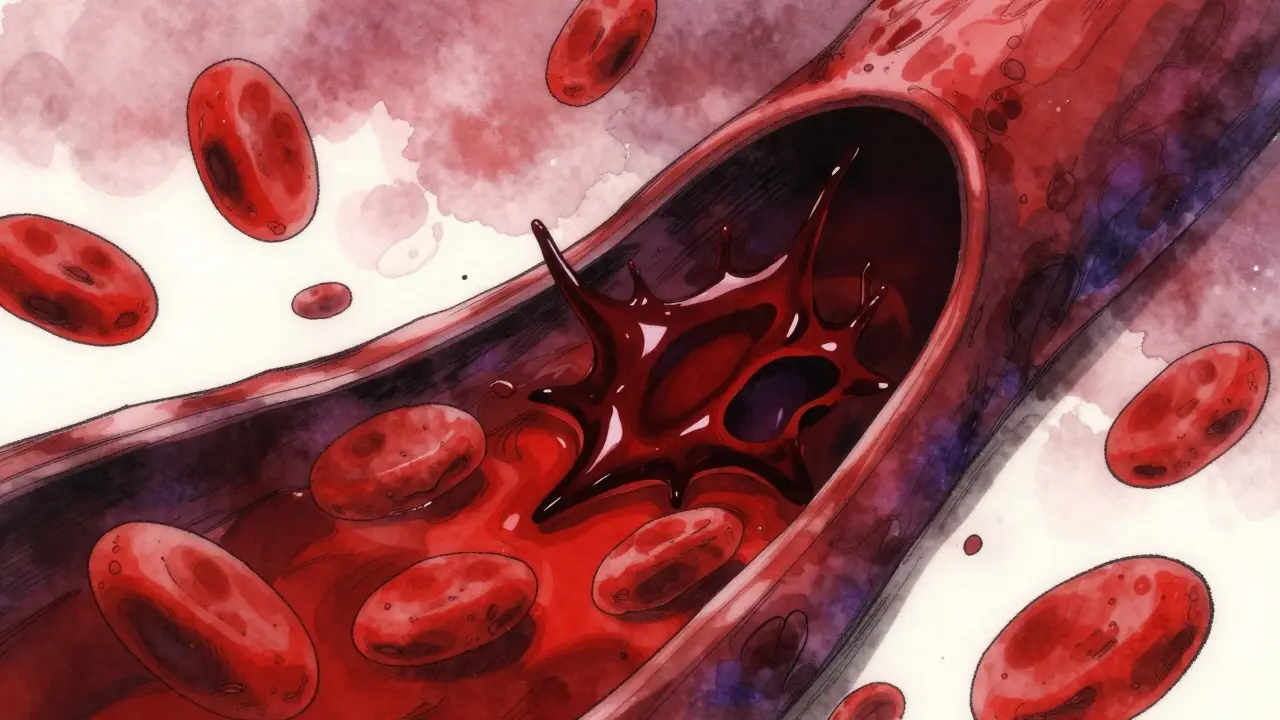
Most of us take medicine to get better, but sometimes the treatment itself can trigger a serious side effect. One of the most dangerous is the formation of pathological blood clots. While clotting is normally a lifesaver that stops you from bleeding out after a cut, medication-related blood clots is a condition where pharmaceuticals disrupt the body's natural balance, causing gel-like masses of blood to form in veins or arteries where they don't belong.
If a clot forms in the leg, it's called Deep Vein Thrombosis (DVT). If that clot breaks loose and travels to the lungs, it becomes a Pulmonary Embolism (PE). Both are medical emergencies. The scary part? Many people ignore the early signs until it's too late. But if you're on high-risk meds, knowing what to look for can literally save your life.
Which Medications Increase Your Risk?
Not every drug causes clotting, but a few specific categories are well-known culprits. The risk usually comes from how these drugs change your blood composition or the way your blood vessels function.
- Hormonal Contraceptives: Birth control pills containing estrogen are a primary trigger. Combined oral contraceptives can increase the risk of a clot by 3 to 5 times compared to those not using them. Some third-generation pills (like those with desogestrel) are even riskier than older, second-generation versions.
- Hormone Replacement Therapy (HRT): For those managing menopause, HRT-especially combinations of estrogen and progesterone-can increase risk by 2 to 3 times, particularly for women over 60.
- Cancer Treatments: Chemotherapy is a heavy hitter. Drugs like Cisplatin can spike your risk by 4 to 7 times. Other treatments, such as Tamoxifen for breast cancer or androgen deprivation therapy for prostate cancer, also elevate the risk significantly.
Why does this happen? For example, some birth control pills increase "factor VII" while decreasing "protein S" in your blood. This creates a "pro-thrombotic state," meaning your blood is essentially primed to clot more easily than it should.
How to Recognize the Warning Signs
Clots don't always announce themselves with intense pain. Often, it starts as a vague discomfort that feels like a pulled muscle. Because about 60% of medication-induced clots happen within the first 3 to 6 months of starting a new drug, you need to be hyper-aware during that window.
If you have a clot in your leg (DVT), look for these specific red flags:
- Swelling in just one leg (usually the calf).
- Pain that feels like cramping or soreness.
- Skin that looks red or discolored.
- A noticeable feeling of warmth in the affected area.
The situation becomes critical when a clot moves to the lungs (PE). This is an immediate emergency. Watch out for unexplained shortness of breath, a rapid heart rate, chest pain that gets worse when you take a deep breath, or sudden lightheadedness and fainting.
If you suspect a clot, a doctor will typically use a D-dimer blood test or an ultrasound. While ultrasounds are great, they have a 5-10% false-negative rate, so if the symptoms persist, doctors may move to a CT pulmonary angiography for a clearer picture.
| Feature | Deep Vein Thrombosis (DVT) | Pulmonary Embolism (PE) |
|---|---|---|
| Primary Location | Legs (usually calf) | Lungs |
| Key Visual Signs | Swelling, Redness | None (Internal) |
| Primary Sensation | Cramping, Warmth | Shortness of breath, Chest pain |
| Urgency | Urgent Medical Attention | Immediate Emergency (911/000) |

Practical Prevention Strategies
Prevention is split into two worlds: mechanical (physical tools) and pharmacological (medication to stop the clotting).
Mechanical Prevention
If you're recovering from surgery or are immobile, compression stockings are a go-to. But they aren't just "tight socks." To work, they need graduated compression-usually 15-20 mmHg at the ankle, tapering down to 5-10 mmHg at the thigh. You should wear them 24 hours a day and replace them every 3 to 6 months because they lose their stretch. If they don't fit perfectly, they can actually cause skin breakdown in some users.
For those in hospital beds, intermittent pneumatic compression devices are used. These are sleeves that inflate and deflate every 10-15 seconds to keep blood moving.
Pharmacological Prevention
When the risk is high, doctors use Anticoagulants, often called blood thinners. Enoxaparin (a low molecular weight heparin) is a gold standard for inpatients, potentially cutting clot risk by 60-70%. For those at home, DOACs (Direct Oral Anticoagulants) like Rivaroxaban or Apixaban are preferred because they don't require constant blood monitoring. However, be aware that DOACs have a slightly higher bleeding risk than heparin.

Lifestyle Tips for High-Risk Patients
If you're taking high-risk meds and have a long flight or car ride ahead, don't just sit there. Long periods of stillness are a catalyst for clots. The CDC suggests walking every 60 to 120 minutes during flights longer than 4 hours. While seated, do 10 repetitions of calf exercises every half hour and drink 8-10 ounces of water every hour to keep your blood from thickening.
For those with cancer, doctors often use the Khorana Score to predict risk. If your score is 2 or higher, you'll likely need proactive medication to prevent a clot before it ever starts. If you have a genetic condition like Factor V Leiden (which affects about 5% of Caucasians), you should generally avoid estrogen-based medications entirely.
When should I be most worried about clots after starting a new medication?
The highest risk period is usually within the first 3 to 6 months of starting a high-risk medication, such as combined oral contraceptives. About 60% of medication-related clot cases happen during this initial window, so it's the most critical time to monitor for symptoms like leg swelling or shortness of breath.
Can I use compression stockings instead of blood thinners?
Mechanical prevention like stockings and pharmacological prevention like anticoagulants serve different purposes. Stockings help blood flow in the legs, but they don't change the chemistry of your blood. In high-risk scenarios (like cancer treatment or surgery), your doctor will likely require blood thinners because stockings alone cannot stop a chemically induced clotting tendency.
Do all birth control pills cause blood clots?
No, not all of them. The risk is primarily associated with those containing estrogen. Progestogen-only pills (the "mini-pill") generally do not carry the same clotting risk. Furthermore, third-generation pills containing desogestrel or gestodene have a higher risk profile than second-generation pills containing levonorgestrel.
What is a D-dimer test and is it 100% accurate?
A D-dimer test measures a substance that is released when a blood clot breaks down. While it's great for ruling out a clot (if the test is negative, you likely don't have one), it's not always a definitive "yes." Additionally, follow-up imaging like ultrasounds can have a 5-10% false-negative rate, which is why clinical symptoms are so important.
How often should I change my compression stockings?
You should replace your compression stockings every 3 to 6 months. Over time, the fabric loses its elasticity, and the stockings will no longer provide the necessary graduated pressure (e.g., 15-20 mmHg at the ankle) to effectively prevent DVT.
Next Steps and Troubleshooting
If you are starting a new medication and have a history of clotting or a family member with thrombophilia, don't wait for the first appointment to bring it up. Ask your doctor for a risk-benefit assessment. If you're already on a DOAC like Apixaban, make sure you get your renal function (creatinine clearance) checked every 3 to 6 months, as these drugs are cleared through the kidneys.
For those experiencing mild swelling, try elevating your legs and staying hydrated, but do not massage the area. If a clot is present, massaging the leg can accidentally break the clot loose and send it straight to your lungs. When in doubt, go to the ER.