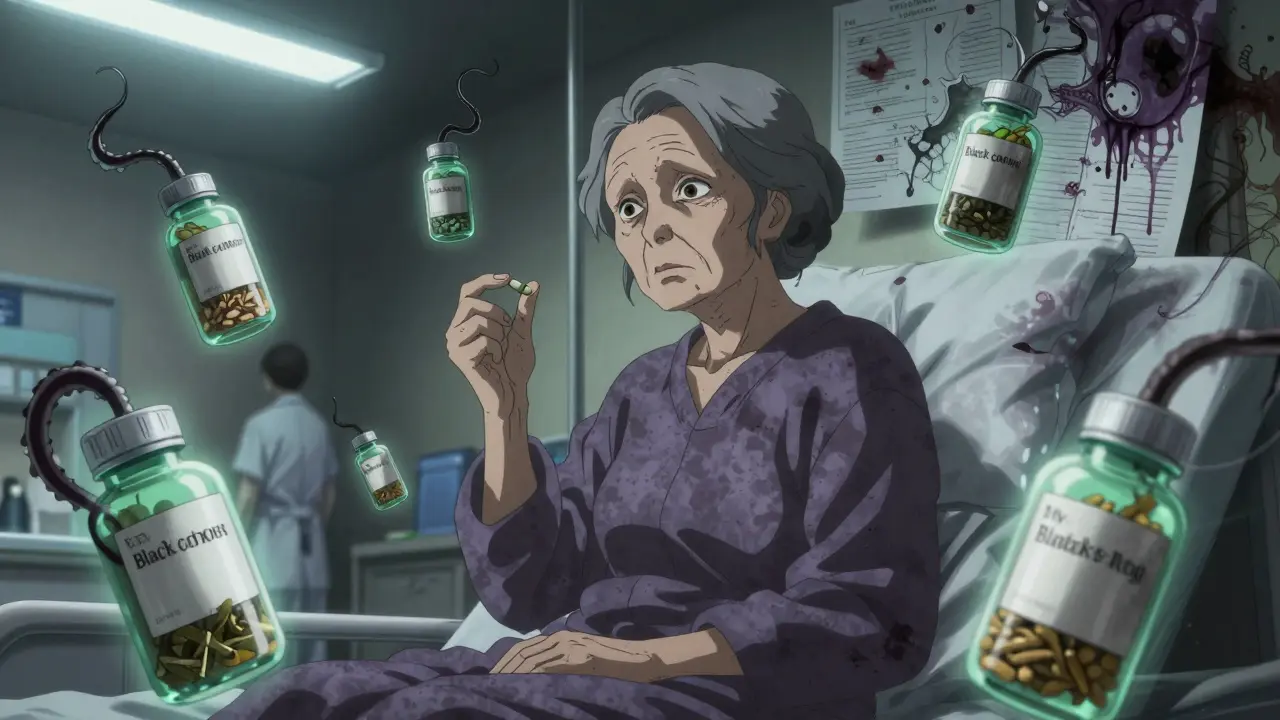
Supplement-Medication Interaction Checker
This tool helps identify potential dangerous interactions between your medications and common supplements based on evidence-based information. Remember: this is not a substitute for professional medical advice.
People turn to natural remedies and supplements hoping to ease side effects from medications, manage chronic conditions, or just feel better without drugs. But here’s the truth: just because something is labeled ‘natural’ doesn’t mean it’s safe-or even effective. In fact, many of these products carry serious risks that most users never see coming.
Why ‘Natural’ Doesn’t Mean Safe
The idea that herbal supplements are harmless because they come from plants is deeply rooted-but completely misleading. A 2016 review in JAMA found that herbal products can cause everything from mild rashes and headaches to liver failure, seizures, and even death. The Japanese Ministry of Health tracked cases of interstitial pneumonia linked to a common herbal formula containing Scutellaria root. In Australia and the U.S., liver damage from herbal supplements is reported often enough that doctors now ask patients outright: ‘Are you taking anything besides your prescription meds?’
It’s not just about the herbs themselves. Contamination is rampant. A 2015 study by the Botanical Adulterants Prevention Program found that nearly 20% of herbal products tested didn’t contain the plant listed on the label. Instead, they had toxic substitutes, heavy metals like lead or mercury, or even hidden pharmaceuticals. One supplement marketed for joint pain was found to contain a steroid similar to prednisone. Another ‘natural’ weight loss pill had hidden stimulants linked to heart attacks.
Supplements That Can Make Side Effects Worse
Some supplements don’t just fail to help-they actively interfere with your medications. St. John’s wort, often taken for mild depression, is one of the most dangerous offenders. It triggers an enzyme in your liver (CYP3A4) that breaks down other drugs too fast. That means birth control pills can become ineffective, antidepressants stop working, and even HIV meds lose their power. One 2000 study showed St. John’s wort cut blood levels of oral contraceptives by up to 24%. That’s not a risk you want to gamble with.
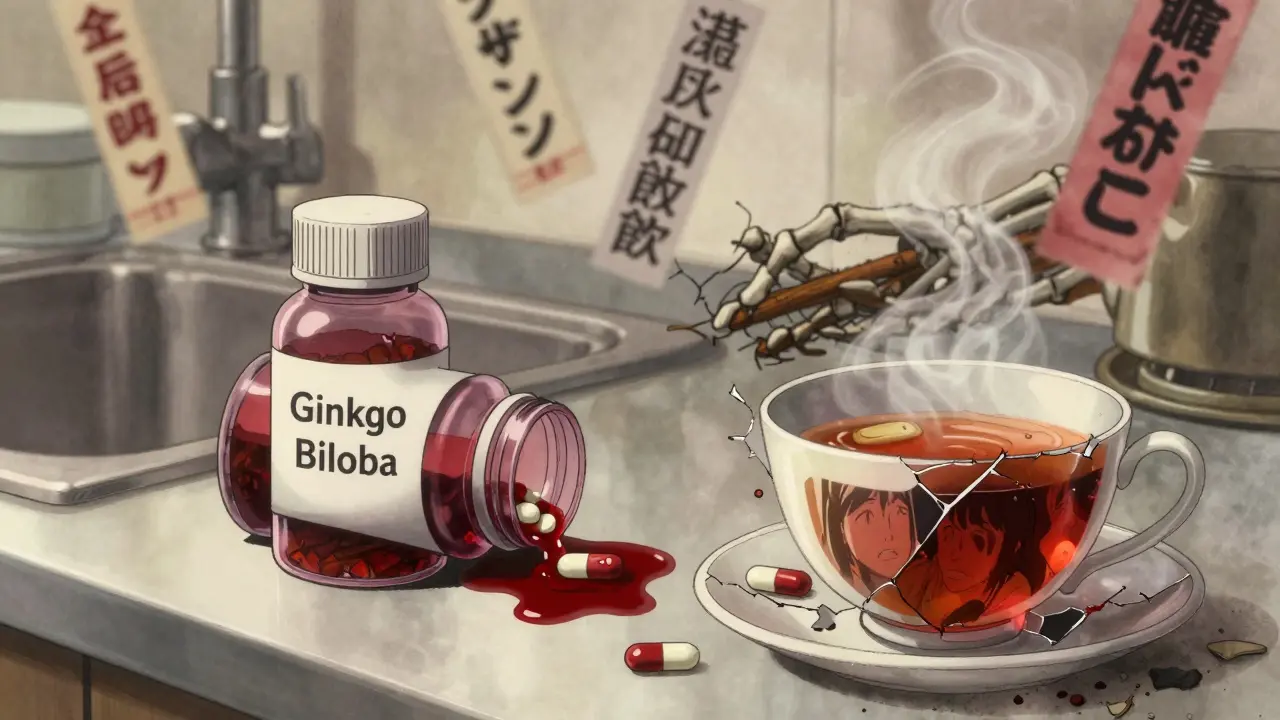
Then there’s Ginkgo biloba and cranberry. Both are popular for circulation and urinary health, but they thin the blood. When combined with warfarin, aspirin, or even over-the-counter ibuprofen, they can cause dangerous bleeding. A man in Melbourne was hospitalized after taking Ginkgo with his daily aspirin. He developed a brain bleed. He didn’t know the two could interact.
Cranberry juice is another silent culprit. People drink it thinking it prevents UTIs, but it’s also a blood thinner. A 2021 case report in the Journal of Clinical Pharmacy and Therapeutics described a woman on warfarin who developed dangerously high INR levels after switching from regular cranberry juice to concentrated capsules. Her doctor had no idea she was taking them.
Black Cohosh and Menopause: A Double-Edged Sword
Black cohosh is one of the most studied herbal remedies for hot flashes and night sweats. The Natural Medicines Database says only specific, standardized forms-like Remifemin®-might work. But even then, results vary wildly between brands. Some products don’t contain enough active compounds. Others are contaminated with liver-toxic substances.
Early fears that black cohosh might increase breast cancer risk have largely been dismissed. But that doesn’t mean it’s risk-free. The Cleveland Clinic reports rare cases of liver injury linked to black cohosh, though it’s unclear if it’s the herb itself or a contaminant. Women over 50, especially those with pre-existing liver conditions, should avoid it unless under medical supervision.
And here’s the kicker: if you’re on hormone therapy or have a history of estrogen-sensitive cancers, don’t assume it’s safe just because it’s ‘natural.’ Always talk to your oncologist or GP first.
Echinacea: Popular, But Not for Everyone
Echinacea is often taken to prevent colds or shorten their duration. The evidence? Mixed. Some studies show a tiny reduction in symptom length. Others show no benefit at all. But the bigger issue isn’t effectiveness-it’s safety.
If you have allergies to ragweed, daisies, marigolds, or chrysanthemums, echinacea can trigger serious reactions: swelling, hives, asthma attacks. One study in the Annals of Allergy, Asthma & Immunology found that nearly 30% of people with ragweed allergies had a reaction to echinacea. And if you have an autoimmune disease-like lupus, rheumatoid arthritis, or multiple sclerosis-echinacea can make things worse by overstimulating your immune system.
Even if you’re not allergic, it can cause stomach upset, dizziness, or a strange tingling in the mouth. These aren’t rare side effects. They’re common enough that the NHS lists them as standard warnings.
Liquorice Root: The Silent Blood Pressure Killer
Liquorice root is in over 75% of traditional Japanese herbal formulas. It’s also in many teas, candies, and ‘natural’ remedies for digestion or fatigue. But it’s not harmless. Regular use-even just a cup of liquorice tea a day-can cause pseudohyperaldosteronism. That’s a condition where your body holds onto salt and water, loses potassium, and your blood pressure spikes.
Symptoms? Swelling in the ankles, muscle weakness, fatigue, headaches, and in severe cases, irregular heartbeat or seizures. The NHS says up to 3% of people who consume liquorice regularly develop this. It’s especially dangerous for older adults, people with kidney disease, or those already on blood pressure meds.
And here’s the problem: many people don’t realize they’re taking it. Liquorice root is often hidden under names like ‘licorice extract’ or ‘Glycyrrhiza glabra’ on labels. If you’re on diuretics or have high blood pressure, avoid it completely.
Older Adults Are at Higher Risk
As we age, our liver and kidneys don’t process substances as efficiently. That means herbal compounds stay in the body longer. What might be a safe dose for a 30-year-old could be toxic for a 70-year-old.
A 2018 study in JAMA Internal Medicine found that adults over 65 were twice as likely to be hospitalized for adverse reactions to herbal supplements than younger adults. Many of these cases involved combinations of supplements and prescription drugs-something the patient never told their doctor.
Doctors don’t always ask about supplements. Patients don’t always think to mention them. But if you’re over 60 and taking anything from a bottle labeled ‘natural,’ you need to bring it up at your next checkup. Even if it’s just a capsule you take ‘for energy.’

The Regulatory Gap
In the U.S., the Dietary Supplement Health and Education Act of 1994 (DSHEA) means supplement makers don’t have to prove their products are safe before selling them. The FDA can only act after someone gets hurt. That’s why you see the same dangerous products on shelves for years before they’re pulled.
Compare that to Europe, where the European Medicines Agency requires herbal products to prove traditional use and safety before they can be sold. That’s why you’ll see fewer dangerous products on shelves there.
Here’s the bottom line: supplements are not regulated like drugs. They’re regulated like food. That means quality control is inconsistent. Two bottles of the same ‘turmeric extract’ can have wildly different amounts of active ingredient-or none at all.
What You Should Do Instead
If you’re dealing with side effects from a medication, don’t reach for a supplement first. Talk to your doctor. There are often better, safer options: adjusting your dose, switching to a different drug, or adding a proven, regulated treatment.
If you still want to try a supplement:
- Choose products with third-party testing (USP, NSF, or ConsumerLab labels).
- Check the label for exact ingredient names and dosages. Avoid anything with ‘proprietary blends’-those hide the real amounts.
- Never mix supplements with prescription meds without checking with your pharmacist.
- Stop taking it immediately if you feel worse: nausea, rash, dizziness, unusual fatigue, or dark urine.
- Report any bad reaction to the FDA’s Safety Reporting Portal. Your report helps others.
And if you’re using supplements to avoid talking to your doctor about side effects? That’s the real danger. Natural doesn’t mean risk-free. It just means the risks are hidden.
When to Walk Away
Some supplements aren’t worth the gamble. Ephedra was banned in the U.S. after causing hundreds of heart attacks and strokes. Even at low doses, it was deadly. Yet similar stimulant-containing herbs-like bitter orange or yohimbe-are still sold as ‘energy boosters.’
If a supplement promises quick fixes-weight loss, instant energy, miracle cures-run. These are the products most likely to be adulterated or dangerous. The FDA has issued over 800 warnings about these types of products since 2010.
There’s no shortcut to managing side effects safely. It takes time, communication with your healthcare team, and sometimes, a change in your primary treatment. No herb can replace that.
Are natural remedies safer than prescription drugs?
No. Natural remedies can be just as dangerous-or more so-than prescription drugs. Many herbal products aren’t tested for safety or interactions before they’re sold. While prescription drugs go through years of clinical trials, supplements can be on shelves with no proof they’re safe. The FDA has documented cases of liver failure, heart attacks, and death linked to herbal supplements.
Can herbal supplements interact with my medications?
Yes, and often dangerously. St. John’s wort can make birth control pills, antidepressants, and HIV meds stop working. Ginkgo and cranberry can increase bleeding risk when taken with blood thinners like warfarin. Liquorice root can raise blood pressure and lower potassium levels, especially if you’re on diuretics. Always tell your pharmacist what supplements you’re taking-they’re trained to spot interactions.
Which supplements are actually backed by evidence for side effect relief?
Very few. Standardized black cohosh (like Remifemin®) has some evidence for hot flashes. Ginger may help with nausea from chemotherapy or pregnancy. But even these only work for specific people and specific formulations. Most other claims-like echinacea for colds or turmeric for inflammation-are either unproven or only show minor, inconsistent benefits. Don’t assume anything works just because it’s popular.
How do I know if a supplement is contaminated?
You usually can’t tell by looking. Contaminants like heavy metals, pesticides, or hidden drugs aren’t visible. Look for products with seals from USP, NSF, or ConsumerLab-these test for purity and potency. Avoid brands that don’t list exact ingredient amounts or use vague terms like ‘proprietary blend.’ If it sounds too good to be true, it probably is.
Should I stop taking supplements before surgery?
Yes. Many herbal supplements-like garlic, ginkgo, ginger, and green tea-can increase bleeding risk during surgery. Others, like valerian or kava, can interact with anesthesia. Most surgeons recommend stopping all supplements at least two weeks before any procedure. Always tell your surgical team what you’re taking, even if you think it’s harmless.

Vinayak Naik
January 7, 2026 AT 00:09Man, I took that ‘miracle turmeric’ stuff for my knees and ended up in the ER with liver enzymes through the roof. No one told me it could do that. Now I just stick to physical therapy and ice packs. Natural my ass.
Saylor Frye
January 7, 2026 AT 19:14It’s amusing how people treat botanicals like they’re somehow exempt from pharmacology. The placebo effect is powerful, but so is hepatic cytochrome P450 induction. If you’re going to self-medicate, at least read the damn papers.
Jeane Hendrix
January 8, 2026 AT 06:09I’m so glad someone finally broke this down. I’ve been trying to explain to my mom that ‘herbal’ doesn’t mean ‘safe’-she’s been taking black cohosh for hot flashes and just found out her OTC joint supplement had hidden diclofenac. She’s terrified now. I think she’s going to start bringing her bottles to her pharmacist before she swallows anything. Honestly, this should be mandatory education in senior centers.
Tom Swinton
January 10, 2026 AT 05:48Okay, I just want to say-this is the most important thing I’ve read all year. I’m not even kidding. I used to take St. John’s wort because my friend said it ‘fixed my anxiety’-turns out it made my antidepressant useless and I had a full-blown panic attack during a work meeting. I didn’t even connect the dots until I read this. I’m so grateful. I’m printing this out and giving it to my entire family. My aunt’s on warfarin and takes cranberry pills every day. She has no idea. Please, everyone-tell your loved ones. This isn’t just advice-it’s life-saving.
Kiran Plaha
January 10, 2026 AT 23:11My uncle died from liver failure after taking some Ayurvedic powder. No one knew what was in it. We still don’t. Just say no to random herbs from the market.
Amy Le
January 11, 2026 AT 21:34USA is weak. In China, we’ve used herbs for 4,000 years. If you can’t handle a little ginkgo, maybe you shouldn’t be alive. 🇨🇳🔥
Pavan Vora
January 12, 2026 AT 08:14My grandma in Kerala used to brew licorice root tea for digestion… every day… for 30 years. She never had high BP. Maybe it’s the soil? Or maybe Western medicine just doesn’t understand…? 🤔
Indra Triawan
January 13, 2026 AT 16:35I just feel like… we’ve all been lied to. The whole ‘natural is good’ thing is a scam. I used to feel so proud taking my ‘clean’ supplements. Now I feel dirty. Like I was part of the problem. 😔
Susan Arlene
January 14, 2026 AT 18:21so i took echinacea once. my mouth tingled. i thought it was weird but whatever. then i read this. now i’m scared to breathe near a daisy. 🌼
Joann Absi
January 14, 2026 AT 20:16THIS IS WHY WE NEED TO BAN SUPPLEMENTS. AMERICA IS A CULTURE OF QUICK FIXES AND IDIOTS. 🚫💊 #NaturalIsNotSafe #FDAASLEEP
Mukesh Pareek
January 16, 2026 AT 18:07Unless the supplement is standardized to ISO 17025-certified phytochemical content and validated via HPLC-MS/MS with bioavailability assays, it’s pharmacologically inert at best and toxic at worst. Your ‘natural’ tea is a lottery ticket with a 1 in 5 chance of poisoning you. Stop gambling.
Gabrielle Panchev
January 18, 2026 AT 09:45Actually, I think you’re oversimplifying this. I’ve seen multiple studies where herbal remedies outperformed placebos in managing chemotherapy-induced nausea-and yes, they were rigorously controlled. Also, the FDA’s track record is abysmal; they took 15 years to ban ephedra, and meanwhile, Big Pharma was pushing SSRIs with 40% dropout rates due to side effects. Maybe the real issue isn’t supplements-it’s the profit-driven, underfunded healthcare system that pushes people toward quick fixes because they can’t afford proper care? Just saying.