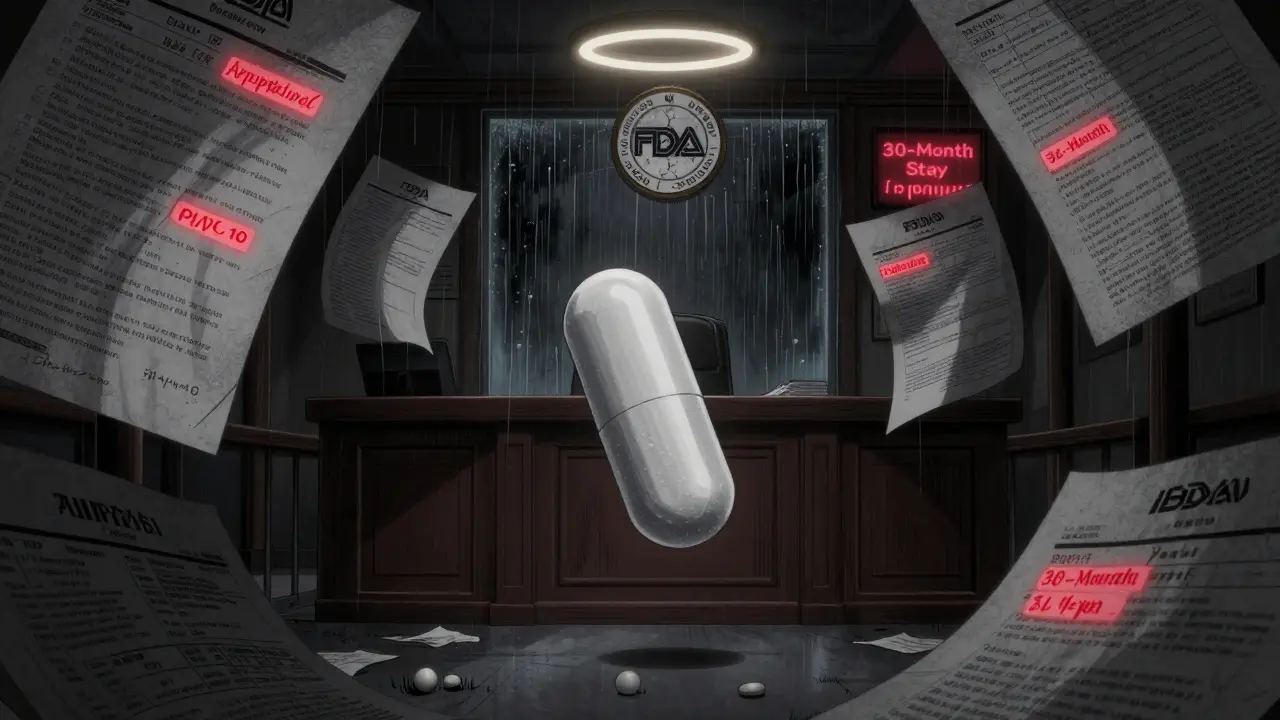
When a generic drug gets tentative approval from the FDA, it doesn’t mean it’s ready to hit pharmacy shelves. It means the agency has checked every scientific box - safety, effectiveness, manufacturing quality - and found it meets the bar. But the drug still can’t be sold. Why? Because something else is blocking it. And that something often takes years to clear.
What Tentative Approval Really Means
Tentative approval isn’t a halfway win. It’s a full pass on science, stuck in legal limbo. The FDA grants it to generic drug applications (ANDAs) that are perfect in every technical way but can’t launch because the brand-name drug still has patents or exclusivity protections. Think of it like getting your driver’s license but being told you can’t drive until your neighbor’s car insurance expires. This system was created by the Hatch-Waxman Act in 1984 to speed up generic access. The idea was simple: let companies prepare early, so when patents expire, generics flood the market and prices drop fast. But in practice, the wait between tentative approval and actual launch often stretches beyond two years.Review Cycles Are Slowing Things Down
Even before patent issues come into play, the FDA review process itself is a major bottleneck. Before 2012, generic applications went through nearly four rounds of review on average. Each time, the FDA sent back a letter listing missing data, flawed methods, or unclear manufacturing details. The most common reasons? Incomplete chemistry and manufacturing controls (CMC) - that’s 35% of all deficiencies. Poor bioequivalence study designs? That’s another 28%. And 22% of applications got stuck because the lab methods used to test the drug weren’t properly validated. The Generic Drug User Fee Amendments (GDUFA) tried to fix this. GDUFA I (2012-2017) and GDUFA II (2018-2022) set deadlines and pushed for faster reviews. But progress was slow. By 2022, the average number of review cycles had dropped from 3.9 to 3.2 - still far from the 2.5 target. And first-cycle approval rates? Only 28% in 2022. That means most applications get rejected the first time, and companies have to go back, fix things, and wait months to resubmit.Manufacturing Problems Are a Hidden Roadblock
It’s not just paperwork. The factory matters. In 2022, 41% of complete response letters (CRLs) - the FDA’s official “not approved” notice - were tied to manufacturing issues. The biggest red flags? Weak quality control systems (63% of facility-related CRLs), poor environmental monitoring (29%), and equipment that wasn’t properly tested or calibrated (24%). Complex drugs make this worse. Inhalers, topical creams, injectables - these aren’t simple pills. They need precise formulations, special equipment, and tight controls. A 2022 FDA analysis found that complex generics had 2.3 times more review cycles than regular oral tablets. One company spent 14 extra months just to get approval for a generic asthma inhaler because the spray mechanism didn’t match the brand’s performance.
Patents Are the Biggest Wall
Even if the FDA says “yes,” the brand-name company can say “no” - legally. When a generic maker files a Paragraph IV certification (saying a patent is invalid or won’t be infringed), the brand can sue. That triggers a 30-month automatic stay. The FDA can’t give final approval during that time, no matter how perfect the application is. Between 2010 and 2016, 68% of tentatively approved generics were held up by these lawsuits. Some lawsuits are legitimate. Many aren’t. Brand companies file “citizen petitions” - formal requests asking the FDA to delay approval on technical grounds. Between 2013 and 2015, 67 petitions were filed. Only three were approved. But they still worked: each one added months to the timeline. Even worse, some brands use “product hopping.” They tweak the drug slightly - change the pill shape, add a coating, switch from tablet to capsule - and get a new patent. This resets the clock. A 2018 FTC study found this happened with 17% of top-selling drugs. And then there’s “pay-for-delay.” Big pharma pays a generic maker to stay off the market. Between 2009 and 2014, 987 generic launches were blocked this way. It’s legal - for now - and it costs consumers billions.Applicants Are Slowing Themselves Down
It’s not all the FDA’s fault. Generic companies often delay their own progress. In 2022, the average time to respond to an FDA deficiency letter was 9.2 months. The FDA recommends 6 months. That extra 3+ months adds up fast. And 29% of initial applications were incomplete from the start - missing labeling details, stability data, or container closure info. Stability data? That’s how long the drug stays safe and effective. If a company doesn’t test it long enough, the FDA won’t approve. But running those tests takes time - sometimes over a year. And if the data looks shaky, the company has to start over.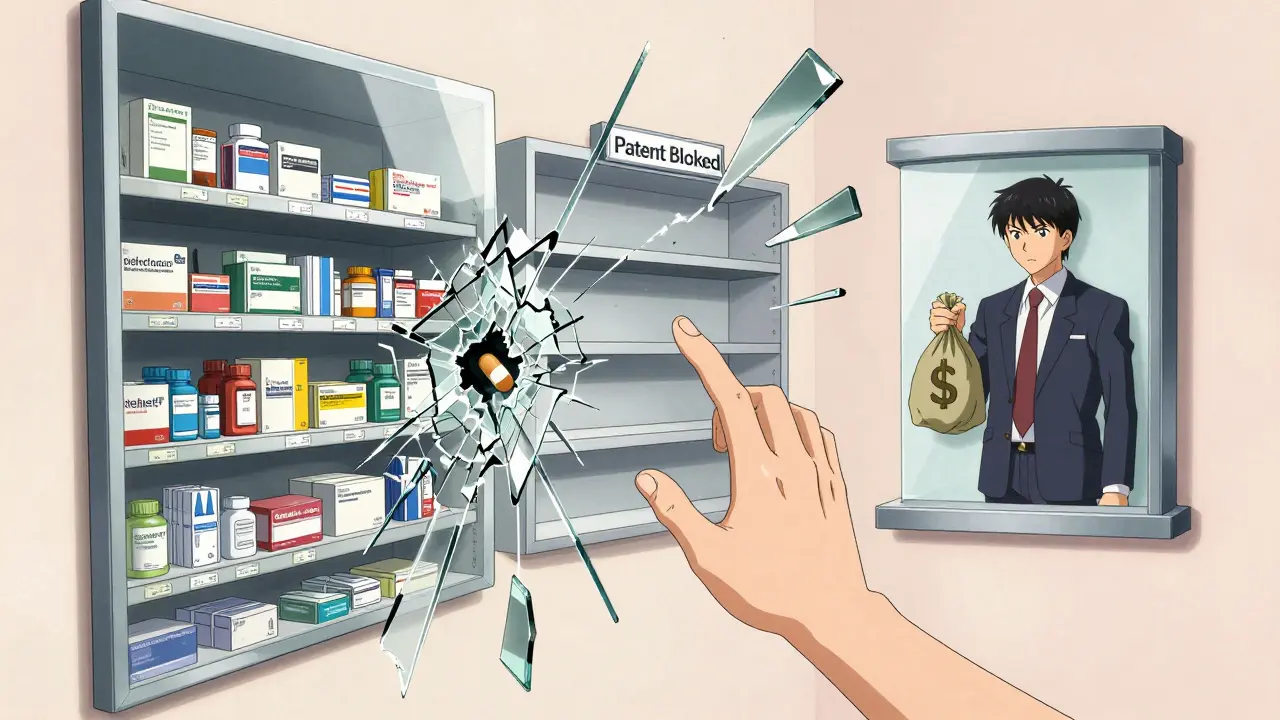
Market Economics Can Kill a Good Drug
Sometimes, even after all the hurdles, the generic never launches. Why? Because it doesn’t make financial sense. A 2022 analysis by DrugPatentWatch found that 30% of tentatively approved generics never hit the market. For drugs with annual U.S. sales under $50 million, that number jumps to 47%. Why bother investing millions in manufacturing, testing, and legal battles if you’ll make pennies per pill? Even when generics launch, prices don’t always drop fast. A 2019 JAMA study found that if only one generic enters the market, prices stay at 80% of the brand’s price for two full years. That discourages other companies from entering. So you get one generic - and no real competition.What’s Being Done to Fix It
The FDA knows the system is broken. That’s why they created the Competitive Generic Therapy (CGT) pathway in 2017. It fast-tracks drugs with little or no generic competition. In 2022, 78% of CGT-designated drugs got tentative approval in under 8 months - half the normal time. They also launched a 2022 initiative to prioritize 102 high-need generics. Of those, 67% got final approval within a year - compared to just 34% for others. That’s progress. New laws like the CREATES Act (2019) try to stop brand companies from blocking sample access - a tactic used to delay generic testing. The Affordable Drug Manufacturing Act (2023) aims to boost U.S. production of active ingredients, reducing supply chain risks. GDUFA III (2023-2027) sets ambitious goals: 70% first-cycle approval rates by 2027, and 8-month review times for priority drugs. But the FDA admits: patent litigation, complex products, and resource limits will keep delays high through at least 2025.What This Means for Patients
You might think: “If the FDA says it’s safe, why can’t I buy it?” The answer is frustratingly simple: the system isn’t built for speed. It’s built for control. And control, in this case, often means higher prices and longer waits. Tentative approval sounds like a green light. But it’s more like a yellow light - flashing, uncertain, and stuck in the middle of a legal traffic jam. Patients pay the price - in dollars, in delayed access, in lost health options. The good news? More generics are getting approved than ever before. The bad news? Many of them still sit on the shelf, waiting for patents to expire, lawsuits to end, or manufacturers to decide it’s worth the cost. The system works - but it doesn’t work fast enough. And for patients who need affordable medicine, every month counts.What is the difference between tentative approval and final approval for generics?
Tentative approval means the FDA has determined the generic drug meets all scientific and manufacturing standards for safety, effectiveness, and quality. But final approval - which allows the drug to be sold - is blocked by patents or exclusivity rights on the brand-name version. Once those legal barriers expire, the FDA can grant final approval without further review.
Why do some tentatively approved generics never reach the market?
Many never launch because the market isn’t profitable enough. If the brand drug sells less than $50 million annually in the U.S., the cost of manufacturing, legal battles, and FDA compliance may outweigh potential profits. Some companies wait for competitors to enter first, hoping prices will rise. Others simply walk away.
How long does it usually take for a tentatively approved generic to launch?
The median time from tentative approval to market launch is about 16.5 months, according to 2022 FDA data. But this can stretch to two years or more if patent litigation drags on, manufacturing issues arise, or the company delays for strategic reasons. Some never launch at all.
Can the FDA approve a generic drug even if a patent is still active?
No. Even with tentative approval, the FDA cannot grant final marketing authorization while a patent or exclusivity period is active. The 30-month statutory stay triggered by patent litigation legally prevents final approval, regardless of the drug’s scientific merit.
What is a citizen petition, and how does it delay generic approval?
A citizen petition is a formal request to the FDA to take a specific action - like requiring additional testing or delaying approval. Brand-name companies often file these to slow down generics, even when the scientific basis is weak. Between 2013 and 2015, 67 petitions were filed to block generics, but only three were approved. Still, each petition added months to the timeline.
How does GDUFA help reduce delays in generic approval?
The Generic Drug User Fee Amendments (GDUFA) lets the FDA collect fees from generic manufacturers to fund faster reviews. GDUFA I and II set deadlines, increased staffing, and improved transparency. GDUFA III (2023-2027) aims for 70% first-cycle approval rates by 2027 and faster reviews for priority drugs. It’s helped reduce review cycles, but progress is still slower than intended.
Sue Stone
January 24, 2026 AT 08:12So basically the FDA says 'you're good to go' but then some lawyer says 'nope, wait 3 years'... and we're all just stuck paying $500 for a pill that could cost $5? This system is broken.
Andrew Smirnykh
January 25, 2026 AT 14:31It's wild how science and law got divorced here. The science says 'approve it' - the legal system says 'hold on.' I get patents exist, but when they're used as delay tactics, it stops being innovation and starts being rent-seeking.
dana torgersen
January 27, 2026 AT 13:24why do they even call it 'tentative approval' if it's not even close to being approved?? it's like saying 'you passed the driving test... but you can't drive until your neighbor's car insurance expires'... wait, that's literally what they said... so why not just say 'approved but blocked'? it's confusing and feels like corporate gaslighting. i'm so tired of this.
Stacy Thomes
January 28, 2026 AT 20:11THIS IS A DISASTER. People are dying because they can’t afford their meds. The FDA did their job. The manufacturers did theirs. But the pharma giants? They’re sitting on patents like dragons hoarding gold. And we’re the peasants begging for crumbs. We need to burn this system down and start over. No more waiting. No more excuses. ACCESS IS A HUMAN RIGHT.
Anna Pryde-Smith
January 29, 2026 AT 19:37Pay-for-delay is not just unethical - it’s criminal. And yet it’s legal? That’s not capitalism. That’s feudalism with a corporate logo. They’re literally paying companies NOT to help people. And we’re supposed to be okay with this? I’m furious.
Kerry Evans
January 31, 2026 AT 01:16Most of these delays are the fault of generic manufacturers. They submit incomplete applications. They don’t do proper stability testing. They think the FDA is their personal consultant. Stop blaming the system - start doing your job right.
Susannah Green
January 31, 2026 AT 05:47For anyone wondering why their generic asthma inhaler still costs $300 - here’s your answer. Complex drugs? They’re a nightmare to replicate. The spray mechanism, the propellant, the particle size - it’s not just copying a pill. And if the manufacturer cuts corners? Patients get sick. So yeah, the FDA has to be extra careful. But they need more funding. And we need to stop acting like every delay is a conspiracy.
Dawson Taylor
January 31, 2026 AT 18:27The structural inefficiencies are systemic. The convergence of regulatory, legal, and economic factors creates a non-linear delay function. The GDUFA framework, while well-intentioned, lacks sufficient enforcement mechanisms to mitigate strategic litigation and market withdrawal incentives. A Pareto-optimal solution requires simultaneous reform of patent law, manufacturing incentives, and pricing transparency.
Sallie Jane Barnes
February 1, 2026 AT 21:55Let’s be real - this isn’t just about drugs. It’s about who gets to live. If a kid needs an inhaler and their family can’t afford it because the brand company paid a generic to stay away? That’s not a policy failure. That’s a moral one. We need to stop treating medicine like a stock option.
charley lopez
February 2, 2026 AT 05:08The CMC deficiencies cited (35%) reflect a fundamental gap in technical rigor among many ANDA filers. The lack of validated analytical methods and inadequate process validation protocols are not administrative oversights - they are systemic quality control failures. Until manufacturers invest in robust QMS, regulatory delays will persist regardless of statutory reforms.
Oladeji Omobolaji
February 3, 2026 AT 17:26in Nigeria we just wait for the brand to expire and then import the generic from india. no paperwork. no lawsuits. no 16 month waits. sometimes the system works better when you don’t overcomplicate it.
Janet King
February 4, 2026 AT 23:57It’s not just about patents. It’s about market size. If a drug only makes $30 million a year, no one wants to spend $10 million to make a generic. That’s not greed - that’s math. We need public funding to support generics for low-revenue drugs. Not everyone can be a blockbuster.
Vanessa Barber
February 5, 2026 AT 05:34Actually, the FDA’s approval rate has improved. The real problem is that people think 'tentative approval' means 'available now.' It doesn’t. It’s like getting your wedding license but the venue is booked for three years. Blaming the FDA is just distraction.
Laura Rice
February 6, 2026 AT 11:56my grandma’s insulin was delayed for 2 years because of a patent lawsuit. she had to split pills. she’s 78. she shouldn’t have to do that. this isn’t a policy debate - it’s life or death. we need to stop talking and start fixing. the people who are suffering? they’re not asking for a PhD thesis. they’re asking for their medicine.
Kerry Moore
February 7, 2026 AT 15:40While the structural challenges are significant, the introduction of the CGT pathway demonstrates that targeted regulatory intervention can yield measurable improvements. The 78% approval rate within eight months for CGT-designated drugs suggests that prioritization, combined with adequate resourcing, can substantially mitigate delays. A scalable model based on this framework warrants immediate expansion.