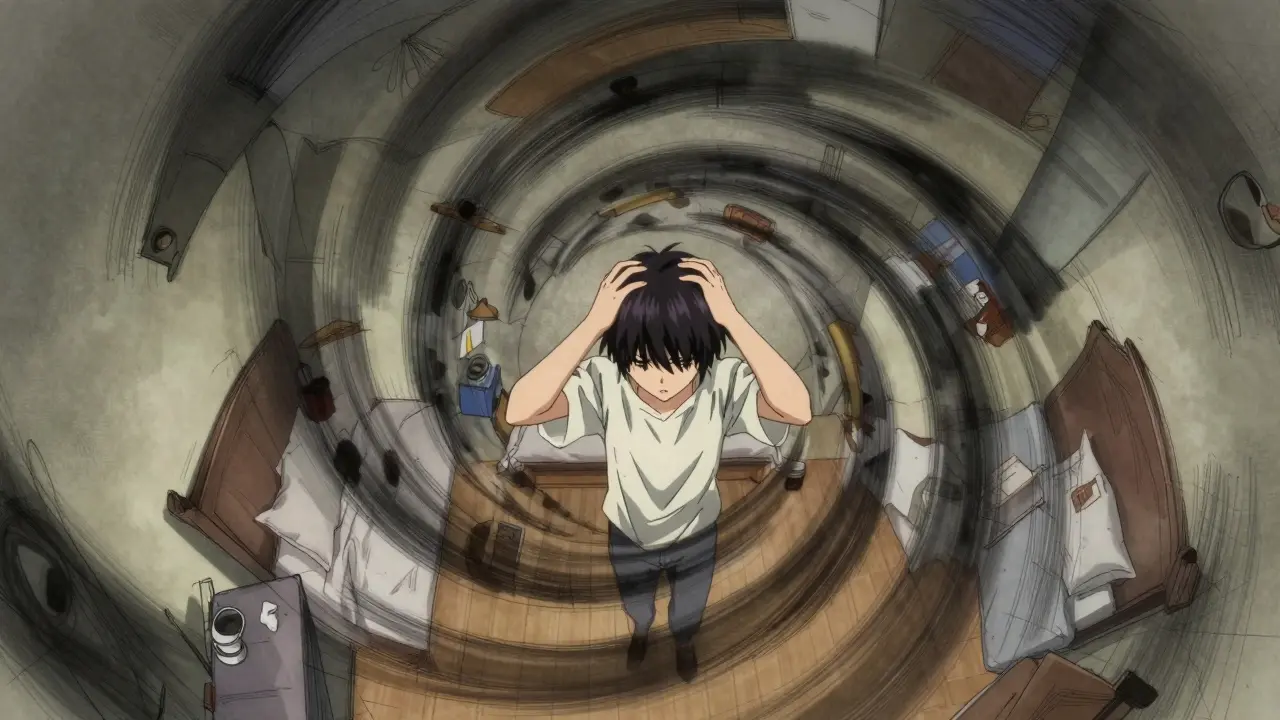
The Inner Ear: Where Balance Begins
About 80% of vertigo cases start in the peripheral vestibular system, which is basically the balance hardware located in your inner ear. This system uses fluid and tiny crystals to tell your brain exactly where your head is in space. When this system malfunctions, your brain receives conflicting signals, and the result is that signature spinning sensation. One of the most common culprits is Benign Paroxysmal Positional Vertigo (or BPPV), which is a disorder caused by tiny calcium carbonate crystals called otoconia that drift out of place and clog the semicircular canals of the inner ear. This is why BPPV usually triggers short, intense bursts of spinning-often lasting only 30 seconds-when you tilt your head back or roll over in bed. It's particularly common in older adults, accounting for half of all dizziness cases in that age group. Other inner ear issues include Vestibular Neuritis, which is inflammation of the vestibular nerve usually caused by a viral infection. Unlike BPPV, this causes a constant, prolonged vertigo that can last for days. Then there is Meniere's Disease, a more complex condition involving fluid buildup (endolymphatic hydrops) in the inner ear. People with Meniere's don't just feel the spin; they often deal with fluctuating hearing loss, a ringing in the ears known as tinnitus, and a feeling of fullness or pressure in the affected ear.When the Brain is the Source: Central Vertigo
Not all vertigo happens in the ear. About 20% of cases are "central," meaning the problem is in the brainstem or the cerebellum. This is a more serious category because it can involve neurological conditions. The most frequent central cause is Vestibular Migraine, which is a type of migraine that causes vertigo instead of (or in addition to) a traditional headache. These episodes can last anywhere from a few minutes to 72 hours and often trigger in crowded environments or under high stress. Because central vertigo can sometimes be a sign of a stroke, doctors use a specific set of tests called the HINTS exam (Head Impulse, Nystagmus, and Test of Skew). When performed within the first 48 hours of symptoms, this exam can identify a stroke with 96.8% sensitivity, which is why it has become a critical tool in emergency rooms worldwide.How Doctors Pinpoint the Cause
Since the symptoms of different disorders overlap, specialists use specific physical maneuvers to see how your eyes react to movement. This is called nystagmus-the involuntary rhythmic movement of the eyes.| Test Name | Target Condition | What it Detects | Typical Accuracy/Sensitivity |
|---|---|---|---|
| Dix-Hallpike Maneuver | Posterior Canal BPPV | Specific eye movements when head is dropped back | 79% Sensitivity |
| Supine Head Roll Test | Horizontal Canal BPPV | Eye movement while lying flat and turning head | High for horizontal canal |
| HINTS Exam | Central Vertigo/Stroke | Combination of head impulse and eye skew | 96.8% Sensitivity |

The Roadmap to Recovery: Treatment Options
Once the cause is identified, the treatment varies wildly. Using the wrong treatment can actually slow down your recovery. For example, taking vestibular suppressants for too long can stop the brain from learning how to compensate for the balance loss. For BPPV, the gold standard is the Epley Maneuver, which is a series of specific head movements designed to guide the displaced calcium crystals out of the semicircular canal and back into the utricle. This procedure is incredibly effective, with some clinics reporting a 95% resolution rate within two weeks. If you have Meniere's disease, the focus shifts to fluid management. Doctors typically recommend a combination of water pills (diuretics) and a strict sodium restriction-usually between 1,500mg and 2,000mg of salt per day. Since most salt is hidden in processed foods, this requires a significant lifestyle change, but it can reduce the frequency of attacks by up to 70%. For those with vestibular migraines, the strategy mimics traditional migraine prevention. This might involve beta-blockers like propranolol or newer medications like eptinezumab, which has shown a 50% reduction in vertigo for over 60% of patients.Vestibular Rehabilitation: Training Your Brain
When the damage to the inner ear is permanent or recovery is slow, the brain needs to be taught how to balance again. This is where Vestibular Rehabilitation Therapy (VRT) comes in. VRT is a specialized form of physical therapy designed to reduce dizziness and improve balance through habituation and gaze stabilization exercises. Think of it as "physical therapy for your brain." VRT doesn't necessarily fix the inner ear; instead, it uses the brain's neuroplasticity to find a workaround. The program usually includes:- Gaze Stabilization: Exercises like the Brandt-Daroff movements that help you keep your vision steady while your head is moving.
- Balance Retraining: Practicing walking on different surfaces (like foam or carpet) to challenge your stability.
- Habituation: Repeatedly exposing yourself to the movements that trigger dizziness until your brain stops overreacting to them.

Medication: The Double-Edged Sword
Many people reach for over-the-counter meds like meclizine (Antivert) to stop the spinning. While these are great for acute nausea, they are a "bandage" solution. These drugs suppress the vestibular system, which sounds good in the moment, but it actually prevents the brain from performing the essential process of central compensation. Medical experts, including those at the Children's Hospital of Philadelphia, warn that using these suppressants for more than 72 hours can delay your natural recovery by 30% to 50%. The goal is to move from symptom suppression to active rehabilitation as quickly as possible.Can I do the Epley maneuver at home?
Yes, home-based Epley maneuvers can be 70-80% effective, but only if performed with extreme precision. You must maintain a specific 30-degree head angle and pause for at least 30 seconds between movements. Because it's easy to get the angle wrong, it is highly recommended to have a professional guide you through the first few sessions.
How long does it take for vestibular therapy to work?
Most patients see significant improvement within 4 to 6 weeks of consistent practice. However, the program typically lasts 6 to 8 weeks, with exercises performed twice daily. Consistency is key; adherence rates of 70% or higher are usually required to see a real difference in balance.
Is vertigo always a sign of something serious?
Not always. In fact, 80% of cases are peripheral, meaning they are caused by inner ear issues like BPPV, which are treatable and not life-threatening. However, central vertigo (originating in the brain) can be a sign of a stroke or tumor, which is why any acute, prolonged vertigo should be evaluated by a doctor within 48 hours.
What is the best diet for Meniere's disease?
The primary dietary goal for Meniere's is limiting sodium intake to between 1,500mg and 2,000mg per day. This helps prevent the buildup of fluid in the inner ear. Since most salt comes from processed foods and restaurant meals, focusing on fresh, whole ingredients is the most effective way to stay within these limits.
Why do I feel worse before I feel better in vestibular rehab?
This is a known phenomenon. VRT works by intentionally triggering dizziness to force the brain to adapt. This temporary exacerbation happens to about 70% of patients in the first 1-2 weeks. It is a sign that the brain is being challenged, and persisting through this phase is necessary for long-term recovery.



Nathan Kreider
April 6, 2026 AT 02:35This really helps make sense of things. Just keep pushing through those tough first few weeks of therapy, it gets so much better!
Darius Prorok
April 6, 2026 AT 11:33Everyone knows BPPV is just about the crystals. If you just do the Epley right, it's fixed. Simple as that.
Del Bourne
April 6, 2026 AT 22:44It's truly vital to emphasize the danger of overusing meclizine. While it provides immediate relief from nausea, hindering the brain's natural compensation process can lead to a much longer recovery period. If you are starting VRT, please ensure you are working with a licensed physical therapist to avoid incorrect head positioning during maneuvers. Proper alignment is the difference between success and continuing the spin. Also, remember that hydration and consistent sleep patterns can actually modulate the frequency of vestibular migraines in some patients. It's all about the systemic approach to balance.
GOPESH KUMAR
April 7, 2026 AT 07:33Typical medical reductionism. You're treating the balance system like a broken machine, but what about the existential dread of losing one's center? The 'glitch' isn't just in the ear; it's in our perception of stability in a chaotic universe.
jack hunter
April 7, 2026 AT 11:25who cares bout the hinst exam anyway... its just another way for doc's to make money off a 5 min test. balance is a social construct anyway lol
Benjamin cusden
April 8, 2026 AT 04:18The intellectual laziness of the previous comment is staggering. The HINTS exam is a clinically validated tool with a high sensitivity rate for stroke detection, regardless of your personal views on the healthcare economy.
Kathleen Painter
April 9, 2026 AT 16:22I think it's just really important that we hold space for everyone's unique journey with this, because whether it's a quick fix like the Epley maneuver or a long road with Meniere's, the emotional toll of feeling like the world is literally sliding away from you is something that shouldn't be overlooked, and I've found that just talking about the fear of falling can be as healing as the physical therapy itself in the long run.
Windy Phillips
April 11, 2026 AT 03:48Some of you are just... lacking discipline!!! If you actually followed the salt restrictions... maybe your symptoms wouldn't be so erratic... it's just sad, really!!!
Ruth Swansburg
April 11, 2026 AT 07:18You can do this! Stay strong!
Nikhil Bhatia
April 13, 2026 AT 04:20Too long. Just do the exercises and stop whining.
Stephen Luce
April 14, 2026 AT 19:35I've been there with the 'worse before better' part of VRT. It's honestly terrifying at first, but sticking with it was the only thing that worked for me.
shelley wales
April 15, 2026 AT 16:01Sending love to everyone struggling with this. You're not alone in this dizzy world!
Alexander Idle
April 16, 2026 AT 09:22The utter audacity of the medical system to suggest that a simple diet of bland, salt-less food could possibly compensate for the sheer horror of a Meniere's attack is simply laughable! I am absolutely appalled by the simplistic nature of these 'solutions' while I suffer in exquisite agony!
charles mcbride
April 17, 2026 AT 12:16It is truly inspiring to see how neuroplasticity can be harnessed to overcome such debilitating symptoms through consistent effort and professional guidance.