
When your doctor prescribes a medication and the pharmacy says it’s out of stock-again-you’re not alone. In 2025, over 350 drugs in the U.S. remain in short supply, from antibiotics to heart medications, hormone therapies, and even basic pain relievers. For many, waiting weeks isn’t an option. That’s where compounding pharmacies come in. They don’t just fill prescriptions. They rebuild them.
What Exactly Is a Compounding Pharmacy?
A compounding pharmacy isn’t your local CVS or Walgreens. It’s a specialized lab where pharmacists mix ingredients from scratch to make medications that aren’t available commercially. Think of it like a chef cooking a meal for someone with food allergies-except instead of gluten or nuts, they’re removing dyes, preservatives, or fillers that trigger reactions. Or instead of pills, they make liquids, creams, or even lollipops for kids who can’t swallow tablets. These pharmacies follow strict standards set by the U.S. Pharmacopeia (USP <795> and <797>) and are often accredited by the Pharmacy Compounding Accreditation Board (PCAB). Only about 1,200 of the 7,500 compounding pharmacies in the U.S. have this extra certification. It’s not just about making something- it’s about making it safe.Why Do Drug Shortages Happen?
Drug shortages aren’t random. They happen because manufacturing is concentrated. A single factory in India or China might supply 80% of a drug used across the country. If that plant shuts down for inspection, has a quality issue, or faces a supply chain delay, the entire U.S. runs out. The FDA tracks over 300 active shortages each year. Some drugs are old, cheap, and low-profit-so manufacturers stop making them. Others are complex, like sterile injectables, which require clean rooms and precise controls. When a drug is on shortage, your doctor might try to switch you to another brand. But what if that brand has the same filler you’re allergic to? Or what if you’re a senior who can’t swallow the new pill size? That’s where compounding steps in.When Compounding Makes the Difference
Here’s what compounding pharmacies can do that regular pharmacies can’t:- Remove allergens like lactose, gluten, or FD&C dyes for patients with sensitivities
- Change a pill into a liquid, gel, or transdermal cream for people who can’t swallow
- Adjust dosage strength-say, from 50mg to 12.5mg-for kids or elderly patients
- Create flavored versions (bubblegum, cherry, mint) so children actually take their medicine
- Combine multiple medications into one dose to reduce pill burden
Who Uses Compounded Medications Most?
Not everyone needs it-but certain groups rely on it:- Children (12% of compounded scripts): Can’t swallow pills? Compounded liquids or chewables fix that.
- Elderly patients (28%): Swallowing problems, multiple meds, or sensitivity to fillers make compounding essential.
- Allergy-sensitive individuals (22%): Reactions to dyes, preservatives, or gluten are common-compounding removes them.
- Chronic pain patients (22%): Topical creams for joint pain or nerve pain avoid stomach side effects of pills.
- Hormone therapy users (28%): Custom doses of estrogen, testosterone, or thyroid meds that aren’t commercially available.

What Compounding Can’t Do
It’s important to know the limits. Compounding pharmacies can’t make:- Biologics (like insulin or monoclonal antibodies)
- Complex IV chemotherapy drugs requiring sterile manufacturing beyond their scope
- Drugs that are patented and legally protected
- Medications that are already available in FDA-approved form
How to Get a Compounded Prescription
It’s not as simple as walking in and asking. Here’s the process:- Your doctor identifies a problem: the drug is unavailable, or you react to it.
- Your doctor writes a prescription with a clear medical reason: "Patient allergic to dye X; requires sugar-free liquid form."
- You take the script to a compounding pharmacy (ask your regular pharmacist for a referral).
- The pharmacist reviews the formula, checks ingredient availability, and confirms it’s legally allowed.
- Preparation takes 24-72 hours. Sterile compounds (like injections) take longer.
- You pick it up. Some pharmacies ship nationwide.
Cost and Insurance: The Big Hurdle
Here’s the tough part: insurance doesn’t always cover compounded meds. About 45% of patients pay out-of-pocket. A standard prescription might cost $15 with insurance. A compounded version? $80-$200, depending on complexity. Some insurers will cover it if your doctor submits a letter of medical necessity. Others require prior authorization. A few state Medicaid programs have special programs for compounding. Always ask the pharmacy to check your coverage before they start making it. One patient in Florida spent $1,200 on a compounded thyroid medication before her insurer finally approved it-after her doctor proved the commercial versions caused severe rashes. It took three months. But she got her life back.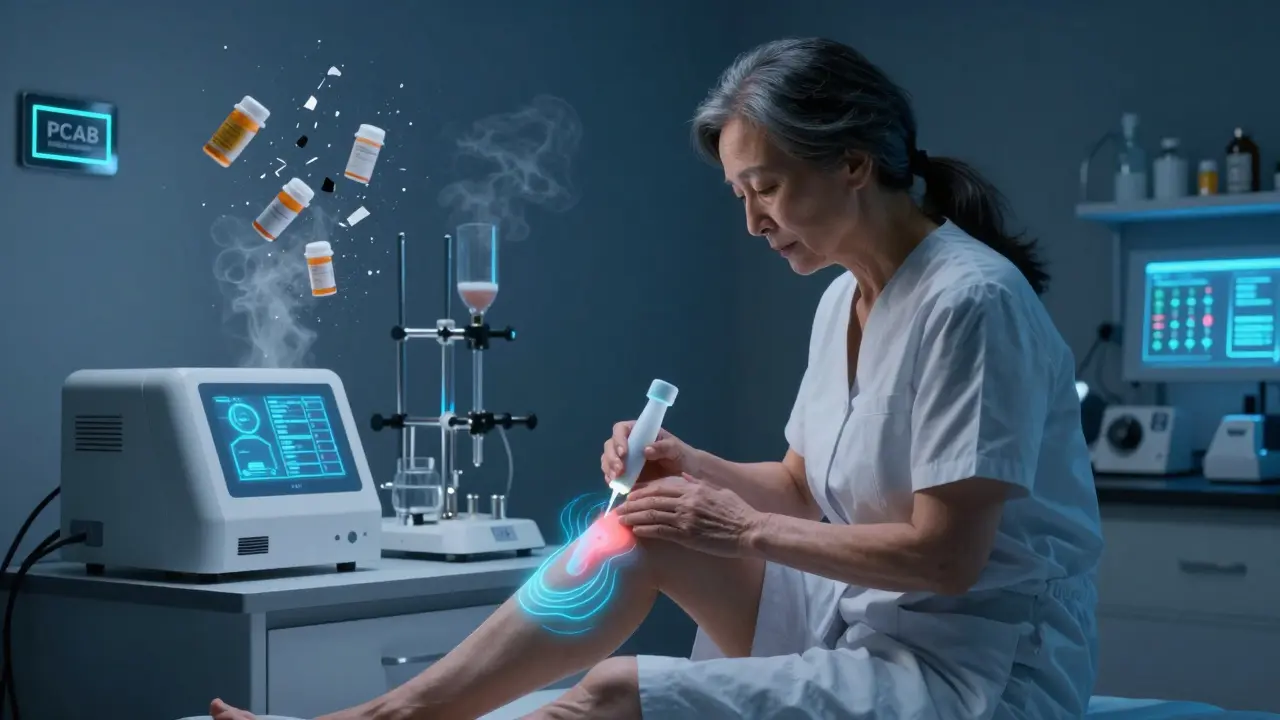
Real Stories, Real Impact
On Reddit’s r/Pharmacy, a pharmacist shared a case: a man on oral finasteride for hair loss had sexual side effects in 32% of users. His doctor switched him to a compounded topical version. Side effects dropped to 8%. He kept using it for years. Another case: a 78-year-old woman with chronic pain couldn’t tolerate NSAIDs because of stomach ulcers. Her pharmacist made a compounded gel with ketoprofen and lidocaine. She applied it twice a day. Her pain score dropped from 8/10 to 3/10. No GI issues. No pills. These aren’t outliers. They’re the norm for people who’ve been let down by the system.What’s Changing in 2025?
The compounding industry is evolving. New digital tools reduce errors by 37%. Stability testing now extends shelf life by 25-40%. The FDA updated its guidance in 2022 to clarify when compounding is acceptable during shortages. PCAB added new requirements in January 2023 for documentation and testing. Demand is rising. The U.S. compounding market is projected to hit $15.8 billion by 2027. More hospitals are building in-house compounding labs. Independent pharmacies are investing in clean rooms and training. But the core hasn’t changed: it’s still about solving problems that big pharma won’t touch.Final Thoughts
Compounding pharmacies aren’t magic. They’re not cheaper. They’re not faster. But when the system fails you-when your medication is gone, or it makes you sick-they’re the only thing standing between you and no treatment at all. If you’re stuck because a drug is unavailable, don’t just wait. Talk to your doctor. Ask if compounding is an option. Find a reputable pharmacy. Bring your medical history. Be persistent. You’re not asking for something unusual. You’re asking for the right medicine. And sometimes, that’s not on the shelf. It’s being made just for you.Are compounded medications safe?
Yes-when they’re made by accredited pharmacies following USP standards. PCAB-accredited compounding pharmacies are held to the same quality standards as major drug manufacturers. They test ingredients, document every batch, and use clean rooms for sterile products. But not all compounding pharmacies are equal. Always choose one with PCAB accreditation and ask about their testing protocols.
Can I get compounded medications without a prescription?
No. Federal law requires a valid prescription from a licensed provider for any compounded medication. Even if a pharmacy offers "over-the-counter" compounded products, those are illegal and unsafe. Always work with your doctor and a licensed pharmacy.
How long does it take to get a compounded medication?
Most take 24 to 72 hours. Simple non-sterile formulas (like creams or liquids) can be ready in a day. Sterile preparations, like injections or IV solutions, take longer-sometimes up to 5 days-because they require extra testing and validation. Always plan ahead, especially if you’re running low.
Why don’t more pharmacies compound medications?
It’s expensive and time-consuming. Compounding requires special equipment, clean rooms, trained staff, and rigorous documentation. Most retail pharmacies focus on volume, not customization. A standard prescription takes 5 minutes. A compounded one can take 30-45 minutes. Fewer than 15% of U.S. pharmacies offer compounding services at all.
Is compounding covered by Medicare or private insurance?
Sometimes. Many insurance plans don’t automatically cover compounded drugs. You’ll need your doctor to submit a letter of medical necessity. Some Medicare Part D plans cover them if they’re deemed essential and no alternative exists. Always check with your insurer before the pharmacy starts making it. About half of patients pay out-of-pocket.

Lynsey Tyson
December 17, 2025 AT 16:15I had no idea compounding pharmacies could make kid-friendly lollipops out of seizure meds. My cousin’s daughter went from vomiting every dose to begging for her cherry-flavored pill. Life-changing.
Dikshita Mehta
December 18, 2025 AT 17:25Compounding isn’t magic-it’s medicine tailored to real human needs. The fact that 85% of allergic patients stick with treatment after switching says everything. It’s not about convenience, it’s about access.
pascal pantel
December 19, 2025 AT 21:17Let’s be real-most of these ‘compounded’ scripts are just lazy prescribing. If your doctor can’t find an FDA-approved alternative, they’re not trying hard enough. And don’t get me started on the $200 bills for something that should cost $15. This is regulatory arbitrage disguised as patient care.
Gloria Parraz
December 20, 2025 AT 12:52My mom’s pain gel changed everything. No more stomach bleeding. No more pills. Just a little rub on her knee and she could finally walk to the mailbox again. This isn’t fringe medicine-it’s dignity.
Sahil jassy
December 22, 2025 AT 04:41India makes most of our meds so when a factory shuts down we all suffer. Compounding is the backup plan we didn’t know we needed. Thank god for these labs
Kathryn Featherstone
December 23, 2025 AT 17:46I used to think compounding was for weird cases. Then my son’s asthma inhaler had a dye that made him break out. We switched to a compounded version-no rash, no panic. Now I’m the one telling every parent I know about it.
Nicole Rutherford
December 25, 2025 AT 06:14Of course you’re paying out of pocket. You’re basically asking for a custom-made drug. If you can’t afford it, maybe you shouldn’t be taking it. This isn’t a right-it’s a luxury for people who can’t follow directions.
Chris Clark
December 26, 2025 AT 14:33so i went to this compounding place in texas and they made me a topical version of my thyroid med and i swear my energy came back like i was 25 again. also they spelled my name wrong on the label but hey it worked lol
Dorine Anthony
December 26, 2025 AT 21:54My pharmacist recommended one after my allergy flare-up. I was skeptical. Now I’m their biggest fan. They even called to check how I was doing after I picked it up. Who does that anymore?
William Storrs
December 28, 2025 AT 02:50If you’re reading this and you’re stuck because your meds are gone-don’t give up. Talk to your doctor. Find a PCAB pharmacy. This system is broken, but you’re not powerless. You’ve got options. Keep fighting.
James Stearns
December 29, 2025 AT 05:40It is imperative to underscore the fact that the compounding of pharmaceuticals constitutes a regulatory gray area fraught with potential for catastrophic deviation from established pharmacopeial norms. The absence of uniform federal oversight renders such practices inherently precarious and ethically ambiguous.
Nina Stacey
December 31, 2025 AT 02:07my grandma got a compounded version of her blood pressure med without the sugar and it stopped her from getting dizzy all day i just wish more people knew about this because honestly the system is so broken and no one talks about it but this saved her life and now she can walk her dog again
Kevin Motta Top
January 1, 2026 AT 11:24Compounding works because it’s human-centered. Big pharma doesn’t care about your allergy to red dye 40. These pharmacies do.
Allison Pannabekcer
January 1, 2026 AT 18:19It’s easy to dismiss compounding as niche or expensive-but when you’re the parent of a child who can’t swallow a pill, or the senior whose stomach can’t handle another NSAID, it’s not a luxury. It’s survival. I’ve seen a 78-year-old woman go from bedbound to gardening again because her pain cream didn’t come from a factory in China. It came from a small lab in Ohio, made by someone who actually listened. That’s not just medicine-it’s care. And we need more of it. Not less. The fact that only 1,200 out of 7,500 compounding pharmacies are PCAB-accredited? That’s a red flag. We need better standards, not fewer options. Insurance companies act like this is a fringe cost, but the real cost is what happens when people stop taking their meds because they can’t tolerate the fillers. ER visits. Hospitalizations. Lost productivity. Those numbers aren’t on the balance sheet. But they should be. This isn’t about being anti-corporate. It’s about being pro-human. And if we’re going to call ourselves a healthcare system, then we have to make space for the people who don’t fit the mold. Not just the ones who can swallow pills, afford brand names, or don’t have allergies to everything on the label.
Alisa Silvia Bila
January 3, 2026 AT 09:41My endocrinologist switched me to a compounded thyroid med after I reacted to the dye in the generic. Took two weeks to get it. Cost $150. Worth every penny. I haven’t felt this good in years.