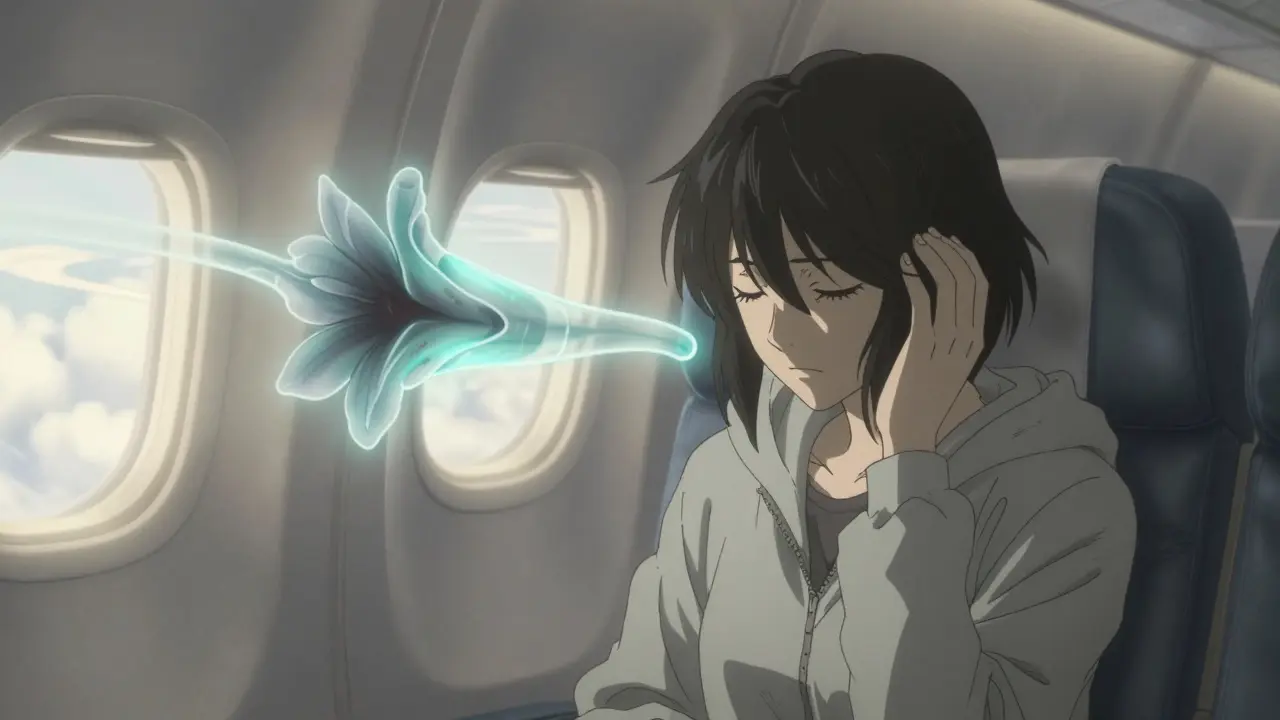
Ever feel like your ears are stuffed with cotton, especially after a cold or during a flight? You’re not alone. Millions of people deal with this weird, annoying sensation - a feeling of fullness, muffled hearing, or that constant need to pop your ears. It’s not just being ‘stuffy.’ It’s likely Eustachian tube dysfunction, a common but often misunderstood issue that messes with your ear pressure and hearing. The Eustachian tube is a tiny canal, about the width of a straw, that connects the middle ear to the back of your nose. Its job? To balance air pressure on both sides of your eardrum. Every time you swallow, yawn, or chew, it opens briefly to let air in or out. When it won’t open properly - thanks to swelling from a cold, allergies, or sinus infection - pressure builds up. The eardrum gets pulled inward. Hearing dulls. That weird muffled sound? That’s your ear trying to catch up. Most of the time, it clears up on its own within a couple of weeks. But if it drags on, it can lead to fluid buildup, recurrent infections, or even temporary hearing loss. The good news? There are simple, proven ways to fix it - and you don’t always need a doctor.
What Does Eustachian Tube Dysfunction Actually Feel Like?
It’s not always obvious. Some people think it’s just an ear infection. But ETD has its own signature symptoms:
- That plugged-up feeling - like you’re underwater - in one or both ears
- Hearing that sounds distant or muffled, like someone turned down the volume
- Popping, clicking, or crackling sounds when you swallow
- Ringing in the ears (tinnitus), especially after a flight or when you’re sick
- Mild dizziness or imbalance - not full vertigo, but enough to feel off
- Occasional ear ache, but usually not sharp or constant pain
Why Does This Happen? The Real Triggers
It’s not random. ETD usually follows something else:
- Upper respiratory infections (colds, flu) - the #1 cause, responsible for nearly 7 out of 10 cases
- Allergies - pollen, dust, pet dander - swell the tissues around the tube
- Sinus infections - mucus and inflammation block the opening
- Altitude changes - flying, driving through mountains, or even elevators
- Children under 7 - their tubes are smaller and more horizontal, so they clog easier
How to Relieve Ear Pressure at Home - No Prescription Needed
Most cases clear up without treatment. But if you’re stuck with that muffled feeling, try these proven methods:
- Swallow more often - sip water, suck on hard candy, or chew gum every 15-20 minutes. Swallowing forces the tube to open.
- Yawn deliberately - open your mouth wide and stretch your jaw. People who do this report relief 78% of the time.
- Try the Valsalva maneuver - pinch your nose shut, close your mouth, and gently blow as if you’re trying to pop your ears. Don’t blow hard. You’re not trying to burst your eardrum. Just enough to feel pressure build. Do it 3-5 times an hour. About 65% of users find this works.
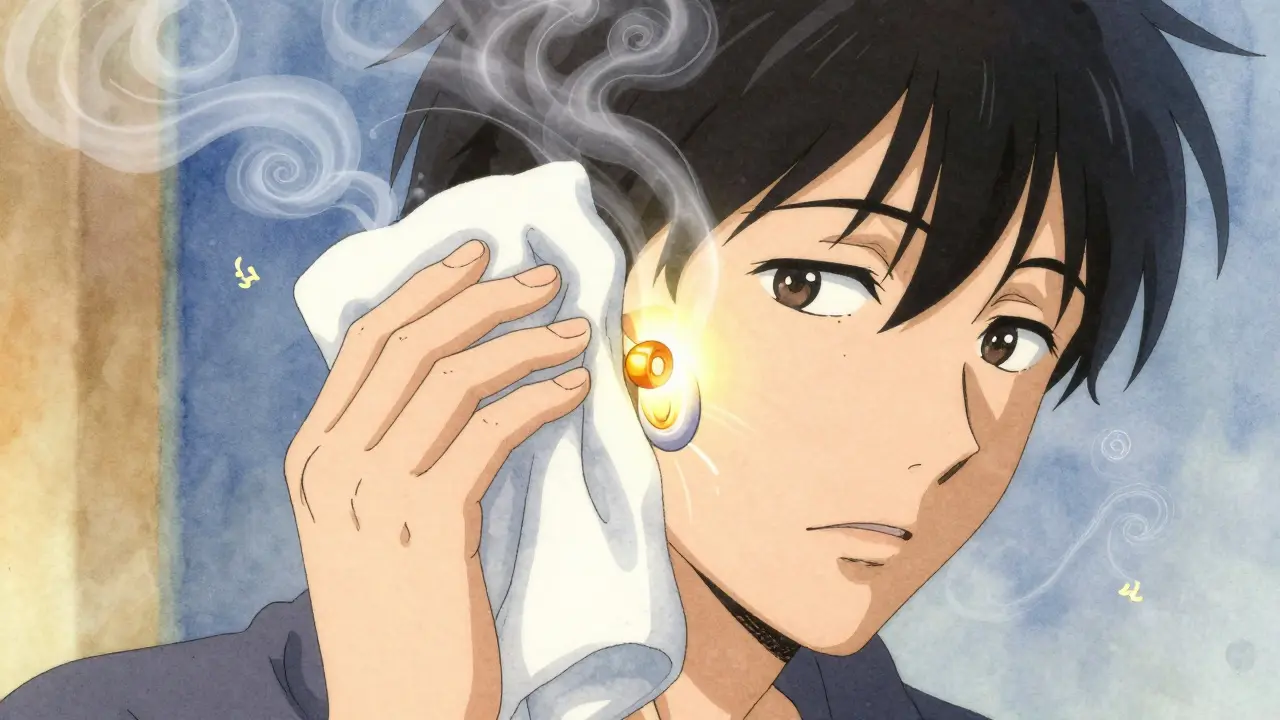
- Use a warm compress - hold a warm (not hot) washcloth against your ear for 10 minutes. Heat can reduce swelling around the tube.
- Stay hydrated - dry mucus clogs faster. Drink water all day to keep things thin and flowing.
When to Try Nasal Sprays - And When to Avoid Them
If home tricks don’t help after a few days, over-the-counter nasal sprays can make a difference - but only if used right.
- Decongestant sprays (like Afrin) - shrink swollen tissues fast. But use them for no more than 3 days. Longer than that, and they cause rebound congestion - your nose gets worse when you stop.
- Steroid nasal sprays (like Flonase) - reduce inflammation over time. Safe for weeks. Best for allergy-related ETD. Take 2-4 weeks to work, but they’re the real long-term fix for chronic cases.
What If Nothing Works? The Medical Options
If symptoms last more than 3 weeks, or if your hearing drops significantly, see an ear specialist. They’ll check for fluid behind the eardrum - a condition called serous otitis media - which can cause hearing loss of 20-50 decibels. For stubborn cases, two procedures are now common:
- Balloon dilation (BDET) - a tiny balloon is inserted through the nose and inflated inside the Eustachian tube for 2 minutes. It stretches the tube open. The whole thing takes about 20 minutes, done in-office with local numbing. Success rates? Around 67% after a year. Many people get relief for 6-12 months. One user, u/ETDWarrior, said it helped for 6 months before symptoms came back - which isn’t unusual.
- Myringotomy - a tiny cut is made in the eardrum to drain fluid. A small tube is often inserted to keep it open. Used when fluid builds up and won’t go away.

What ETD Isn’t - And When to Worry
It’s easy to confuse ETD with other ear problems:
- Acute otitis media - this is a true infection. It causes constant, sharp pain, fever, and sometimes pus. ETD pain is usually dull and comes and goes.
- Swimmer’s ear - pain is in the outer ear canal. Touching the earlobe hurts. ETD pain is deep inside.
- Barotrauma - sudden ear injury from rapid pressure changes (like scuba diving). It’s acute and traumatic. ETD is slow and persistent.
What’s New in ETD Treatment?
Research is moving fast. The big shift? Moving away from surgery and toward gentle, in-office fixes. Balloon dilation is now the go-to for chronic cases. But the next wave? Bioabsorbable stents - tiny, dissolvable devices placed in the tube to keep it open. Early trials show 85% of patients improved after just 3 months. The trend is clear: less cutting, less downtime, more precision. By 2026, experts predict a 15% yearly increase in these minimally invasive treatments.
Bottom Line: What to Do Right Now
Here’s your quick action plan:
- Day 1-7: Chew gum, swallow water, yawn. Try Valsalva gently. Use a warm compress. Avoid flying if you can.
- Day 8-14: If no improvement, start a steroid nasal spray (like Flonase). Keep hydrating. Avoid allergens.
- Day 15-21: Still stuck? See an ENT. They’ll check for fluid and consider balloon dilation if needed.
Can Eustachian tube dysfunction cause permanent hearing loss?
In most cases, no. Temporary hearing loss from ETD is usually mild - between 15 and 40 decibels - and reverses once pressure equalizes. But if fluid builds up behind the eardrum for more than 3 months without treatment, it can lead to more significant hearing loss (up to 50 decibels) and even eardrum damage. That’s why persistent symptoms need medical attention.
Why does my ear pop when I swallow but still feel blocked?
That popping means your Eustachian tube is opening briefly - but it’s not staying open long enough to fully equalize pressure. Think of it like a door that opens for a second, then slams shut again. The air trapped behind the eardrum hasn’t escaped, so the pressure remains. You need more frequent, consistent openings - which is why chewing gum or sipping water every 15 minutes helps.
Is it safe to use Valsalva if I have a cold?
Yes - but be gentle. Blowing too hard can force mucus into the middle ear, making things worse. Use just enough pressure to feel your ears pop. If you feel pain or dizziness, stop. The goal is to equalize, not force. If your nose is completely blocked, Valsalva won’t work well. Try a saline nasal rinse first to clear the passage.
Can allergies cause Eustachian tube dysfunction?
Absolutely. Allergies are the second most common cause, responsible for about 22% of cases. When your nasal passages swell from pollen or dust, the opening of the Eustachian tube gets pinched shut. That’s why people with chronic allergies often have recurring ear pressure. Steroid nasal sprays are often the best long-term fix for allergy-related ETD.
How do I know if I need balloon dilation?
You may be a candidate if you’ve had symptoms for more than 3 months, tried nasal sprays and home remedies without success, and your doctor confirms fluid or poor tube function on a hearing test or ear exam. It’s not for occasional pressure after a flight - it’s for chronic, daily issues that affect your quality of life. Most people who get it report lasting relief for 6-12 months.


Alisa Silvia Bila
December 21, 2025 AT 04:23I used to think my ears were just weird, but after my last flight, I tried chewing gum nonstop for an hour and it actually worked. No more muffled sound. Who knew something so simple could fix this?
Now I always pack hard candies before takeoff.
Marsha Jentzsch
December 22, 2025 AT 07:19OMG YES!! I’ve been suffering for MONTHS and no one gets it!! I tried everything-yawning, Valsalva, even crying (yes, I cried) and nothing worked until I started using Flonase daily. I was skeptical, but now I’m basically a steroid evangelist. Also, stop blowing so hard-you’re not trying to launch your eardrum into orbit!!
Carolyn Benson
December 24, 2025 AT 07:13It’s not about pressure. It’s about control. The Eustachian tube is a metaphor for how we handle emotional blockages-when we suppress, when we don’t swallow our feelings, when we refuse to yawn through the pain. Your ear doesn’t just need air-it needs release. The body remembers what the mind ignores. That crackling? That’s your soul trying to breathe.
And if you’re using nasal sprays like a crutch, you’re avoiding the real issue: you’re afraid to let go.
Try meditation. Or journaling. Or just sit in silence for ten minutes without swallowing. See what rises.
Chris porto
December 25, 2025 AT 05:41I’ve had this for years, mostly after colds. The gum and water trick works fine for me. Not magic, just physics. I don’t overthink it. If it’s still bothering me after a week, I use Flonase. No drama. No spiritual meaning. Just keep things moving.
Also, don’t trust Reddit advice that turns ear problems into metaphors. I’ve tried that. It didn’t help my hearing.
Aadil Munshi
December 27, 2025 AT 02:43Oh wow, another American article pretending they discovered this. In India, we’ve been using saline rinses and steam inhalation for centuries-before you even had Flonase. And guess what? It works better than your overhyped balloon thing.
Also, why are you telling people to chew gum? That’s just distraction. The real fix is avoiding dairy during cold season. Milk thickens mucus. Basic biology. Why isn’t this in your ‘bottom line’? You missed the point.
Also, your 87% stat? Probably from a study funded by pharma. Just saying.
Erica Vest
December 28, 2025 AT 13:33Correction: The Valsalva maneuver should be performed with the mouth closed and nose pinched, exhaling gently against resistance. Blowing too hard risks barotrauma or fluid reflux into the middle ear. Steroid nasal sprays are indeed first-line for allergic ETD, but should be used daily for at least 14 days before assessing efficacy. Decongestant sprays are contraindicated beyond 3 days due to rhinitis medicamentosa. Balloon dilation is indicated for chronic, refractory cases with documented Eustachian tube obstruction on impedance audiometry or CT. All information above is consistent with 2023 AAO-HNS guidelines.
Kinnaird Lynsey
December 29, 2025 AT 05:28Interesting how we all treat our ears like broken appliances. You’re not supposed to ‘fix’ them-you’re supposed to listen to them. I used to pop my ears like it was a contest. Now I just sit quietly, breathe, and wait. Sometimes the body knows better than the hacks.
Also, I hate when people call it ‘just a cold thing.’ It’s not. It’s your body screaming for balance. And yeah, Flonase helped me. But so did stopping myself from constantly trying to ‘fix’ it.
Glen Arreglo
December 30, 2025 AT 08:15My dad was a pilot. He taught me the Valsalva trick when I was 10. We used to do it during takeoff like a game. Never had issues. Also, Australians do this all the time-no big deal. You guys act like it’s a medical mystery. It’s just anatomy. Drink water. Chew. Breathe. Stop overcomplicating it.
And no, I don’t need a balloon in my ear. I need a better airline that doesn’t pressurize like a pressure cooker.
shivam seo
December 30, 2025 AT 10:19LMAO. You wrote a 2000-word essay on ear popping. In Australia, we just say ‘pop your ears’ and move on. You people turn everything into a TED Talk. I had this for six months, tried nothing, it went away. You’re overdiagnosing yourself because you read too much online. Also, balloon dilation? Sounds like a Silicon Valley scam. Stick to gum. Or don’t. I don’t care.