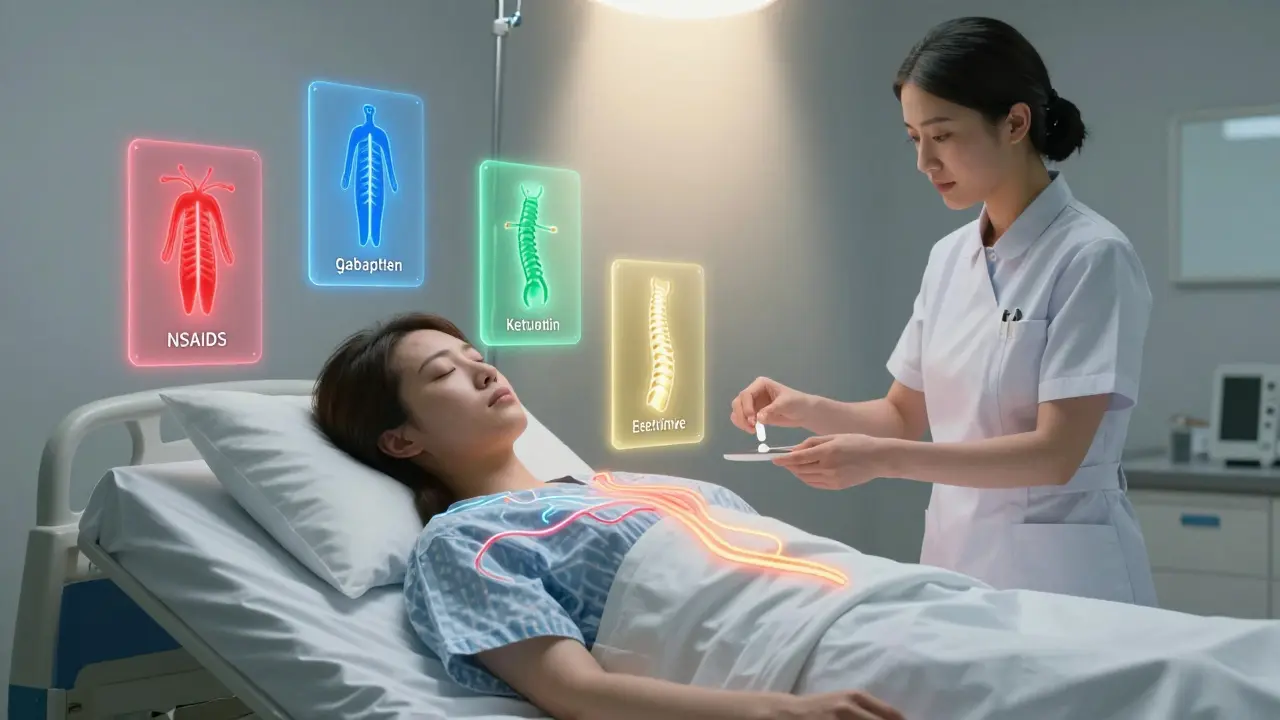
After surgery, pain is normal-but it doesn’t have to mean opioids. For years, the go-to answer for post-surgical pain was a pump with morphine or hydromorphone. But that approach came with a heavy cost: nausea, drowsiness, constipation, and a growing risk of dependence. Today, a smarter, safer way is standard: multimodal analgesia (MMA). It’s not a single drug. It’s a smart mix of medications, techniques, and timing designed to block pain at multiple points-so you need far less, or even zero, opioids.
Why Multimodal Analgesia? The Opioid Shift
In 2016, the CDC issued guidelines that changed how doctors think about pain after surgery. They didn’t ban opioids-they just said: don’t start there. The opioid crisis made it clear that even short-term use can lead to long-term dependency. Studies show that patients who get opioids after surgery are more likely to still be using them six months later, even if their surgery went perfectly. Enter MMA. This isn’t a new idea, but it’s now the gold standard. The goal? Use several different types of painkillers together so each one works at a lower dose. That means better pain control with fewer side effects. A 2022 review of 17 clinical trials found that patients on MMA cut their opioid use by 32% to 57% compared to those who got opioids alone. And here’s the kicker: their pain scores didn’t get worse. They stayed just as low.How MMA Works: The Science Behind the Strategy
Pain doesn’t travel one path. It uses multiple signals in your nervous system. MMA attacks those signals from different angles:- Acetaminophen (Tylenol) works in the brain to lower pain signals.
- NSAIDs like celecoxib or naproxen reduce inflammation at the surgical site.
- Gabapentin or pregabalin calm overactive nerves-especially helpful for nerve-related pain after spine or joint surgery.
- Ketamine, a low-dose anesthetic, blocks pain receptors in the spinal cord and reduces the brain’s sensitivity to pain.
- Lidocaine infusions quiet nerve firing during and after surgery.
- Dexmedetomidine reduces stress and anxiety, which can amplify pain perception.
Real Protocols: What Hospitals Are Doing
Different hospitals have different recipes, but they all follow the same logic. Take Rush University Medical Center’s spine surgery protocol. Before surgery, patients get:- 1000 mg acetaminophen
- 300-600 mg gabapentin
- 400 mg celecoxib

Who Benefits Most?
MMA works best when pain is predictable. That means:- Joint replacements (knee, hip)
- Spine surgery
- Orthopedic trauma
- Abdominal procedures
The Hidden Challenge: Coordination
MMA sounds simple. But it’s not. It requires a team. Anesthesiologists, pharmacists, nurses, and surgeons all need to be on the same page. A patient can’t get gabapentin before surgery if the pre-op nurse doesn’t know the protocol. A pain score of 6 at 2 a.m. won’t be treated if the PACU nurse isn’t trained to give ketamine as needed. Successful MMA programs have:- Standardized order sets in the hospital system
- Clear roles: who gives what, when, and how
- Training for all staff, including nursing aides
- Pain assessments every 2 hours for the first 24 hours

What About Side Effects?
Non-opioid doesn’t mean no risk. Gabapentin can cause dizziness or drowsiness-especially in older adults or those with kidney issues. If your eGFR (kidney function) is below 30, the dose must drop to 200 mg once daily. Naproxen? Avoid it if you have kidney disease or heart failure. NSAIDs can raise blood pressure and hurt kidney function over time. Ketamine, even at low doses, can cause mild hallucinations or dizziness. That’s why it’s given slowly and monitored. Lidocaine infusions need careful heart monitoring. These aren’t dangerous if used correctly-but they need oversight.The Future: What’s Next?
By 2025, the American Society of Anesthesiologists predicts that 85% of major surgeries will use formal MMA protocols. That’s up from 60% in 2022. New tools are emerging:- Continuous numbing infusions through catheters placed at the surgical site
- Extended gabapentin prescriptions (5-10 days after discharge) to prevent chronic pain
- Apps that let patients log pain levels at home, so doctors adjust meds remotely
What You Can Do
If you’re scheduled for surgery:- Ask if your hospital uses MMA.
- Request a pre-op consultation with the pain team.
- Bring a list of all medications you take-including supplements.
- Ask about non-opioid options before you sign the consent form.
- Don’t assume opioids are the best option. Ask: "What’s the plan if I don’t want opioids?"
Is multimodal analgesia only for major surgeries?
No. While it’s most common in joint replacements, spine surgery, and trauma cases, MMA is now used in minor surgeries too-like knee arthroscopies or hernia repairs. Even in these cases, studies show a 30-40% reduction in opioid use. The key is timing: starting non-opioid meds before surgery, even for minor procedures, makes a big difference.
Can I refuse opioids after surgery?
Yes. Many hospitals now offer "opioid-free" surgery pathways. These rely on regional nerve blocks, IV lidocaine or ketamine, and scheduled non-opioid drugs. If you’re concerned about addiction, side effects, or past opioid use, tell your surgical team early. They can build a plan that avoids opioids entirely while still keeping your pain under control.
Why is gabapentin used for surgical pain?
Gabapentin doesn’t treat inflammation-it calms overactive nerves. After surgery, especially spine or joint procedures, nerves can become hypersensitive. Gabapentin helps prevent this "wind-up" effect. Studies show it reduces both acute pain and the chance of developing chronic pain afterward. It’s usually started before surgery and continued for several days after.
Do I still need to take pain meds at home after MMA?
Yes, often. MMA doesn’t mean you’re pain-free the moment you wake up. Most protocols include a 5-10 day supply of non-opioid meds like acetaminophen, gabapentin, or NSAIDs for home use. This helps prevent pain from returning and reduces the risk of transitioning to long-term pain or opioid use. Your discharge plan should clearly list what to take, when, and for how long.
What if my hospital doesn’t offer MMA?
Ask for a pain management consultation. Even if your hospital doesn’t have a formal MMA protocol, many teams will work with you to create one. You can also request specific medications like gabapentin or acetaminophen before and after surgery. Be clear: "I want to avoid opioids if possible." Many providers are willing to adapt if you advocate for yourself.


Alex Brad
March 4, 2026 AT 06:08Why are we still debating this?
Renee Jackson
March 5, 2026 AT 03:04Healthcare institutions that delay implementation are, in effect, perpetuating harm.
RacRac Rachel
March 6, 2026 AT 16:15Everyone should ask for this. Seriously.
Chris Beckman
March 7, 2026 AT 06:35also why is ketamine even in here? that stuff is a trip. dont even get me started on how many people have bad reactions.
Richard Elric5111
March 7, 2026 AT 22:51It is, in essence, a quiet revolution.
Deborah Dennis
March 9, 2026 AT 17:46What’s next? A 12-drug cocktail with a side of acupuncture and a prayer? This isn’t medicine. It’s pharmacy roulette.
Shivam Pawa
March 11, 2026 AT 13:15simple works. people forget that.
Diane Croft
March 12, 2026 AT 16:19If we can make this standard, we’re not just saving lives-we’re saving families from the slow creep of dependency. Thank you for sharing this.
Tobias Mösl
March 13, 2026 AT 15:53But they’ve convinced hospitals to rebrand opioids as ‘dangerous’ so they can sell you a 5-drug combo for $400 instead of $10.
Wake up. This isn’t science. It’s rebranding.
Ethan Zeeb
March 14, 2026 AT 09:49When the team doesn’t communicate, the patient gets nothing. No pre-op meds. No follow-up. Just a script for oxycodone because ‘someone forgot.’
It’s not the protocol that’s broken. It’s the system.
Darren Torpey
March 14, 2026 AT 15:10When every instrument plays its part? You don’t need the soloist (opioids) to carry the whole damn piece.
Lebogang kekana
March 16, 2026 AT 04:48Patients heal faster. Families don’t have to watch their loved ones nod off.
It’s not magic. It’s just smart.
Jessica Chaloux
March 16, 2026 AT 12:08If this had been his plan… he’d be here today. Thank you.
Justin Rodriguez
March 18, 2026 AT 06:01Handing them a pamphlet isn’t enough. They need a 5-minute conversation before surgery. That’s the missing piece.