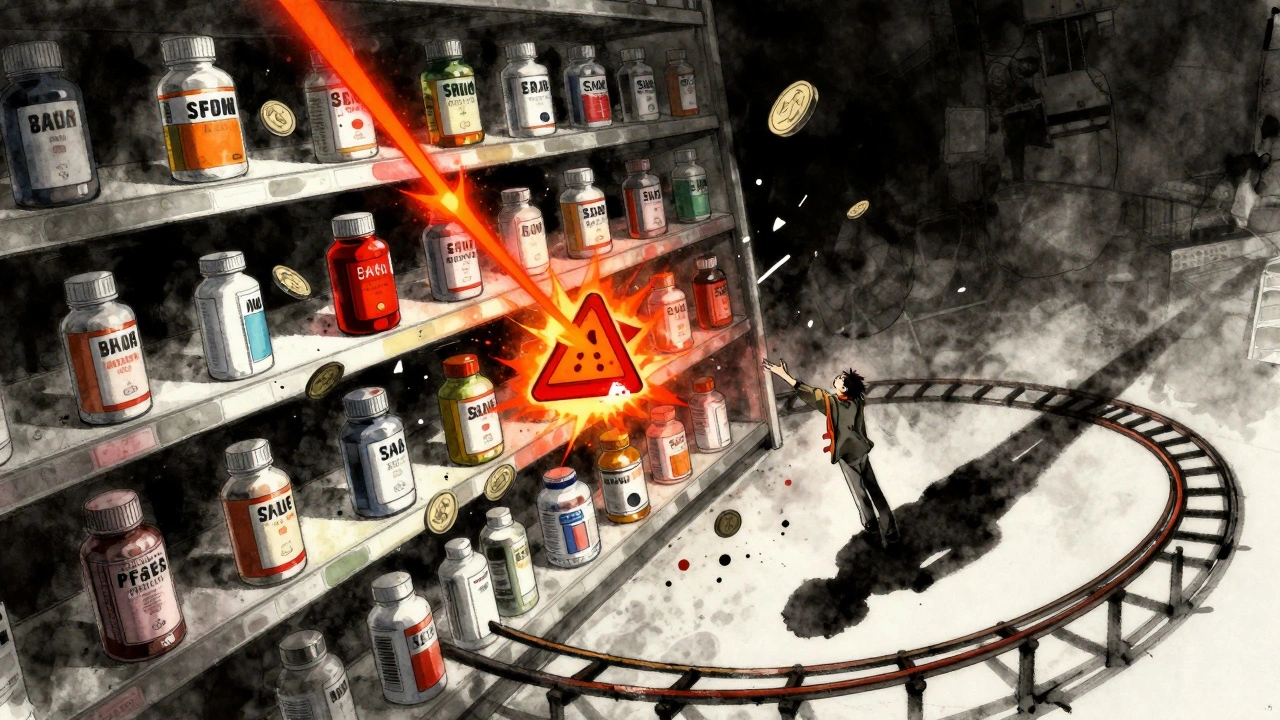
When you pick up a generic prescription, you expect it to be cheaper than the brand-name version. And for the most part, it is. But what you don’t see is how wildly the price can swing from one year to the next - sometimes dropping 80%, other times jumping 300% in just 12 months. The truth is, generic drug pricing isn’t stable. It’s a rollercoaster shaped by competition, manufacturing issues, and corporate decisions you’ll never hear about until your copay jumps at the pharmacy counter.
How Generic Drug Prices Usually Drop - and Why They Sometimes Skyrocket
When a brand-name drug loses its patent, generic versions flood the market. The first company to enter typically prices its version at about 90% of the brand’s cost. But as more companies get approval, prices drop fast. With two competitors, prices fall to around 65% of the brand. Three companies? Down to 52%. Four or more? Prices can plunge to just 15% of the original brand price.
This is how it’s supposed to work. And for many drugs, it does. Take levothyroxine, the thyroid medication. Between 2013 and 2018, its generic price dropped by 87%. That’s because dozens of manufacturers made it, and competition kept prices low.
But here’s the flip side: when only one or two companies make a generic drug, prices can explode. In 2018, the price of generic nitrofurantoin macrocrystals - a common antibiotic - jumped 1,272% over five years. Why? Because by 2018, only three manufacturers were left making it. One shut down. Another got hit with an FDA warning. Suddenly, the market had no real competition. The remaining company raised prices, and patients paid the price.
Year-by-Year Price Trends: The Numbers Behind the Noise
Looking at the big picture, generic drug prices have been falling overall. But that average hides a lot of chaos. In 2023, the overall list price for generics increased by just 4.9% - a slowdown from 5.2% in 2022. Sounds good, right? Not when you dig deeper.
Between January 2022 and January 2023, about 40 generic drugs saw price hikes averaging 39%. One in five of those jumped over 50%. And it’s not just a one-year fluke. From 2013 to 2014, nearly 8% of generic prescriptions saw price spikes between 100% and 500%. That’s not a glitch. That’s a pattern.
Here’s what’s happening: 60% of generic drugs stay stable - their prices change less than 5% a year. Another 25% move a little - 5% to 20%. But 15%? Those are the wild cards. They can jump 20% or more in a single year. And those 15%? They account for 60% of all the spending growth in the generic market.
Why Some Generics Cost More Than Others - And Why It Changes So Fast
Not all generic drugs are created equal. Cardiovascular generics like lisinopril or atorvastatin usually cost just 12% of their brand-name equivalents. But central nervous system drugs like gabapentin or sertraline? They average 25% of brand prices - still cheap, but higher than heart meds. Why? Because fewer companies make them, or they’re harder to produce.
Manufacturing complexity plays a big role. Some generics require sterile production, special packaging, or hard-to-source ingredients. If a factory in India or China has an FDA inspection failure - which happened at 23% of foreign facilities in 2023 - supply drops. And when supply drops, prices spike. That’s what happened with generic doxycycline in 2022. One major manufacturer shut down for quality issues. Within months, prices doubled.
And then there’s the Medicaid Best Price rule. It forces manufacturers to offer the lowest price they give to any buyer - including Medicaid - to all other payers. That means if a hospital negotiates a deep discount, the manufacturer has to match it everywhere. That discourages price competition. Why lower your price if you’re forced to lower it for everyone?
The Real-World Impact: Patients, Pharmacies, and the Hidden Costs
Patients feel this volatility most. One Reddit user reported their generic lisinopril - a blood pressure pill - jumped from $4 to $45 at Walmart in 18 months. GoodRx data confirmed it: that same drug rose 247% between January 2022 and December 2023. That’s not a typo. That’s real life for people on fixed incomes.
Medicare seniors aren’t immune. In early 2024, 37% of seniors taking generics said they skipped doses or cut pills to save money. That’s not just inconvenient - it’s dangerous. High blood pressure, diabetes, and thyroid conditions can get worse fast when meds are inconsistent.
Pharmacies are caught in the middle. Independent pharmacies saw their margins shrink on 15% of their generic inventory because prices flipped so fast. One week, a drug is profitable. The next, it’s a loss leader. The National Community Pharmacists Association found that 68% of small pharmacies had to absorb price increases on 20% of their generic stock. On average, they lost $3.75 per prescription.
Meanwhile, patients using GoodRx still save an average of $112.50 per generic prescription compared to cash prices at big chains. But that’s only if you know to use it - and if the pharmacy accepts it. Many don’t.
What’s Changing in 2025 - and What’s Not
The Inflation Reduction Act didn’t directly cap generic prices, but it changed the game. Brand-name drug makers now have to pay rebates to Medicare if their prices rise faster than inflation. That’s why brand prices grew just 2.3% in 2024 - down from 5% historically. But generics? They’re still mostly at the mercy of the market.
The FDA is trying to fix the problem. Their 2024 plan targets faster approvals for generics with few competitors - aiming for 20% quicker reviews. The FTC has 12 active investigations into unjustified price hikes in markets with three or fewer manufacturers. And Medicaid’s new rule, which removed the cap on rebates, forced some brand-name drugs to drop prices in January 2024 - but generics barely budged.
Still, the core problem remains: too few makers, too much power. The top five generic manufacturers now control 52% of the market - up from 38% in 2015. When you have only three companies making a drug, one can leave. Or get shut down. Or raise prices. And there’s no backup.

What You Can Do When Your Generic Drug Price Jumps
If your prescription suddenly costs more:
- Check GoodRx, SingleCare, or RxSaver - prices vary wildly between pharmacies.
- Ask your pharmacist if there’s a different generic manufacturer available. Sometimes the same drug, made by a different company, costs half as much.
- Call your insurance. Ask if they can switch you to a different tier or if they have a mail-order option with lower copays.
- If you’re on Medicare, ask about Extra Help or state pharmaceutical assistance programs.
- Don’t skip doses. Talk to your doctor. They might be able to prescribe a similar drug that’s still affordable.
And if you’re paying cash, always ask for the cash price before you pay. Sometimes it’s cheaper than your insurance copay.
The Bigger Picture: Generics Still Save Billions - But Not for Everyone
Let’s not lose sight of the wins. Generics saved the U.S. healthcare system over $2.2 trillion between 2008 and 2017. In 2023 alone, they saved more than $250 billion. That’s because 90% of all prescriptions filled are generics.
But savings aren’t evenly distributed. The drugs that keep getting cheaper - like metformin or ibuprofen - are the ones with 10+ manufacturers. The ones that spike? Those are the ones with one or two makers. And those are the ones that hurt people the most.
Generic drugs are still the best tool we have to control costs. But if we don’t fix the market’s fragility - if we don’t encourage more manufacturers to enter and prevent consolidation - the savings will keep being stolen by the few who control the supply.
For now, the system works - for most drugs, most of the time. But for the 15% that spike? It’s a gamble. And patients are the ones holding the losing ticket.
Why do generic drug prices go up even though they’re supposed to be cheaper?
Generic drugs are cheaper because they don’t need to pay for research or marketing. But their prices depend on competition. If only one or two companies make a drug, they can raise prices without fear of losing customers. When manufacturers shut down, get FDA warnings, or leave the market, supply drops - and prices spike. That’s why some generics jump 300% in a year while others keep falling.
Which generic drugs are most likely to have price spikes?
Drugs with few manufacturers - three or fewer - are the biggest risk. Cardiovascular drugs like nitrofurantoin and doxycycline, and central nervous system drugs like gabapentin and sertraline, are common targets. These are often older, low-margin drugs that manufacturers only make if they can control the market. When competition disappears, prices climb.
Are generic drug prices rising overall?
No - overall, generic drug prices have been falling for years. But the average hides extreme volatility. While most generics stay stable or get cheaper, about 15% of them see price jumps over 20% in a single year. Those few drugs drive most of the spending growth in the generic market.
Can I switch to a different generic version of my drug?
Yes. Generic drugs have the same active ingredient, so switching manufacturers is safe. But pharmacies sometimes default to one brand. Ask your pharmacist if they can fill your prescription with a different generic - the price might be half as much. You can also check GoodRx to see which manufacturer’s version is cheapest in your area.
Why do pharmacies sometimes charge more for generics than insurance?
Insurance plans negotiate bulk prices with pharmacies, often lower than the cash price. But pharmacies also have to pay manufacturers, and if the manufacturer raised the price suddenly, the pharmacy may be forced to charge more. Sometimes, the cash price is higher than your copay - but other times, it’s lower. Always ask for the cash price before you pay.
Is there any government action to stop generic drug price spikes?
Yes. The FTC has 12 active investigations into price hikes in markets with few manufacturers. The FDA is speeding up approvals for generics with limited competition. Medicaid’s new rule also forced some brand-name drugs to lower prices - though generics saw less impact. But enforcement is slow, and the market is still dominated by a handful of companies.
Generic drugs are essential to keeping healthcare affordable. But their prices aren’t guaranteed. They’re the result of a fragile system - one where a single factory shutdown or corporate decision can cost patients hundreds of dollars. The solution isn’t more regulation alone. It’s more competition. And until more manufacturers enter the market, the next price spike is always just one exit away.


Geraldine Trainer-Cooper
December 5, 2025 AT 22:52It's not about capitalism it's about who's left holding the bag
Kenny Pakade
December 7, 2025 AT 02:51Dan Cole
December 8, 2025 AT 12:20Billy Schimmel
December 10, 2025 AT 10:03Shayne Smith
December 11, 2025 AT 02:51Karen Mitchell
December 12, 2025 AT 01:53Nava Jothy
December 13, 2025 AT 02:49brenda olvera
December 13, 2025 AT 14:25Patients would cry and we could do nothing
But hey at least we had GoodRx to help them
Hope things get better soon